
In Istanbul, where the past doesn’t just linger-it breathes beneath your feet-the Basilica Cistern stands as one of the city’s most hauntingly beautiful secrets. Tucked beneath the bustling streets of Sultanahmet, just a five-minute walk from the Hagia Sophia and the Blue Mosque, this 1,600-year-old underground reservoir holds more than water. It holds the weight of empires, the silence of centuries, and the quiet rhythm of a city that never forgot how to listen to its own history.
What You’re Really Seeing Beneath the Streets
The Basilica Cistern isn’t just an old water tank. Built in 532 AD during Emperor Justinian I’s reign, it was designed to supply fresh water to the Great Palace and nearby buildings after the city’s aqueducts were damaged in a riot. Covering 9,800 square meters-roughly the size of two soccer fields-it could hold 80,000 cubic meters of water, enough to sustain the palace complex during long sieges or droughts. That’s the equivalent of 32 Olympic swimming pools.
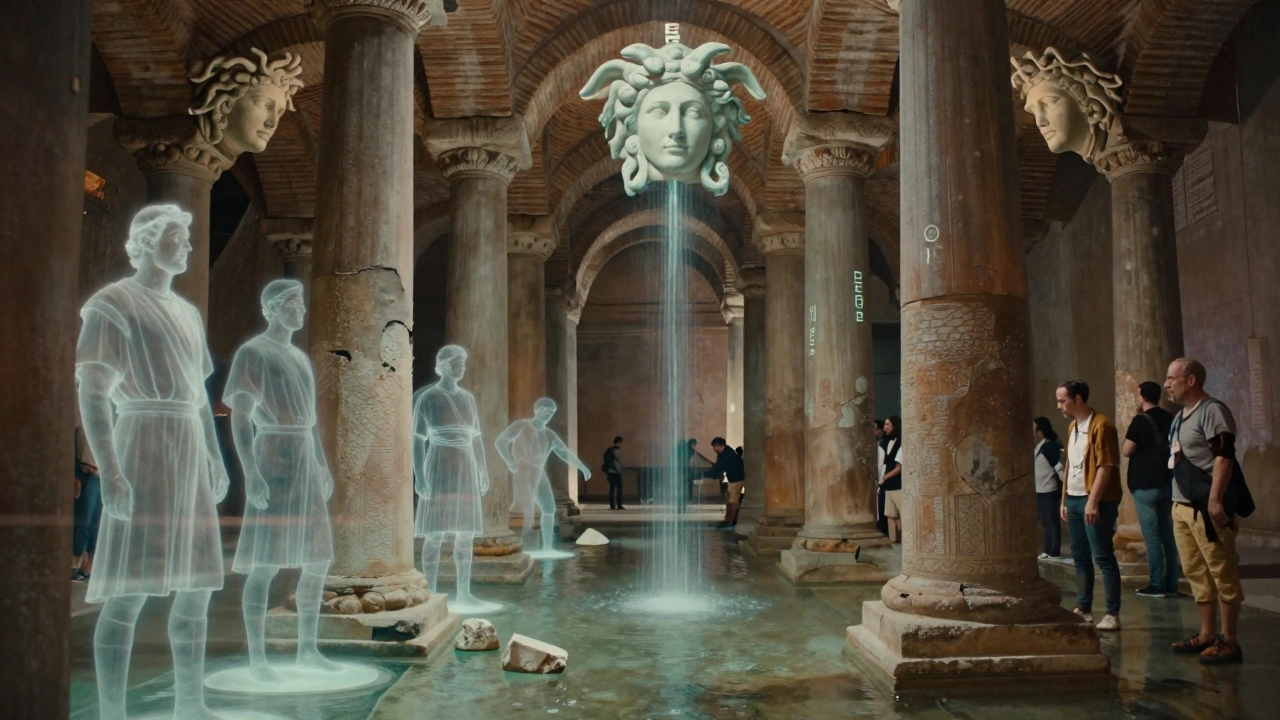
What makes it unforgettable isn’t just its scale, but its architecture. Over 336 marble columns, each 9 meters tall, rise from the water like silent sentinels. They once supported the vaulted brick ceiling of what was once a grand basilica, later repurposed into a water storage system. The columns aren’t random. Many were salvaged from older Roman temples. Two of them, carved with Medusa heads, are turned sideways and upside down-likely to neutralize the mythic power of the Gorgon’s gaze. Locals still whisper about them. Tourists snap photos. But few pause to wonder: who placed them there, and why?
A Sensory Experience Unlike Any Other
Walking into the cistern feels like stepping into a cathedral carved from stone and shadow. The air is cool, damp, and still. The only sounds are the gentle drip of water, the echo of footsteps, and the occasional murmur of a guide speaking Turkish, English, or Russian. The dim, golden lighting reflects off the water’s surface, turning the floor into a mirror that doubles the columns into an endless forest of marble.
On hot summer days, when the streets of Sultanahmet bake under the sun and the scent of simit and çay fills the air, the cistern becomes a natural air conditioner. Locals who’ve lived here for generations know this. They bring their children here not just to see history, but to feel it. In winter, when the Bosphorus winds cut through the city, the cistern’s warmth-stored in its thick stone walls-offers a quiet refuge.
There’s no ticket booth screaming for your credit card. No overpriced souvenir stall selling fake Ottoman lamps. Just a small, unassuming entrance near the back of the Hagia Sophia, where you pay 120 Turkish lira (as of 2026) and descend a narrow staircase into another world. The wooden walkways, built over the water, let you glide between columns without getting your shoes wet. At the far end, you’ll find a small café selling freshly brewed Turkish coffee in traditional çay bardakları-perfect for sitting and watching the light shift across the water as the afternoon fades.
The Medusa Heads: More Than a Photo Op
Everyone stops at the Medusa heads. But few know the real story. One Medusa head rests on its side at the base of a column near the western wall. The other is upside down, placed beneath a column in the northwest corner. Scholars don’t agree on why they’re positioned this way. Some say it was a practical reuse of ancient stone. Others believe Byzantine builders, steeped in pagan and Christian symbolism, turned them upside down to ward off evil. A third theory, popular among local historians, suggests they were placed to honor the original builders of the columns-possibly from the Temple of Athena in Sardis or a Roman temple in Ephesus.
What’s certain is this: the Medusa heads are not decorative. They’re functional relics. And in Istanbul, where every stone has a story, they remind you that this city doesn’t just preserve history-it repurposes it, reclaims it, and sometimes, quietly, re-enchants it.
How to Visit Without the Crowds
If you’ve been to Istanbul before, you know the drill: Hagia Sophia at 9 a.m., Blue Mosque by noon, Topkapı Palace by 3 p.m. The Basilica Cistern gets swallowed in the same tide. But here’s the secret: go early, or go late.
Open daily from 9 a.m. to 6 p.m., the cistern is quietest before 10 a.m. and after 4 p.m. Locals who work in Sultanahmet often slip in during their lunch break-20 minutes, no guide, just silence and the sound of dripping water. If you’re staying in a hotel near Taksim or Kadıköy, consider combining your visit with a walk through the Grand Bazaar. Afterward, grab a slice of baklava from Kaya Pastanesi, just a 10-minute walk from the cistern’s entrance. Their pistachio version, dusted with crushed rose petals, is the kind of thing you’ll remember long after the photos are deleted.
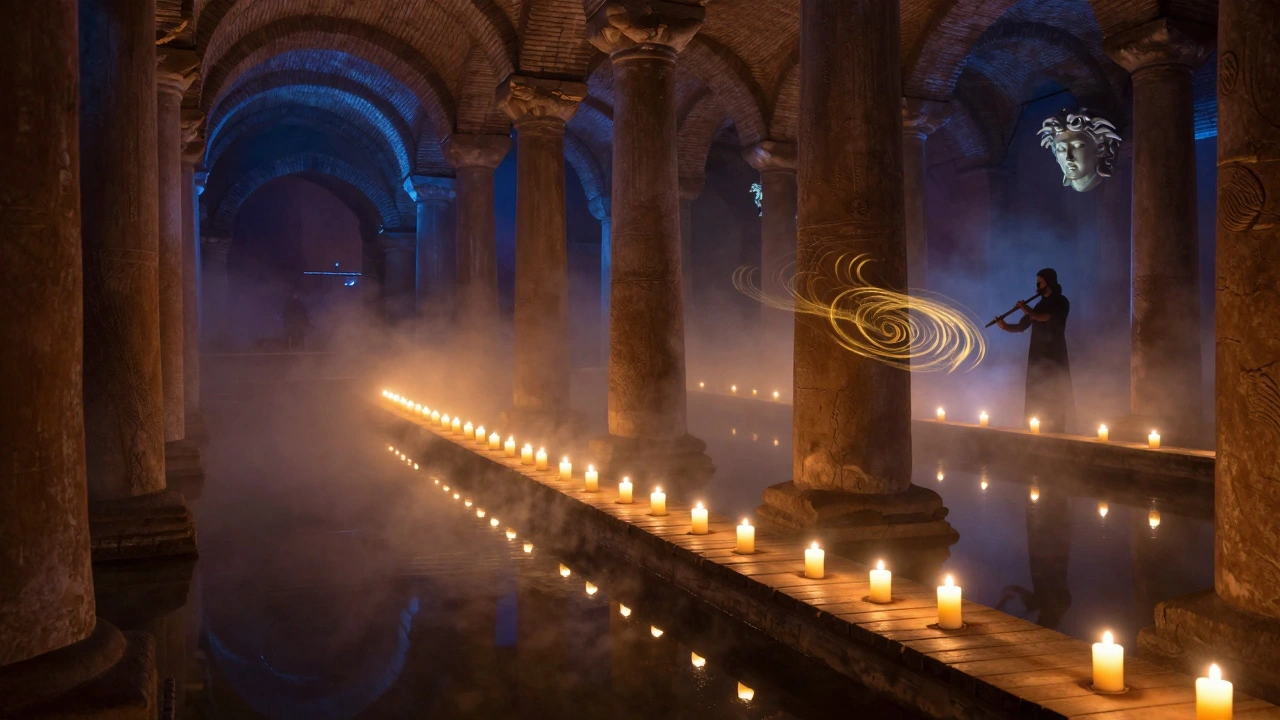
Or, if you’re visiting in spring, time your trip with the Istanbul Biennial. During the event, artists sometimes install temporary light projections inside the cistern-soft blues and golds that ripple across the water, turning ancient columns into living canvases. It’s not in the guidebooks. But if you ask a local artist or a curator at the Istanbul Modern, they’ll point you to the schedule.
Why This Matters to Istanbul
This isn’t just a tourist spot. It’s a living part of Istanbul’s identity. While other cities paved over their past, Istanbul buried its water under its streets-and then let the world come to see it. The cistern reminds residents that their city was built on ingenuity, not just faith or force. It’s a testament to Byzantine engineering that still works, even after 1,500 years.
And in a city where the call to prayer echoes over the Bosphorus and the ferry horns blare at dawn, the Basilica Cistern offers something rare: stillness. No phones. No ads. No traffic. Just water, stone, and the slow, steady drip of time.
What to Bring and What to Skip
- Bring: A light jacket (it’s always 14°C down there), comfortable shoes (the walkways are uneven), and a small bottle of water. You won’t need a guide-audio guides are available in Turkish, English, German, and Arabic at the entrance for 40 lira.
- Don’t bring: Large bags (there’s no storage), food (except maybe a single piece of candy), or expectations of solitude on weekends. Avoid visiting during Ramadan if you’re not used to crowds-locals flock here after iftar for the cool air and quiet.
If you’re staying in Istanbul for more than a few days, return at night. The cistern closes at 6 p.m., but on select evenings during cultural festivals, it hosts candlelit concerts. The sound of ney flutes echoing through the stone chambers feels like listening to the city’s heartbeat.
More Than a Cistern
The Basilica Cistern isn’t just one of Istanbul’s attractions. It’s a mirror. It reflects how this city holds its history-not in museums behind glass, but in the damp air under its feet, in the way the light falls on a 1,500-year-old column, in the quiet pause between two drips of water.
It’s the place where a grandmother from Kadıköy brings her grandchild to whisper stories of emperors and monsters. Where a young expat from Berlin sits alone, sketching the shadows. Where a taxi driver from Üsküdar stops for a coffee after his shift, just to sit in the silence.
In Istanbul, the past doesn’t wait for you to visit. It waits for you to notice it.
Is the Basilica Cistern open all year round?
Yes, the Basilica Cistern is open daily from 9 a.m. to 6 p.m. year-round, including public holidays. It closes only during extreme weather events, like heavy flooding, which is rare. Winter visits are especially peaceful-fewer crowds, and the cool air feels like a natural spa.
How do I get to the Basilica Cistern from Taksim or Kadıköy?
From Taksim, take the M2 metro to Sultanahmet (about 25 minutes), then walk 8 minutes downhill. From Kadıköy, take the ferry to Eminönü (20 minutes), then walk 10 minutes through the Spice Bazaar. Avoid taxis during rush hour-Sultanahmet’s narrow streets are chaotic. Walking is often faster and lets you stumble upon hidden cafés and street musicians along the way.
Can I take photos inside the cistern?
Yes, photography is allowed without flash. Tripods are not permitted. Many locals and photographers come at dusk to capture the water’s reflection-especially during the golden hour, when the lighting creates a dreamlike glow. The best spot is near the Medusa heads, where the columns line up perfectly.
Is the Basilica Cistern accessible for people with mobility issues?
The cistern has ramps at the entrance and wooden walkways inside, but the floors are uneven and the stairs are steep. Wheelchairs can enter, but mobility is limited due to narrow passages and the water’s edge. The staff are helpful and can provide a stool if you need to rest. For those with limited mobility, consider visiting during off-hours when it’s less crowded and easier to navigate.
Are there guided tours in Turkish?
Yes, guided tours in Turkish are available hourly at the entrance, and they’re led by local historians who’ve spent years studying Byzantine engineering. The guides often share stories you won’t find in English guides-like how the cistern was used as a storage room during the Ottoman era, or how locals used to leave offerings in the water during the 19th century. Ask for the guide who speaks with a Marmara accent-they know the hidden details.
What’s the best time of year to visit?
April to June and September to October are ideal. The weather is mild, the crowds are thinner, and the humidity in the cistern feels refreshing, not oppressive. Avoid July and August-when temperatures hit 35°C above ground, the underground air gets heavy and sticky. If you must visit in summer, go early morning. Bring a fan.