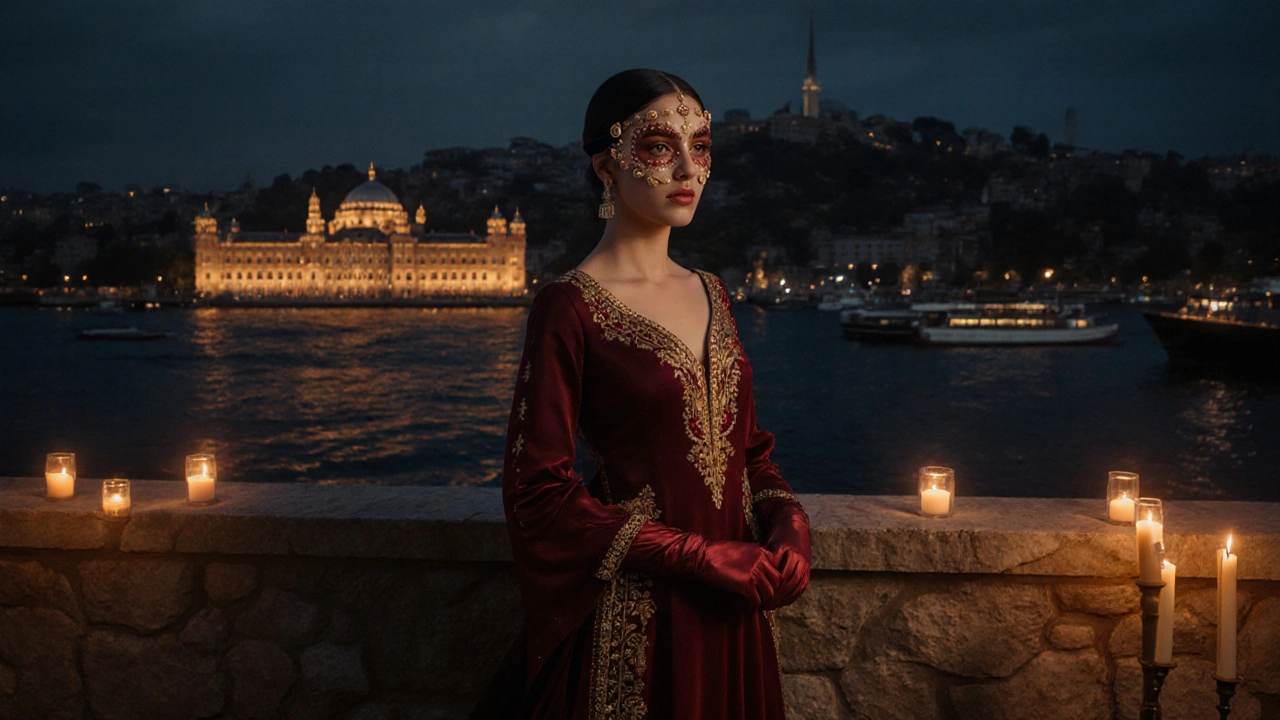


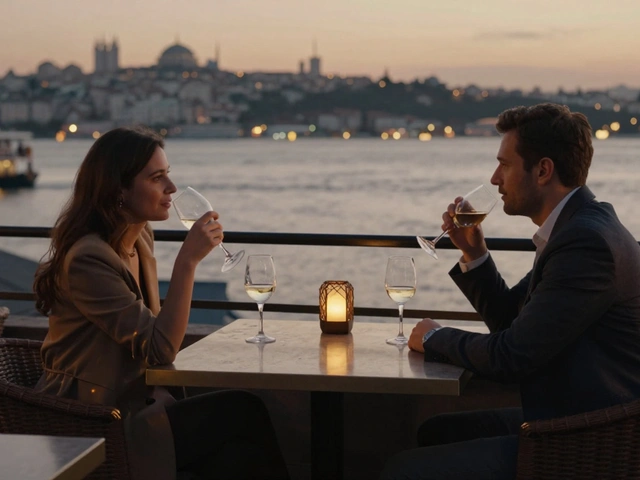
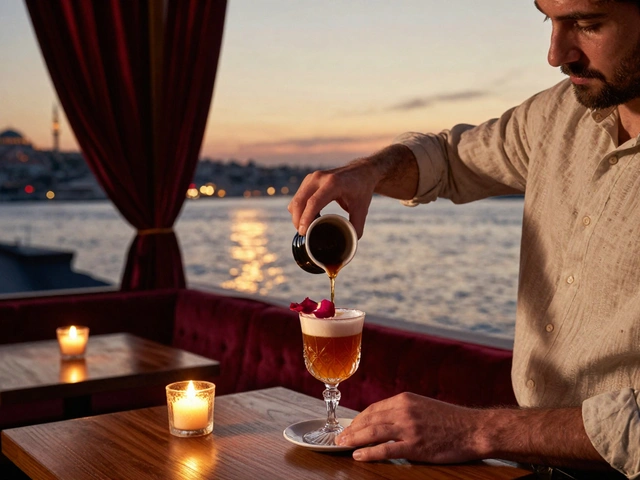
In Istanbul, where the Bosphorus reflects candlelight from rooftop lounges and historic yalıs double as secret event spaces, masquerade culture isn’t just a theme-it’s a legacy. The city’s blend of Ottoman grandeur, Byzantine mystique, and modern decadence makes it one of the few places in the world where a velvet cloak and a gold-leafed mask don’t feel out of place. Whether you’re attending a private masquerade at a restored 19th-century Ottoman mansion in Bebek or a themed night at a hidden basement bar in Karaköy, the right look turns heads-and not just because of the feathers.
Why Masquerade Fashion Thrives in Istanbul
Istanbul’s masquerade scene isn’t borrowed from Venice. It’s evolved from centuries of disguise. The Ottoman harem used veils and layered silks to navigate social boundaries. Wealthy merchants disguised their identities at secret coffee houses to avoid political scrutiny. Even now, in places like the Masquerade Club events hosted at the Çırağan Palace or the hidden courtyard of the Galata House, the mask isn’t just decoration-it’s permission. Permission to be more. To flirt without names. To dance without labels.
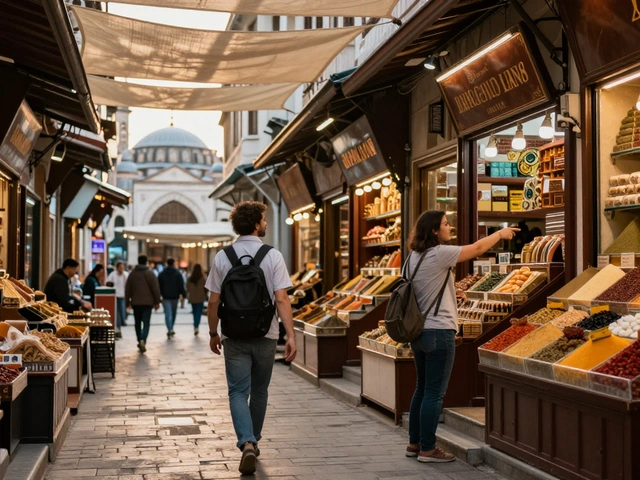
Unlike generic themed parties elsewhere, Istanbul’s masquerades are layered with cultural texture. You won’t see plastic Halloween masks here. You’ll see hand-painted leather masks from the artisans in Kadıköy’s Çarşı district, embroidered with Ottoman floral motifs. You’ll see silk brocade cloaks stitched by tailors in the Grand Bazaar’s Çinili Çarşı, lined with velvet from Bursa. These aren’t costumes. They’re heirlooms in the making.
The Five Iconic Masquerade Looks (and How to Build Them in Istanbul)
1. The Ottoman Noble
This look channels the sultans’ court-elegant, heavy, and silent in its power. Think: floor-length kaftan in deep crimson or midnight blue, trimmed with gold thread from the Altın Çıkmaz embroidery shop in Eminönü. Pair it with a half-mask carved from buffalo horn, hand-engraved with pomegranate vines-a symbol of eternity in Turkish folklore. Don’t forget the çarşaf gloves, silk-lined and fingerless, bought from the same tailor who makes wedding attire for families in Üsküdar.
Where to source it: Visit Yıldız Kumaş on Divan Yolu for authentic brocade. For masks, head to Maskara Atölyesi in Kadıköy, where artisans use 200-year-old wood-carving techniques.
2. The Byzantine Enchantress
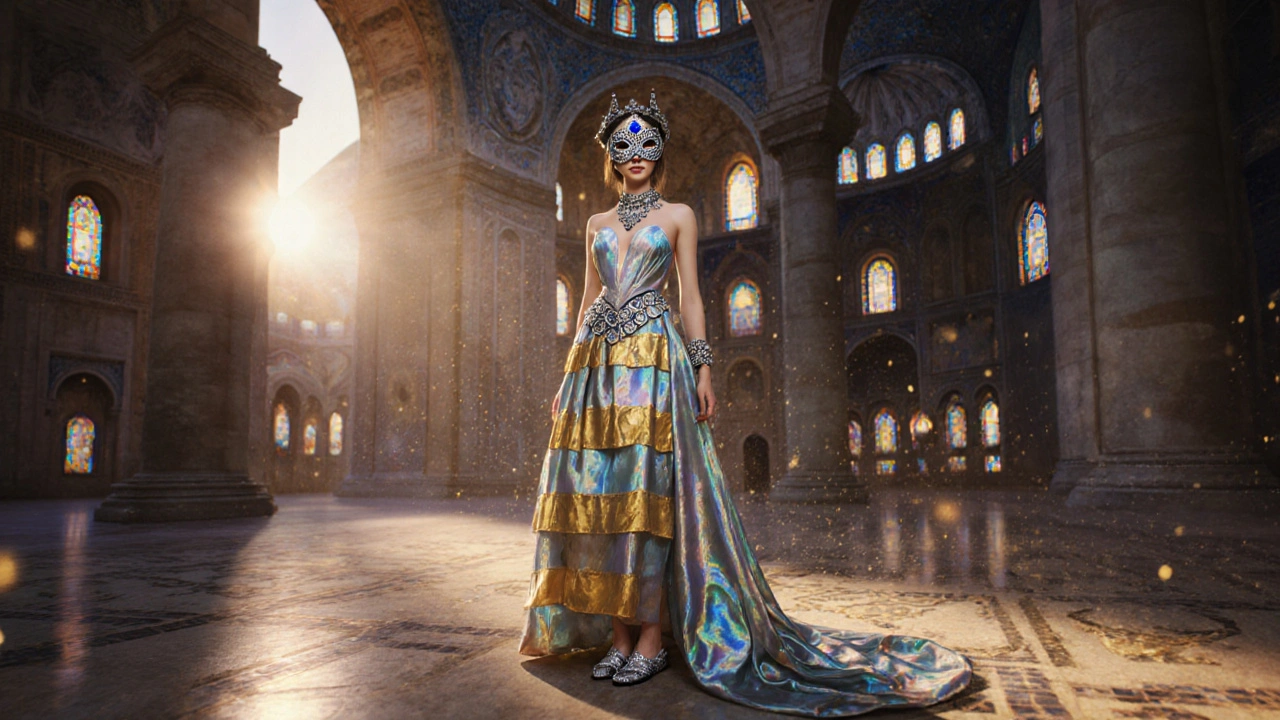
Drawn from the mosaics of Hagia Sophia, this look is all about shimmer and mystery. A sleeveless gown in iridescent silk, layered with gold lamé strips that catch the light like cathedral glass. The mask? A circular, open-faced design with filigree silver wire, shaped like a halo, embedded with tiny lapis lazuli stones-imported from Afghanistan but crafted by Istanbul’s Armenian glassworkers in Samatya.
Accessories: A choker made of antique Ottoman coins, strung on black silk cord. Wear it with velvet slippers stitched with silver thread, available at Çarşı Pabuççuları near the Spice Bazaar.
3. The Modern Velvet Rebel
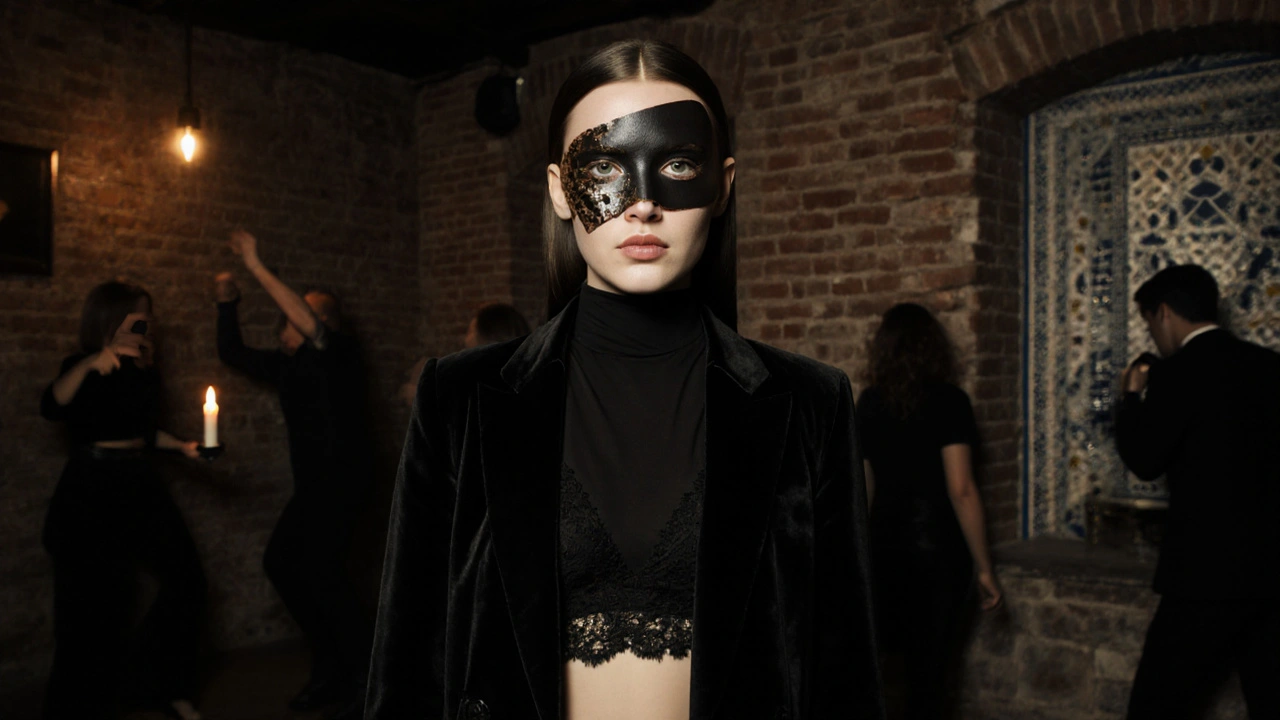
For those who want edge without losing elegance. A tailored black velvet blazer, cropped at the waist, worn over a high-neck lace top. The mask is minimalist-a curved, asymmetrical piece in matte black, with one side dusted in 24k gold leaf. Think no feathers, no frills. Just sharp lines and quiet confidence.
Where to find it: Atelier 1923 in Nişantaşı custom-makes these for Istanbul’s art scene crowd. Their designer, Elif Demir, studied under Parisian couturiers but uses Turkish leather and hand-dyed velvet from Denizli.
4. The Bosphorus Phantom
This look is inspired by the mist that rolls over the strait at dawn. A long, flowing cape in charcoal gray chiffon, lined with silver thread that glows faintly under candlelight. The mask is translucent-made of layered silk organza, painted with watercolor gradients of indigo and misty white. It’s not meant to hide. It’s meant to dissolve you into the night.
Perfect for rooftop masquerades at 1923 Bar in Karaköy or the Boğaziçi Yalı events. For the cape, order from Yunus Emre Kumaş in Fatih-they’ve been weaving translucent silks since 1887.
5. The Ottoman Courtesan Reimagined
A daring, sensual take on the köçek dancers of the 18th century. A cropped, beaded bodice with gold chain detailing, paired with wide-legged satin pants that flare at the ankle. The mask is a half-face design, shaped like a peacock’s tail, with real feathers dyed in Istanbul’s signature sunset hues: burnt orange, deep violet, and rose gold.
Feathers are sourced from local falconers in the Belgrade Forest. The beads? Handmade by Romani artisans in Zeytinburnu. This look isn’t for the shy. It’s for those who want to be remembered.
Where to Find Masquerade Events in Istanbul
Don’t just buy the outfit-live it. The city’s best masquerade nights aren’t advertised on Instagram. They’re whispered.
- Çırağan Palace’s Winter Masquerade - Held every December, hosted in the former Ottoman sultan’s summer residence. Guests arrive by private boat. Dress code: full historical regalia. Entry by invitation only.
- Galata House’s Midnight Masquerade - A monthly underground event in a converted 1880s printing press. DJs spin Turkish ney flute mixes. Masks are provided, but you’re encouraged to bring your own.
- Boğaziçi University’s Autumn Ball - A student-run tradition since 1973. The theme changes yearly. Last year: “The Lost Letters of the Grand Vizier.”
- Leb-i Derya’s Secret Soirée - A floating masquerade on a restored Ottoman gulet. Departs from Kabataş at 10 PM. Only 30 guests. RSVP via WhatsApp to the host’s hidden number-ask at the bar for the code.
Pro Tips for Pulling Off the Look in Istanbul
- Don’t wear heels on cobblestones. The streets of Beyoğlu and Balat are uneven. Choose low, embroidered slippers or velvet ankle boots.
- Carry a small velvet pouch with a spare mask. Istanbul nights get humid. Sweat can ruin a hand-painted surface.
- Use rosewater to clean your mask. It’s traditional, gentle on leather, and smells like Istanbul summers.
- Don’t wear perfume. The scent of oud and amber is already in the air. Let your mask do the talking.
- Leave your phone in your coat. The best masquerades happen when no one knows your name.
What Not to Do
Don’t show up in a plastic pirate mask from the airport gift shop. It’s not just tacky-it’s disrespectful. In Istanbul, masks carry history. They’re not props. They’re portals.
Don’t try to mimic Venice. The Venetian style is beautiful, but it doesn’t belong here. Istanbul’s masquerade is its own language. It speaks in silk, not satin. In gold leaf, not glitter. In silence, not noise.
Final Thought: The Mask Is Your Passport
In Istanbul, wearing a mask isn’t about hiding. It’s about becoming. The city has always been a place of layered identities-East and West, sacred and profane, past and present. When you slip on a handcrafted mask here, you’re not dressing for a party. You’re stepping into a story that’s been told for 500 years.
So choose your look wisely. Wear it proudly. And when the music fades and the candles dim, remember: the most powerful masks aren’t the ones that hide your face-they’re the ones that reveal who you’ve always been, but never dared to show.
Where can I buy authentic Ottoman-style masquerade masks in Istanbul?
For hand-carved, historically accurate masks, visit Maskara Atölyesi in Kadıköy or Altın Çıkmaz in Eminönü. These workshops use traditional wood and leather techniques passed down for generations. Avoid mass-produced masks sold in tourist areas like Istiklal Street-they lack craftsmanship and cultural accuracy.
Can I rent a masquerade outfit instead of buying one?
Yes. Atelier 1923 and Yıldız Kumaş offer rental services for high-end masquerade pieces, especially before major events like the Çırağan Palace masquerade. Rentals include cleaning and storage. Expect to pay between 800 and 2,500 TL depending on materials and detail.
Are masquerade events in Istanbul open to tourists?
Some are, some aren’t. Events at Çırağan Palace and Galata House are open to the public but require advance RSVPs-often weeks ahead. Smaller, underground events like Leb-i Derya’s gulet masquerade are invitation-only. Ask at luxury hotels like Pera Palace or Çırağan for recommendations. Tourists are welcome if they respect the culture and dress appropriately.
What’s the best time of year to attend a masquerade in Istanbul?
Late October through December is peak season. The weather cools, making heavy fabrics comfortable, and the city’s nightlife shifts into high gear. The most iconic events happen in November, leading up to the winter solstice-a traditional time for mystery and ritual in Ottoman culture. Avoid summer; the humidity ruins delicate fabrics and masks.
How do I match my mask to my outfit without looking over-the-top?
Match the color palette, not the detail. If your gown is deep blue with gold trim, choose a mask in navy with gold accents-not one covered in feathers and gems. Let one element shine: either the mask or the garment. In Istanbul, restraint is the ultimate luxury. Less is always more.
8 Comments
Wow, this is honestly one of the most beautiful cultural deep dives I’ve read in ages 🌙✨
Just read the part about the Bosphorus Phantom and I’m already planning my trip to Istanbul next November.
That translucent silk mask? I’d wear it to my own funeral and feel like I finally belonged.
Also, rosewater for cleaning masks? Genius. I’m stealing that.
Why does everything in this city feel like poetry written in velvet?
I’ve been to Venice, Paris, New Orleans… but this? This is magic with a heartbeat.
Can’t wait to see someone in that Ottoman Courtesan look at a rooftop bar.
My soul already feels lighter just reading this.
Thank you for writing this like a love letter to a city that never stops surprising.
Also, 1923 Bar is now on my bucket list. No exceptions.
Let’s be real - this isn’t fashion. It’s cultural appropriation dressed up as art.
Why are we romanticizing Ottoman elitism like it’s not built on slavery and imperial conquest?
And don’t get me started on those ‘artisan’ masks - most were made in Chinese factories and shipped to Kadıköy with a sticker.
You think the harem women wore silk because they loved it? They wore it because they had no choice.
This isn’t heritage. It’s a luxury brand’s marketing campaign with a history book open on the desk.
Real culture doesn’t need glitter and velvet to be valid.
Stop fetishizing oppression and call it ‘mystery’.
okay but the Byzantine Enchantress look?? i’m literally crying rn 😭
gold lamé strips like cathedral glass?? yes please!!
i just booked my flight to istanbul and im gonna hit up maskara atölyesi and then spend 3 hours in the grand bazaar trying to find the right coins for the choker
also the rosewater tip?? saved my life (and my mask)
and no i dont care if it’s ‘over the top’ - if you’re gonna wear a peacock feather mask, go full fairy godmother energy 💫
also who’s coming with me? we can rent matching capes and get lost in karaköy at 2am
the city deserves this kind of magic 🥹
So you’re telling me a guy in a velvet blazer and a gold-dusted mask is somehow deeper than a guy in a hoodie
Wow. Groundbreaking.
Next you’ll tell me wearing a mask makes you philosophical
It’s just a costume with a higher price tag
People pay 2500 TL to feel special
Meanwhile in America we just wear Halloween masks and drink whiskey
And we’re still more authentic than this performative nostalgia
Stop romanticizing poverty as elegance
It’s not heritage. It’s retail therapy with a history degree
you misspelled 'kaftan' in the first paragraph
it's 'kaf tan' not 'kaftan' as one word
also 'çarşaf' is spelled with a cedilla under the s not a regular s
and you said 'Bursa velvet' but the real velvet comes from Konya
and the mask workshop is in Kadıköy not Kadikoy without the dot
and the Ottoman coins are not from Afghanistan they're from the Balkans
you're not wrong but you're not right either
and if you're gonna write about history at least get the diacritics right
it's disrespectful
wait so the masquerade events are invite only but you're telling us exactly how to get in
is this a trap
is the government using this to track foreign tourists
what if the gulet is a front for a spy ring
what if the rosewater is laced with something
what if the gold leaf on the masks has microchips
why is no one talking about this
the 1923 Bar is probably where they brainwash people into loving Ottoman nostalgia
they give you a mask and suddenly you forget your own name
and the feathers? they're not from falconers
they're from drones
they're watching us
you think you're being free but you're just another puppet in a velvet string
This piece… this is the kind of writing that makes me believe in beauty again.
Every sentence felt like a whispered secret passed from one generation to the next.
The way you described the Bosphorus Phantom dissolving into the mist - I could feel the damp air on my skin.
And the Ottoman Courtesan look? That’s not fashion - that’s rebellion dressed in silk and defiance.
I’ve never been to Istanbul, but now I understand why people say the city breathes.
It doesn’t just host history - it wears it, carries it, sings it in the rustle of brocade.
The fact that someone still hand-carves masks using 200-year-old techniques… that’s not tourism.
That’s resistance.
That’s love.
And the rosewater tip? That’s the kind of detail only someone who’s lived it would know.
Thank you for reminding me that some traditions aren’t meant to be consumed - they’re meant to be honored.
If I ever make it to Istanbul, I’ll walk into Maskara Atölyesi with trembling hands - not to buy, but to bow.
While I appreciate the cultural exposition, I must emphasize that the veracity of the sourcing claims requires independent verification.
For instance, the assertion that Yıldız Kumaş offers authentic brocade on Divan Yolu may be misleading, as recent municipal audits indicate a significant portion of ‘handwoven’ textiles are now industrially produced.
Furthermore, the notion that 24k gold leaf is applied by hand in the context of commercial masquerade events is statistically improbable given labor cost structures in contemporary Istanbul.
Additionally, the reference to ‘Romani artisans in Zeytinburnu’ as primary bead producers warrants ethnographic substantiation, as no documented guild or cooperative currently operates under such parameters.
One must exercise caution when conflating romanticized narrative with verifiable economic reality.
It is imperative to distinguish between aesthetic embellishment and anthropological accuracy.
Respect for cultural heritage does not excuse the propagation of unverified commercial mythologies.
Kindly consider submitting corroborative documentation before disseminating such claims to a global audience.
Thank you for your attention to these matters.