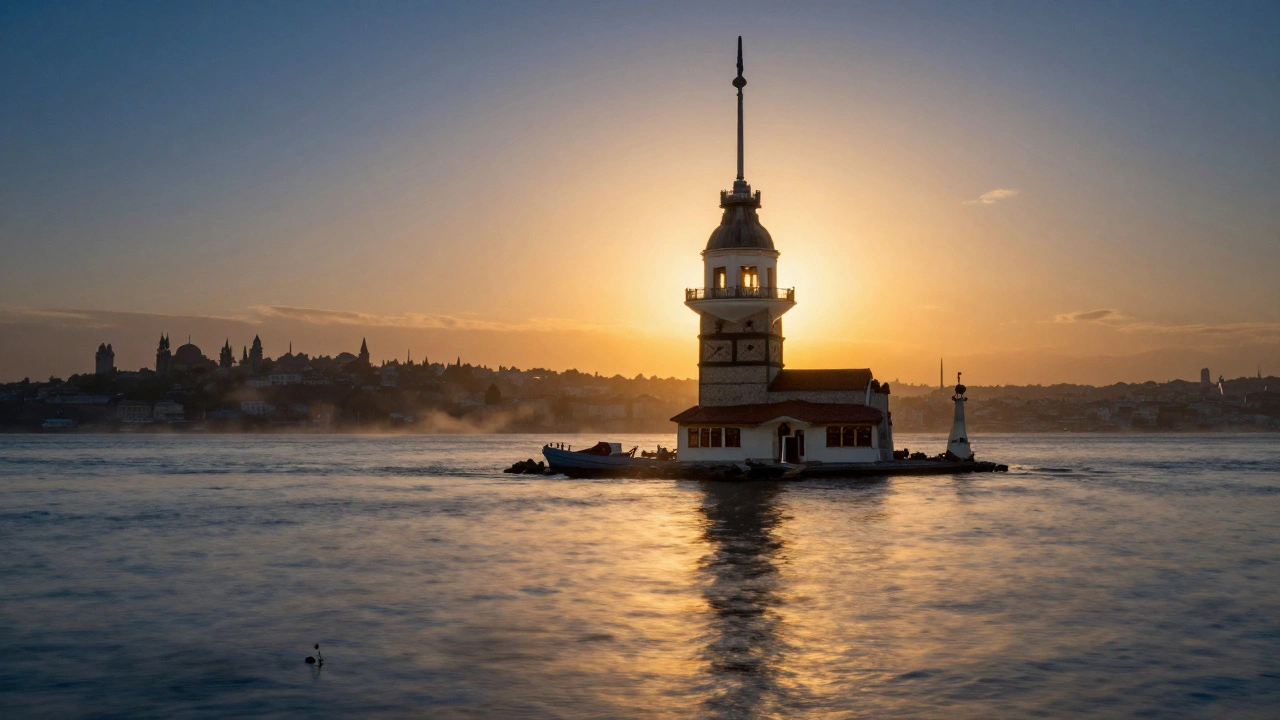

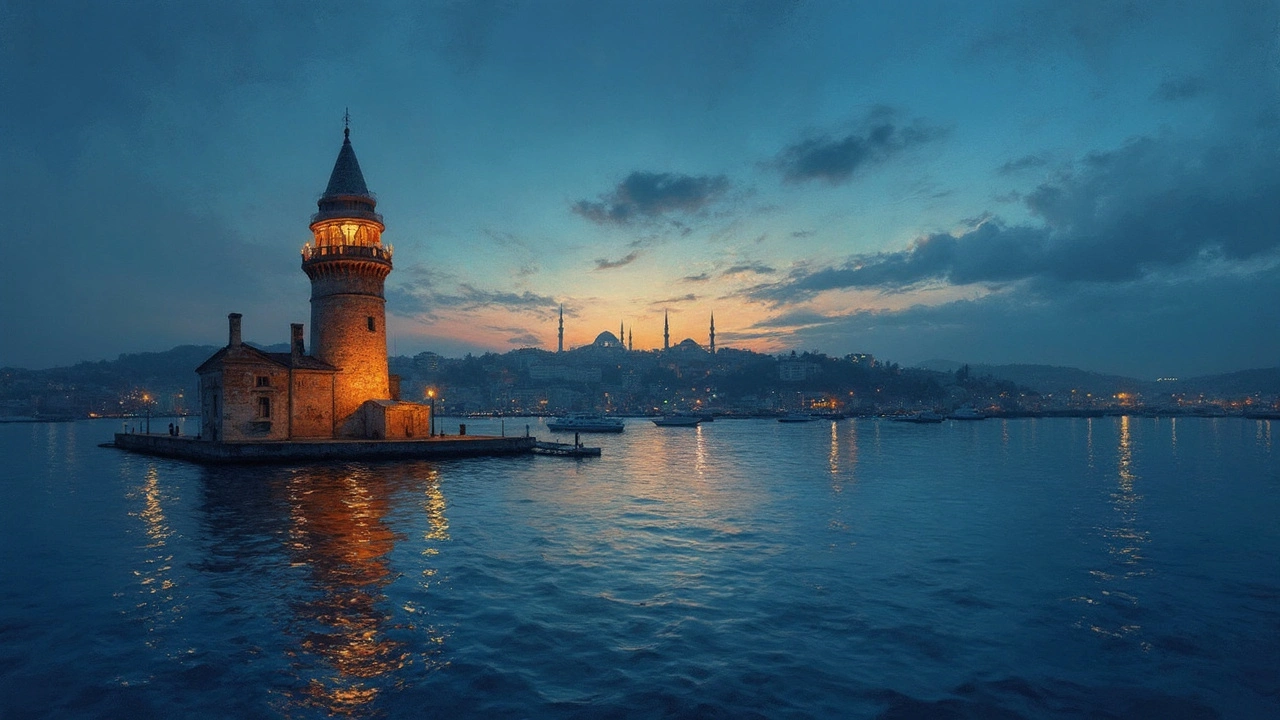
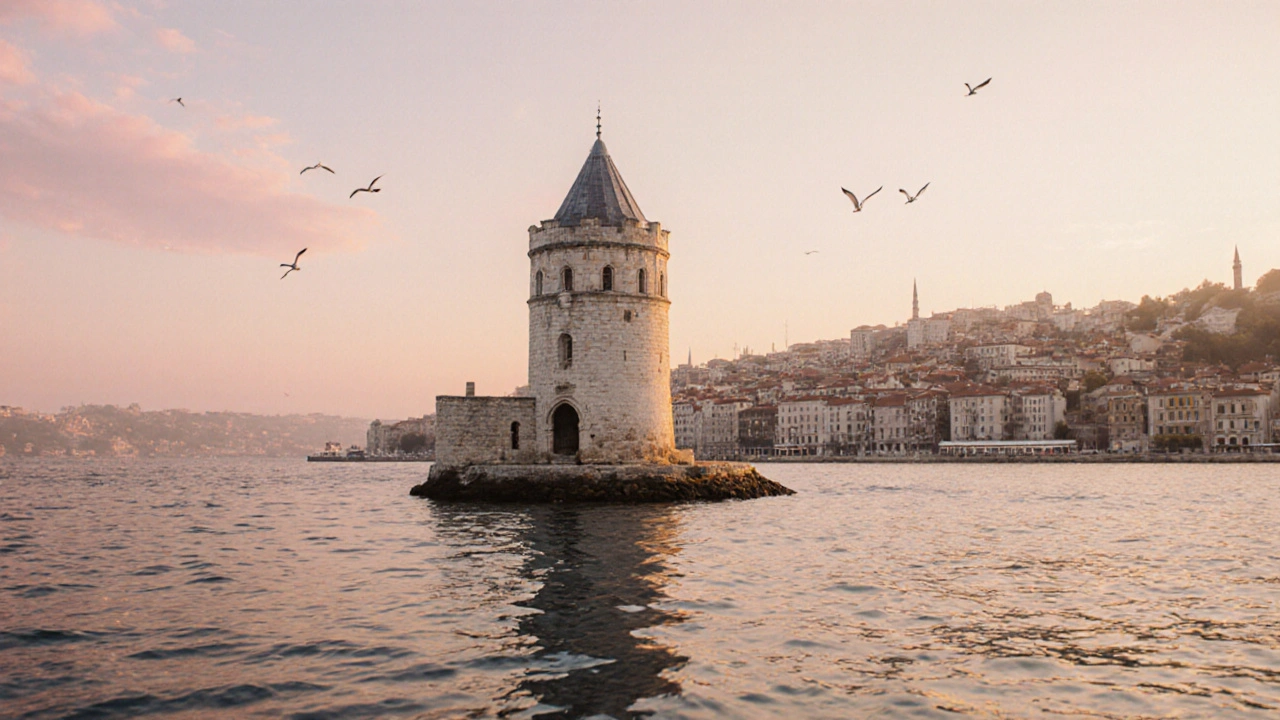
In Istanbul, where the Bosphorus whispers secrets between continents, few sights stir the imagination like the Maiden's Tower. Perched on a tiny island just off the Asian shore of the Bosphorus, this slender stone tower has watched over the city for over a thousand years. Locals call it Kız Kulesi, and to anyone who’s taken a ferry from Üsküdar or watched the sunset from Beşiktaş, it’s more than just a landmark-it’s a story carved in stone and salt air.
A Tower That Has Seen Empires Rise and Fall
The Maiden’s Tower wasn’t built to be a palace, a prison, or even a lighthouse-at least, not at first. The earliest version, built by the Byzantine Emperor Alexios I Komnenos in the 12th century, was a defensive outpost. But over time, its purpose shifted with the tides of history. The Ottomans expanded it, added a mosque on its base, and turned it into a customs checkpoint. Today, it’s a restaurant and café, but its soul still belongs to the myths that grew around it.Walk along the waterfront in Kadıköy on a quiet evening, and you’ll hear stories from fishermen, taxi drivers, and grandmothers sipping çay. They don’t talk about the tower’s architecture. They talk about the princess.
The Princess Who Was Locked Away
The most famous legend begins with a prophecy. A seer told the Byzantine emperor that his daughter would die on her 18th birthday-from a snakebite. Terrified, the emperor built the tower on an isolated rock in the sea, far from any land where snakes might crawl. He raised his daughter there, surrounded by servants, guards, and only the sound of waves.On the day of her 18th birthday, the emperor brought her a basket of rare fruits as a gift. Inside, hidden beneath ripe figs and pomegranates, was a venomous snake. The princess died, just as the oracle foretold.
But here’s the twist locals love: the snake didn’t come from the mainland. It was smuggled in by a jealous courtier who knew the tower’s isolation made it the perfect place to carry out a quiet murder. The emperor, heartbroken, ordered the tower to be named after his daughter-and to never again be used as a prison.
Every spring, when the first ferry from Üsküdar docks near the tower, you’ll still see couples pause to look at it. Some say the princess’s spirit still walks its stairs, watching for suitors who might one day come to claim her.
The Lovers’ Tragedy: A Tale from the Ottoman Era
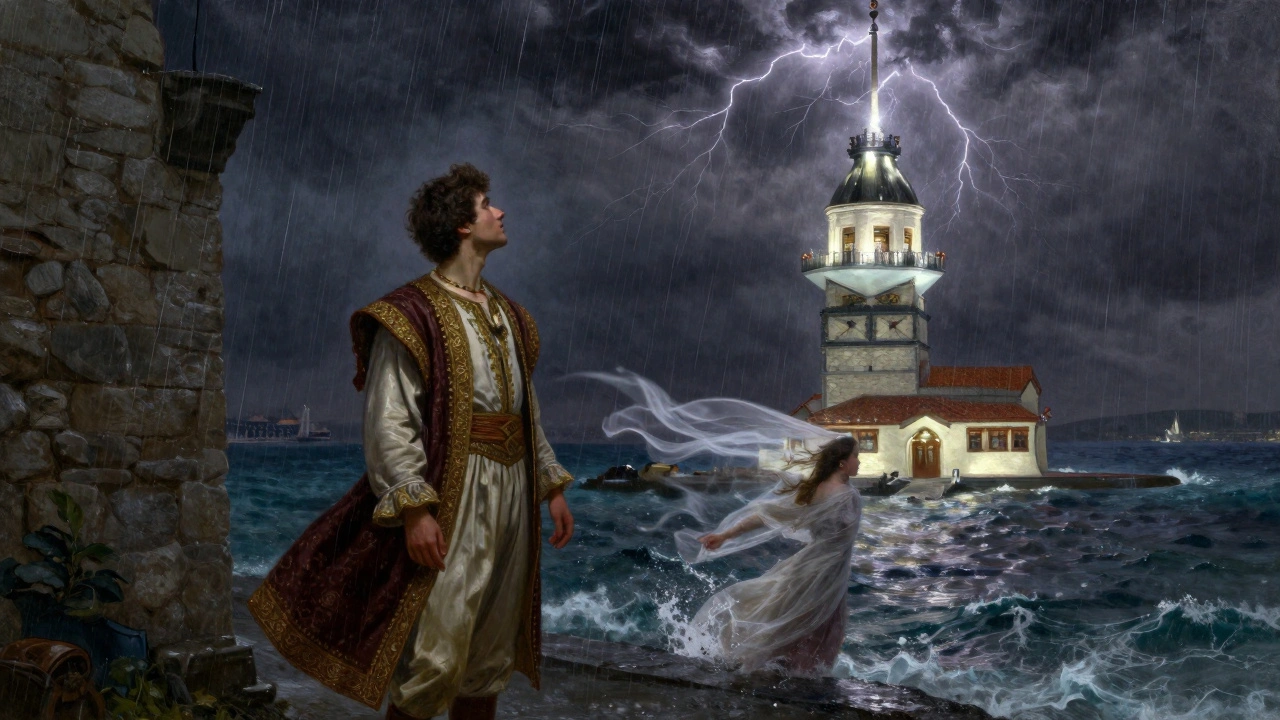
Another version of the tale, whispered in the backrooms of historic cafés like Çiçek Pasajı or over a plate of hünkar beğendi in a family-run restaurant in Beşiktaş, tells of a young Ottoman nobleman and his beloved-a baker’s daughter from the hills of Üsküdar.They met by chance near the tower’s shore, where she sold freshly baked simit to sailors. He was enchanted by her laugh, her hands dusted with flour, the way she never looked up when he offered her gold. She refused it all. "I love you," she said, "not your title."
When his family found out, they forced him to marry a noblewoman. Heartbroken, he disappeared. Months later, his body washed ashore near the tower. The baker’s daughter, unable to bear the loss, climbed to the top and threw herself into the sea.
That night, a storm rose. Lightning struck the tower. When the sun rose, the tower was wrapped in a veil of white mist-and from then on, it was said that on quiet nights, if you listen closely, you can hear two voices singing a love song carried by the wind.
Why This Tower Still Captures Istanbul’s Heart
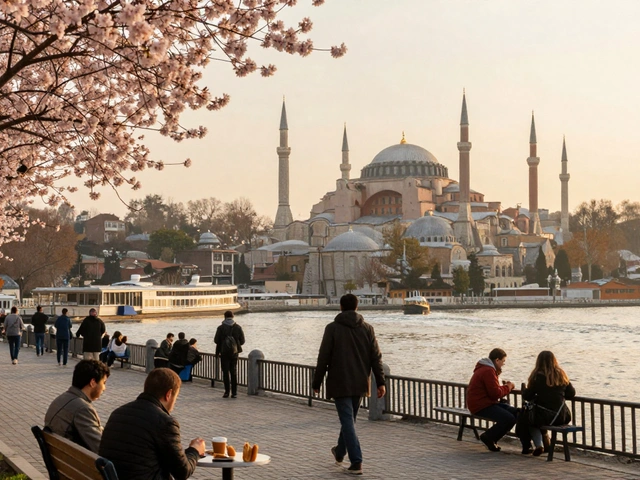
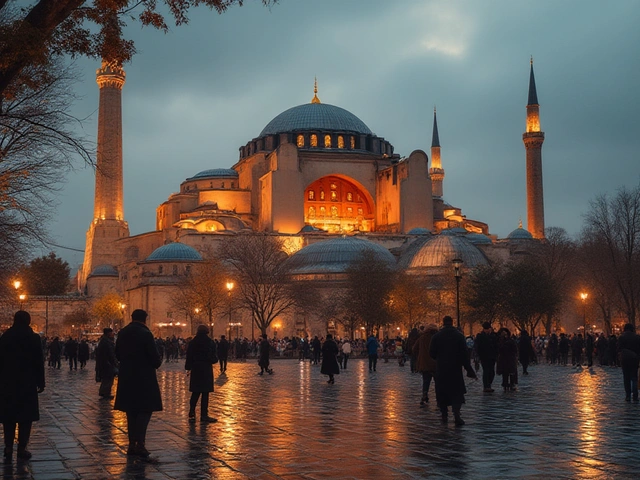
Unlike the Hagia Sophia or Topkapı Palace, the Maiden’s Tower doesn’t scream for attention. It doesn’t need crowds or ticket lines. It’s a quiet presence, visible from the ferry between Kadıköy and Beşiktaş, from the rooftop bars of Ortaköy, from the balconies of homes in Arnavutköy.It’s a symbol of longing. Of love that outlasts empires. Of fate that can’t be escaped-not by walls, not by distance, not even by death.
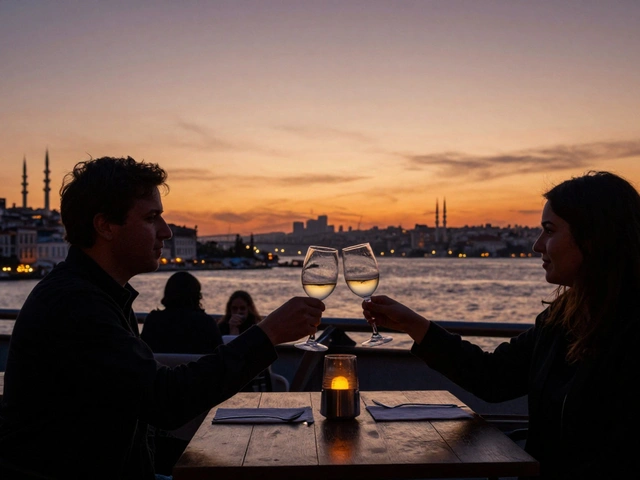
That’s why, on Valentine’s Day, couples still take boats to the tower. Not to eat at its upscale restaurant (though the grilled octopus with lemon and olive oil is worth it), but to sit on the deck, watch the sun dip behind the Princes’ Islands, and remember that some stories don’t end. They just wait.
How to Experience the Legend Today
You don’t need to be a tourist to feel the weight of these legends. If you live in Istanbul, here’s how to make the tower yours:- Take the İDO ferry from Üsküdar to Kınalıada. Ask the captain to slow down near the tower. Watch the light hit its stone walls as the sun sets.
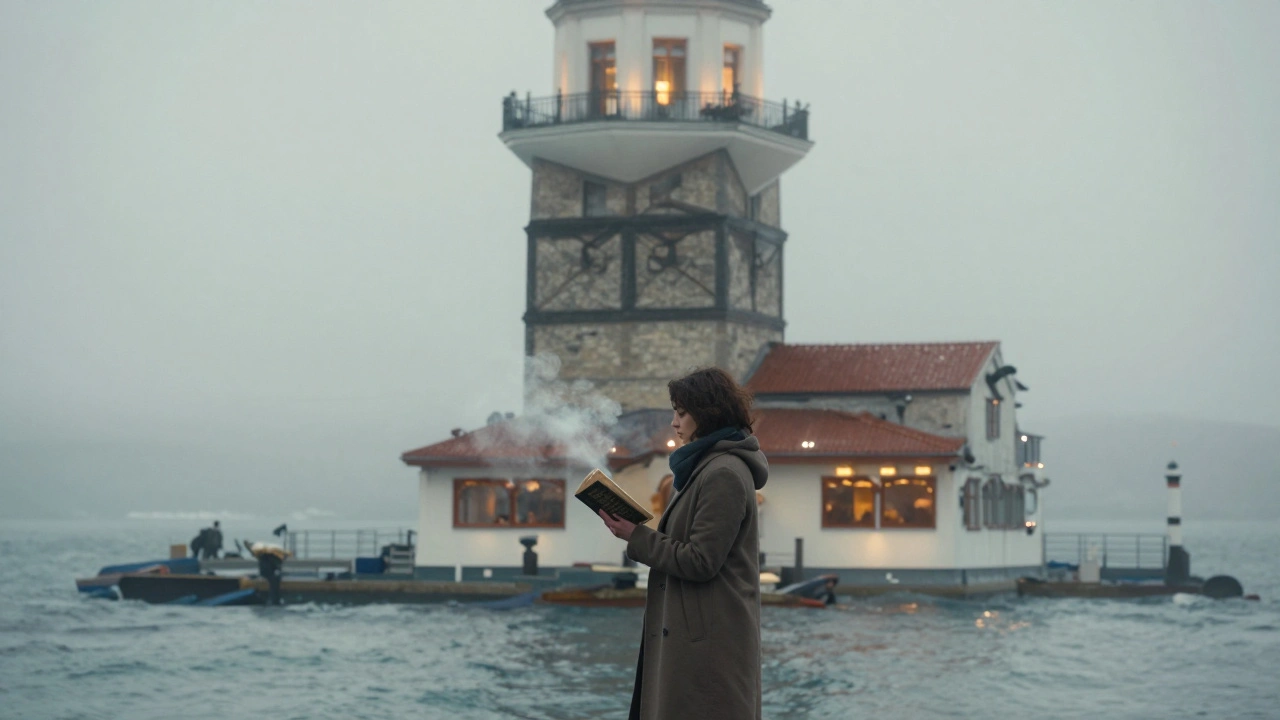
- Visit on a foggy morning. The tower vanishes into mist, and you’ll understand why people once believed it was a portal to another world.
- Bring a book of Turkish poetry-Orhan Veli or Nazım Hikmet-and read under its shadow. The verses about lost love feel different here.
- On New Year’s Eve, join the crowd at the Bosphorus shoreline in Beşiktaş. When the fireworks explode, look up at the tower. It’s the only structure in Istanbul that’s lit from within, glowing like a lantern in the dark.
More Than a Legend-A Living Part of Istanbul
The Maiden’s Tower isn’t frozen in time. It’s been a quarantine station during plagues, a radio transmission tower during the Republic, a filming location for Turkish dramas that air on Star TV and Show TV. In 2021, a local artist installed a sound sculpture inside that plays the recorded voices of Istanbul women telling their own love stories.That’s the magic of this place. It doesn’t just hold myths-it holds memories. Every generation adds a new layer: a couple’s initials carved into a bench, a love letter left in the donation box, a child’s drawing taped to the wall.
When you walk past the tower on your way to work, or when you see it from your balcony in Beşiktaş, remember: this isn’t just stone and iron. It’s the echo of a thousand hearts that loved, lost, and refused to let go.
Is the Maiden's Tower open to the public?
Yes, the Maiden’s Tower is open daily from 9 AM to 7 PM. You can visit by taking a short boat ride from Üsküdar, Beşiktaş, or Kabataş. The tower houses a café and restaurant, and there’s a small exhibit on its history. Entry to the tower itself is free with a boat ticket, but dining inside requires a reservation.
Why is it called the Maiden’s Tower?
The name comes from the most famous legend-the story of a princess locked away to protect her from a prophecy. In Turkish, "Kız Kulesi" literally means "Maiden’s Tower," with "kız" referring to a young, unmarried woman. Over centuries, the name stuck, even as the tower’s function changed. Locals still use "Kız Kulesi" more than the English translation.
Can you stay overnight in the Maiden's Tower?
No, overnight stays are not allowed. The tower is not a hotel, though it has been used for private events and photo shoots. There’s a small apartment on the upper floor used by staff and maintenance teams, but it’s not open to the public. If you want a romantic night by the water, book a table at the tower’s restaurant and stay until the last light fades.
Are there other towers in Istanbul with similar legends?
Not exactly. While Istanbul has many historic towers-like the Galata Tower or the Lighthouse of Rumeli Hisarı-none carry the same romantic weight as the Maiden’s Tower. The Galata Tower was a watchtower and prison, and Rumeli Hisarı was built for military control. Only Kız Kulesi is tied to love stories that feel personal, intimate, and deeply human.
What’s the best time to photograph the Maiden's Tower?
Golden hour-just after sunset-is the most magical. The tower glows in warm light, and the water reflects it like liquid gold. For a dramatic shot, head to the shore in Beşiktaş or the rooftop of the Çırağan Palace. If you’re on the Asian side, the viewpoint near Kadıköy’s Moda Park offers a clean, unobstructed view. Avoid midday; the light is harsh and the crowds are thick.



8 Comments
This tower... it’s not just stone. It’s a sigh caught in salt air, a heartbeat that outlasted empires. I read this at 3 a.m. in my Brooklyn apartment, and I cried. Not because it’s sad-but because it’s true. Love doesn’t need a grand stage. Sometimes, it just needs a whisper, a wave, and a tower that remembers.
And that last line? "They just wait." God. That’s the whole damn thing.
Ugh. Another Westernized fairy tale dressed up as "cultural heritage." The real history? The Ottomans used it as a customs post. The "princess" story? Byzantine propaganda to distract from their crumbling empire. And don’t even get me started on the "love song"-that’s pure Bollywood nonsense injected into Turkish folklore.
Also, "Kız Kulesi" doesn’t mean "Maiden’s Tower"-it means "Girl’s Tower." Stop romanticizing. It’s just a building. 🙄🔥
Love how this piece layers myth, memory, and materiality-Kız Kulesi as palimpsest. The tower’s evolution-from Byzantine sentinel to Ottoman toll station to modern-day culinary experience-isn’t just architectural; it’s anthropological. You’ve got embodied trauma in the princess myth, collective longing in the lover’s suicide, and now, contemporary resonance via the sound sculpture of Istanbuli women’s voices.
It’s not a monument. It’s a living archive. And the fact that it’s still lit from within on New Year’s Eve? That’s ritualized collective catharsis. We don’t just preserve stories-we animate them. This isn’t tourism. It’s communion.
P.S. The grilled octopus is *chef’s kiss*-but the silence on the deck? That’s the real delicacy.
Okay, I’m not even from Turkey, but I just booked a flight to Istanbul. This made me feel something I haven’t felt in years. Like, deep, soul-level connectedness.
Also, the part about reading Orhan Veli under the tower? YES. I’m bringing my copy of "It’s Raining" and a thermos of chai. I’m gonna sit there until the mist rolls in.
To everyone who’s ever loved and lost: you’re not alone. The tower remembers you too. 💕🌙
Look, I’ve been to Istanbul. The tower’s cute. But honestly? It’s just a tiny building with a view. Everyone acts like it’s the Taj Mahal, but it’s not even that big.
Also, the "love song" thing? That’s just the wind through the gaps. People love making up ghost stories to feel special. I’ve seen more haunting in my local pub.
Also, why is everyone so obsessed with dead girls? 😴
Is it possible that the tower’s true function-beyond architecture, beyond myth-is to serve as a mirror? We project onto it our fears of isolation, our dread of fate, our longing for transcendence.
The princess isn’t a victim. She’s a symbol of the human refusal to accept contingency. The lover isn’t tragic-he’s the embodiment of the choice to let love define existence, even beyond death.
And the sound sculpture? That’s not art. That’s collective testimony. Every voice added is a stitch in the fabric of memory. The tower doesn’t hold stories-it holds the silence between them.
And that silence? That’s where the real haunting lives.
Just went last month. The boat ride is 10 minutes. The café is overpriced. The view? Worth it.
That’s it.
There’s something profoundly tender about a place that refuses to be reduced to a single narrative.
The tower doesn’t care if you believe in the princess. Or the lover. Or the snake. It just… stands. And lets you bring your grief, your hope, your longing, and leave it there.
That’s the quietest kind of power. Not the power of conquest, but the power of endurance.
And yes-I did read Nazım Hikmet there. The wind carried his words like a sigh. I didn’t cry. But I felt it.
Thank you for writing this. I needed to remember that some things are meant to be felt, not explained.