

In Istanbul, where the call to prayer mingles with the clink of glasses and the Bosphorus reflects neon signs like liquid gold, the city’s bars aren’t just places to drink-they’re time machines. You can sip a craft gin in a 19th-century Ottoman warehouse one night and wake up the next remembering the scent of oud and pipe smoke that still lingers in the wooden beams. This isn’t just about cocktails. It’s about how Istanbul’s layers-Byzantine, Ottoman, Soviet-influenced, and hyper-modern-have been poured into glass after glass, bottle after bottle, across generations.
From Coffee Houses to Speakeasies: How Istanbul’s Drinking Culture Evolved
Before bars as we know them existed, Istanbul’s social life revolved around kahvehane-coffee houses. These weren’t quiet spots for reading. They were political forums, chess battlegrounds, and storytelling hubs where men gathered to debate poetry, trade news, and plan uprisings. When alcohol began to appear in the late 1800s, it didn’t come in flashy bottles. It arrived quietly, through European influence, hidden in basements and back rooms of grand houses in Beyoğlu and Galata.
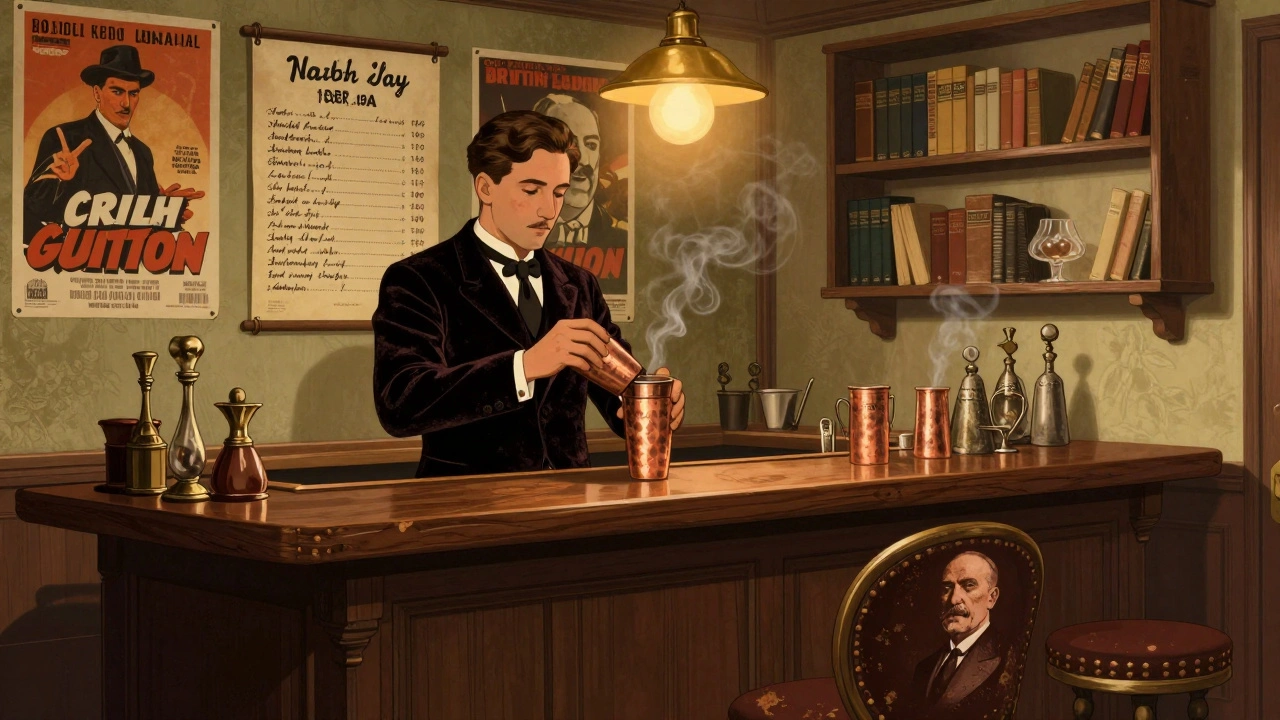
By the 1920s, after the fall of the Ottoman Empire, Istanbul’s elite started opening secret drinking dens. These weren’t called bars. They were meşrubat evleri-drink houses-often disguised as bookshops or tailors. The most famous, like the now-closed Asmalı Mescit (once a hidden jazz club beneath a mosque), became legends. Today, places like Bar 1920 in Cihangir don’t just replicate that vibe-they honor it. The walls are lined with vintage Turkish film posters, the bartenders wear velvet vests, and the signature cocktail? A Yenice: raki infused with dried figs, lemon thyme, and a drop of rosewater, served in a hand-blown glass from Iznik.
Where the Past Still Whispers: 5 Historic Bars You Can Visit Today
Not every old building in Istanbul is a museum. Some are still alive-with ice clinking, laughter echoing, and stories being retold.
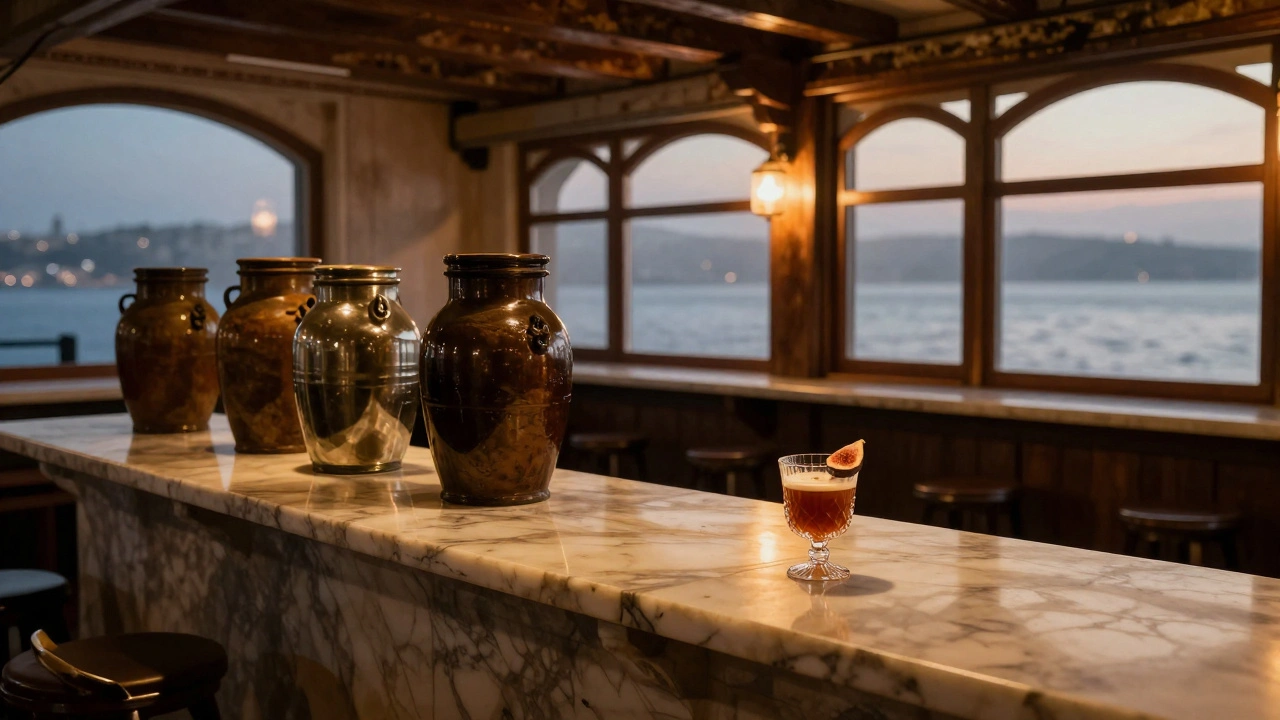
- Leb-i Derya (Karaköy): Opened in 1875 as a wine cellar for Italian merchants, this spot survived two world wars and a fire. Today, it’s a dimly lit gem with original marble counters and a cellar where Ottoman-era wine jars still sit untouched. Order the İstanbul Sour-a twist on the classic with mastic syrup and local honey.
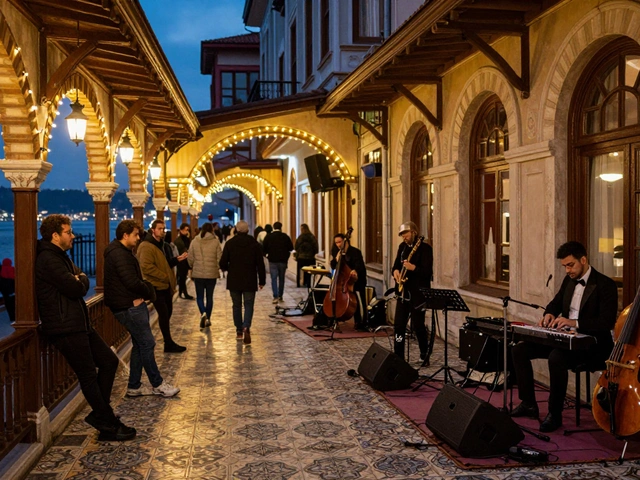
- Çiçek Pasajı (İstiklal Avenue): Once called Fish Street in the 1800s, this arcade was lined with fishmongers. By the 1950s, it became a hub for jazz musicians and poets. Now, it’s packed with bars like Florya and Mezze, but the original mosaic floor and iron railings remain. Come at 8 p.m. on a Friday-the live clarinet player still plays the same 1930s Turkish tango.
- Bar 1920 (Cihangir): As mentioned, this isn’t a themed restaurant. It’s a living archive. The owner, a retired architect, restored the space using original blueprints from 1918. The barstools? Replicas of those used by Mustafa Kemal Atatürk’s inner circle. The menu? Only drinks from pre-1950 Turkish cocktail books.
- İstanbul Bar (Beyoğlu): Hidden behind a nondescript door in a 1902 apartment building, this place opened in 1998 but feels like 1948. No Wi-Fi. No music. Just the hum of an old refrigerator and a wall of 200+ Turkish raki brands. Locals come here to talk politics. Tourists come to understand why Turks drink raki with water-and why they never rush it.
- Perili Köşk (Bebek): Once a palace for Ottoman princesses, this 1890s waterfront mansion now hosts a members-only bar with views of the Bosphorus. The drinks are served on silver trays, the ice is hand-carved, and the bartenders know your name by the third visit. It’s not cheap-but the history? Priceless.
Why These Bars Feel Different Than Anywhere Else
What makes Istanbul’s historic bars unique isn’t just their age. It’s how they’ve survived. Unlike cities where old buildings are torn down for condos, Istanbul’s neighborhoods cling to memory. A bar in Kadıköy might sit above a 400-year-old spice shop. A cocktail in Beşiktaş might be poured into a glass that once held tea for a sultan’s advisor.
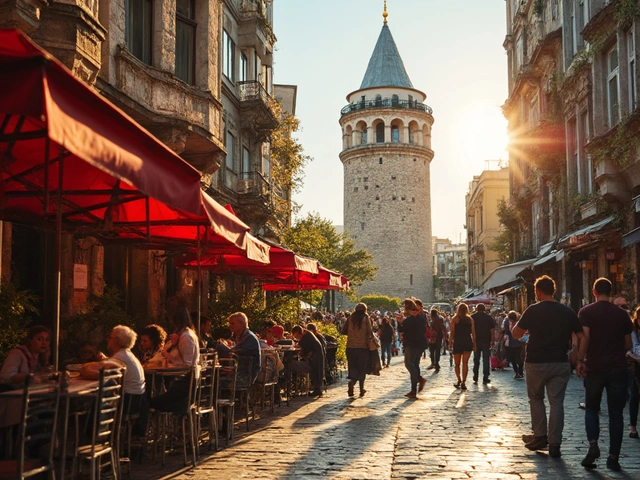
And then there’s the rhythm. In New York, bars close at 4 a.m. In Tokyo, they shut by 2. In Istanbul? They close when the last person leaves. It’s not about the law-it’s about respect. If you’re still talking about your childhood in Erzurum or your first kiss by the Galata Tower, the bartender won’t hurry you. They’ll refill your glass. Maybe even tell you a story about the time they served a famous poet here in 1987.
There’s also the scent. Not just of alcohol. Of wet stone from the Bosphorus breeze. Of cinnamon from the nearby Spice Bazaar. Of woodsmoke from a nearby ocakbaşı grill. These bars don’t just serve drinks-they serve atmosphere. You taste the city in every sip.
How to Find Them (And Avoid the Tourist Traps)
Not every bar with “Ottoman” in its name is authentic. In Taksim, you’ll find places with fake lanterns, DJs playing Turkish pop remixes, and menus in six languages. They’re loud. They’re crowded. They’re not wrong-but they’re not the real thing.
Here’s how to spot the real ones:
- Look for small signs. The best historic bars have no neon. Maybe just a wooden plaque or a faded sign in Ottoman script.
- Check the crowd. Locals? Elderly men sipping raki slowly? Women in headscarves laughing with friends? That’s a good sign.
- Ask for the eski menü-the old menu. If they have one, it’s likely been unchanged for decades.
- Visit before 9 p.m. The best places fill up late. But if you go early, you’ll see the staff polishing the same copper shakers their grandfathers used.
And skip the Instagrammable bars with floating lanterns and glitter cocktails. If it looks like a scene from a Netflix period drama, it probably is. Real history doesn’t need filters.
When to Go: Seasons, Events, and Local Timing
Istanbul’s bar scene changes with the seasons-and so should your plan.
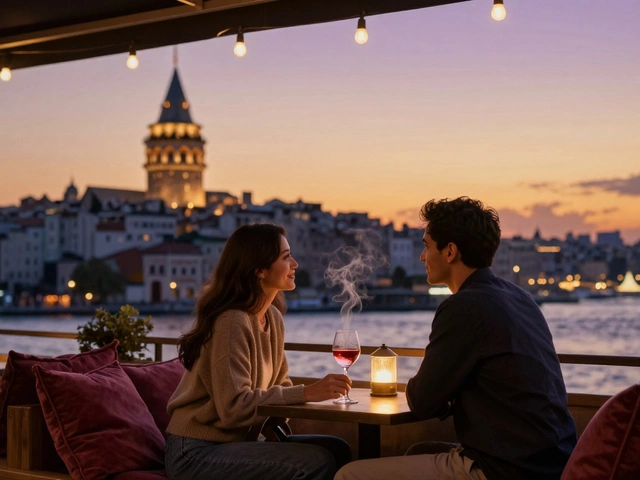
- Spring (April-June): The Bosphorus is calm. Open-air terraces like Çırağan Bar (inside the Çırağan Palace) come alive. Perfect for sunset raki with grilled mackerel.
- Summer (July-August): Heat is intense. Head to the Princes’ Islands. On Büyükada, Bar Kafe sits under century-old chestnut trees. No cars. Just bicycles, sea breeze, and homemade lemonade with mint.
- Autumn (September-November): The best time. The city cools. The historic bars reopen after summer breaks. Leb-i Derya hosts Şarkı Sohbetleri-evenings of old Turkish songs with live ney flute.
- Winter (December-February): Cozy is king. Find a bar with a fireplace. Bar 1920 burns olive wood. The scent fills the room. You’ll want to stay all night.
Don’t miss the Istanbul Cocktail Week in October. It’s not a festival for tourists. It’s a celebration by local mixologists who spend months researching forgotten recipes from Ottoman cookbooks. You’ll taste drinks no one’s made in 100 years.

What to Order: Drinks That Tell Stories
Forget vodka shots. In Istanbul’s historic bars, the drink is the story.
- Raki: The national drink. Always served with water and ice. Watch how the liquid turns milky white-that’s called aslan sütü, lion’s milk. Drink it slowly. With mezes. With friends.
- Şıra: Fermented grape juice, non-alcoholic but rich. Served in winter. Made in the Black Sea region. Found only in old taverns.
- Yenice: The signature of Bar 1920. A modern twist on a 1910s recipe. Figs, thyme, rosewater. Sweet, herbal, haunting.
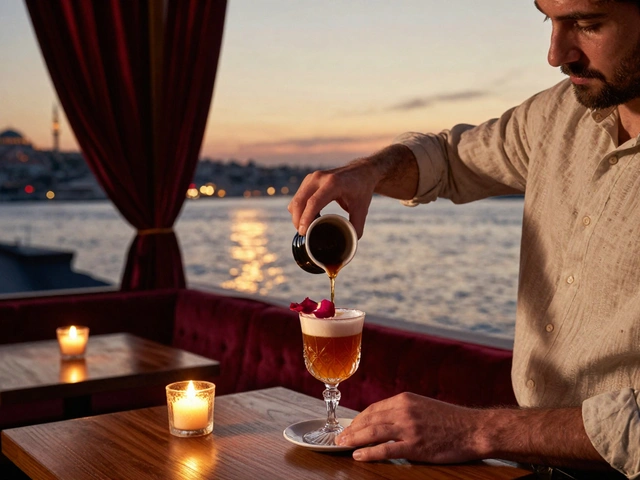
- İstanbul Sour: Leb-i Derya’s creation. Gin, mastic, honey, lemon. Served with a single dried fig on the rim.
- Kahve Koyu: A coffee-based cocktail from the 1950s. Espresso, brandy, cardamom, and a splash of cream. Sipped after dinner. Like a warm hug.
Pro tip: Never say “I’ll have a beer.” In these places, beer is an afterthought. Order something that has a name. Something that carries weight.
Why This Matters Now
Istanbul is changing fast. New luxury hotels open every month. Chains like Starbucks and Caffè Nero spread like ivy. But these historic bars? They’re resistance. Quiet, stubborn, beautiful resistance.
They remind you that culture isn’t just in museums. It’s in the way a bartender remembers your name. In the smell of old wood. In the silence between songs. In the fact that someone still cares enough to polish a copper shaker for 80 years.
When you leave one of these bars, you don’t just leave a drink behind. You leave a piece of Istanbul’s soul-and take a little of it with you.
Are these historic bars expensive?
Some are, but not all. Places like Bar 1920 and Leb-i Derya charge 120-180 TL for a cocktail, which is high by local standards-but you’re paying for history, not just alcohol. For something more affordable, try Çiçek Pasajı’s smaller bars, where a raki with mezes costs 60-80 TL. The real value isn’t in the price-it’s in the story you take home.
Can foreigners visit these bars without knowing Turkish?
Absolutely. Most bartenders in historic bars speak at least basic English, especially in Beyoğlu and Karaköy. But you don’t need to speak to enjoy them. The atmosphere speaks louder. Point to a drink on the old menu. Nod when they bring it. Smile. That’s enough.
What’s the best time to visit these bars to avoid crowds?
Weeknights between 7 and 9 p.m. are ideal. Locals arrive later, after dinner. Tourists flood in after 10. If you want quiet, authentic conversation, come early. You’ll hear stories you won’t find in any guidebook.
Are these bars family-friendly?
Some are. Çiçek Pasajı has family-friendly hours until 8 p.m., and many locals bring their children to sip şıra or lemonade. But places like Perili Köşk or Bar 1920 are adult-only after 9 p.m. Always check ahead. The best historic bars respect tradition-and that includes knowing when to keep things quiet.
Is there a dress code?
No strict rules, but smart casual works best. No flip-flops or tank tops. These bars are proud of their heritage. A nice shirt, clean shoes, and a jacket for evening will make you feel at home-and blend in. Locals dress with care. You should too.
Next time you’re walking through the narrow alleys of Cihangir or the echoing halls of Galata, pause. Look up. There’s a door you might have missed. Behind it? A century of stories. A glass of raki. And a bar that remembers.

10 Comments
Just went to Leb-i Derya last month. That Istanbul Sour changed my life. No cap.
Actually, the term 'meşrubat evleri' is a 20th-century retroactive label-historically, they were called 'meyhane' or 'alkol evleri.' The article misrepresents linguistic nuance. Also, 'Yenice' isn't a 1910s recipe; it was created in 2015 by Bar 1920's owner, who openly admits this in his podcast. Please fact-check before romanticizing.
What struck me most isn't the cocktails or the architecture-it's how these spaces hold space for silence. In a world rushing to fill every second with content, these bars let you just... be. No music, no screens, no pressure. That’s rare. And beautiful.
Oh my god, the sensory overload of Perili Köşk is *chef’s kiss*-the hand-carved ice, the silver trays, the way the Bosphorus glows like liquid opal at dusk. I swear, the bartender whispered a poem to me while pouring the raki. This isn’t a bar-it’s a curated emotional experience, darling. And yes, I cried. Twice.
The author romanticizes decay. These 'historic' bars are gentrified nostalgia traps. The 'original marble counters' at Leb-i Derya were replaced in 2010. The 'vintage film posters' are reproductions. The '1918 blueprints' were sourced from a flea market. This isn't preservation-it's performative heritage for tourists with disposable income. And the 'priceless history'? It's priced at 180 TL a cocktail.
It's deeply irresponsible to encourage people to visit places where alcohol is consumed in a culture that officially prohibits it for many. This article glorifies indulgence while ignoring the moral weight of drinking in a predominantly Muslim city. You're not 'experiencing history'-you're disrespecting it.
There is a fundamental chronological inconsistency in the article: the Ottoman Empire dissolved in 1922, yet the text references 'Soviet-influenced' culture in Istanbul during the 19th century. The Soviet Union was not established until 1922, and even then, its influence on Istanbul's bar culture was negligible-primarily limited to a few exiled Bolsheviks in Pera, none of whom opened establishments. Additionally, the phrase 'liquid gold' is a clichéd metaphor, overused since the 1980s travel writing boom, and diminishes the article’s credibility. Furthermore, the use of 'oud' in the context of pipe smoke is chemically inaccurate-oud is a resin, not a smoke component. These are not minor errors; they are systemic failures of research.
For those interested in authentic Şıra, try the family-run cellar under the old market in Rize. The recipe hasn’t changed since 1947. No tourism, no branding-just fermented grapes and patience. Most Istanbul bars serve a diluted version. True Şıra has a slight effervescence and a hint of wild yeast. It’s not for everyone, but if you’re curious, ask for the 'koyu' version.
okay but did you know that the guy who runs bar 1920 used to be a janitor at the topkapi palace? he found the old cocktail recipes in a dusty drawer and just started making them. no fancy degrees, no marketing team. just love. and that’s why it feels real.
There’s something sacred about a place that remembers. Not just the drinks, not just the furniture-but the quiet moments between people. The way the light hits the wood at 5 p.m. in winter. The way the bartender doesn’t rush you when you’re lost in thought. These aren’t bars. They’re time capsules with ice cubes. And honestly? We need more of them. Not just in Istanbul. Everywhere.