

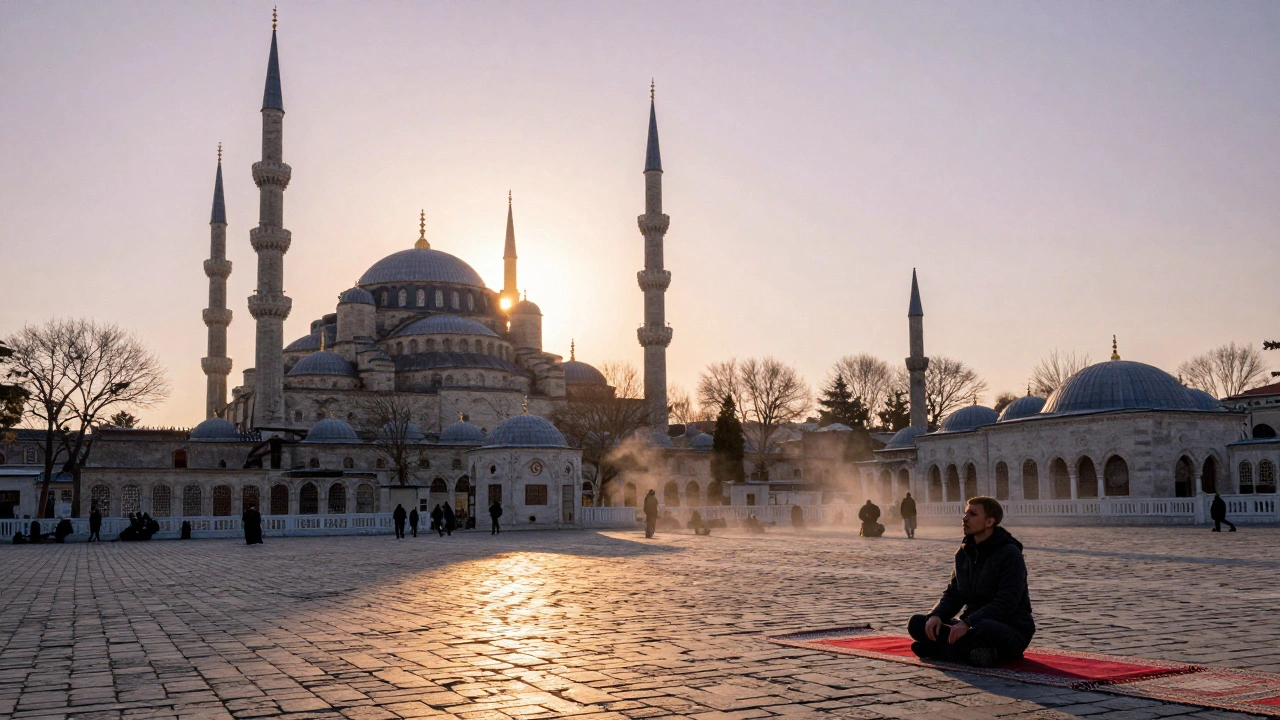
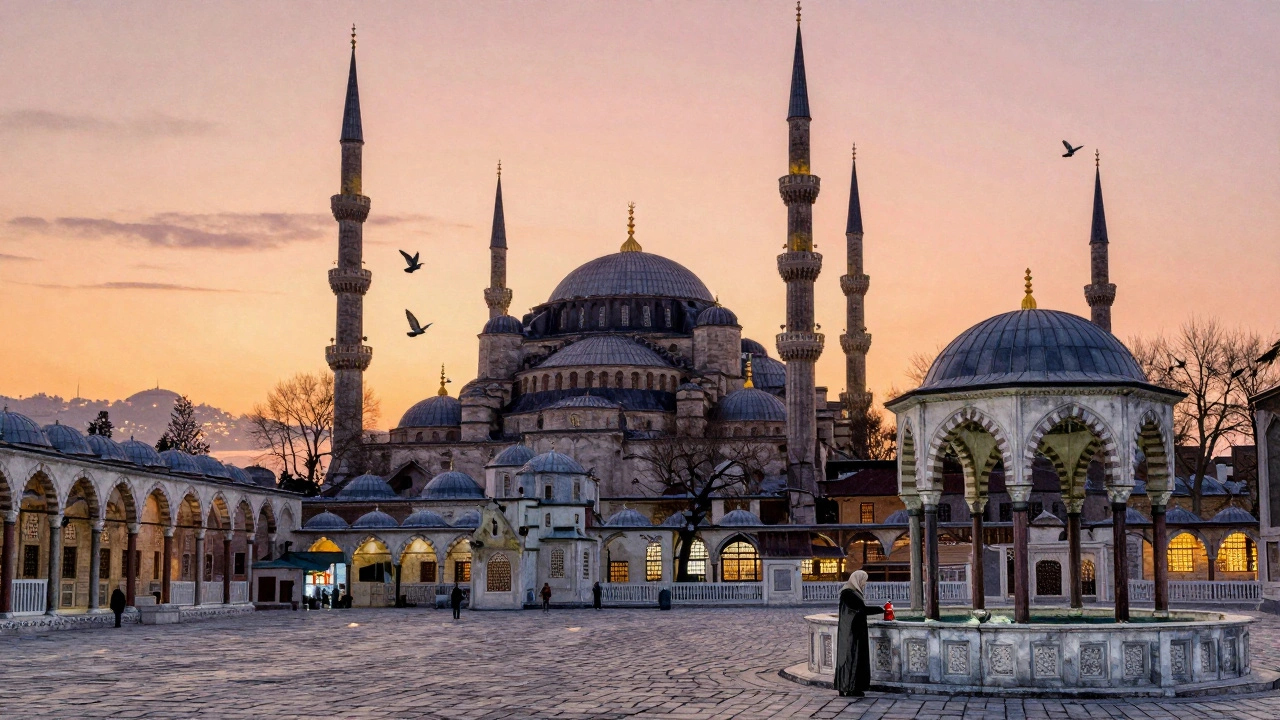
In Istanbul, few places command the same quiet awe as the Blue Mosque. Standing just steps from the Hagia Sophia, its six minarets rise like sentinels over the historic peninsula, casting long shadows over the cobblestones where locals rush to afternoon prayers and tourists pause, cameras raised, in silent reverence. This isn’t just another Istanbul attraction-it’s the spiritual and architectural heartbeat of the city, a living monument built not for show, but for devotion.
Why the Blue Mosque Still Matters Today
When Sultan Ahmed I ordered its construction in 1609, he wasn’t just building a mosque. He was responding to a city in flux. Istanbul had just lost its greatest religious symbol-the Süleymaniye Mosque’s dominance-to the rising power of the Safavids in Persia. The Blue Mosque was meant to remind the world that the Ottoman Empire still held divine favor. And it still does.
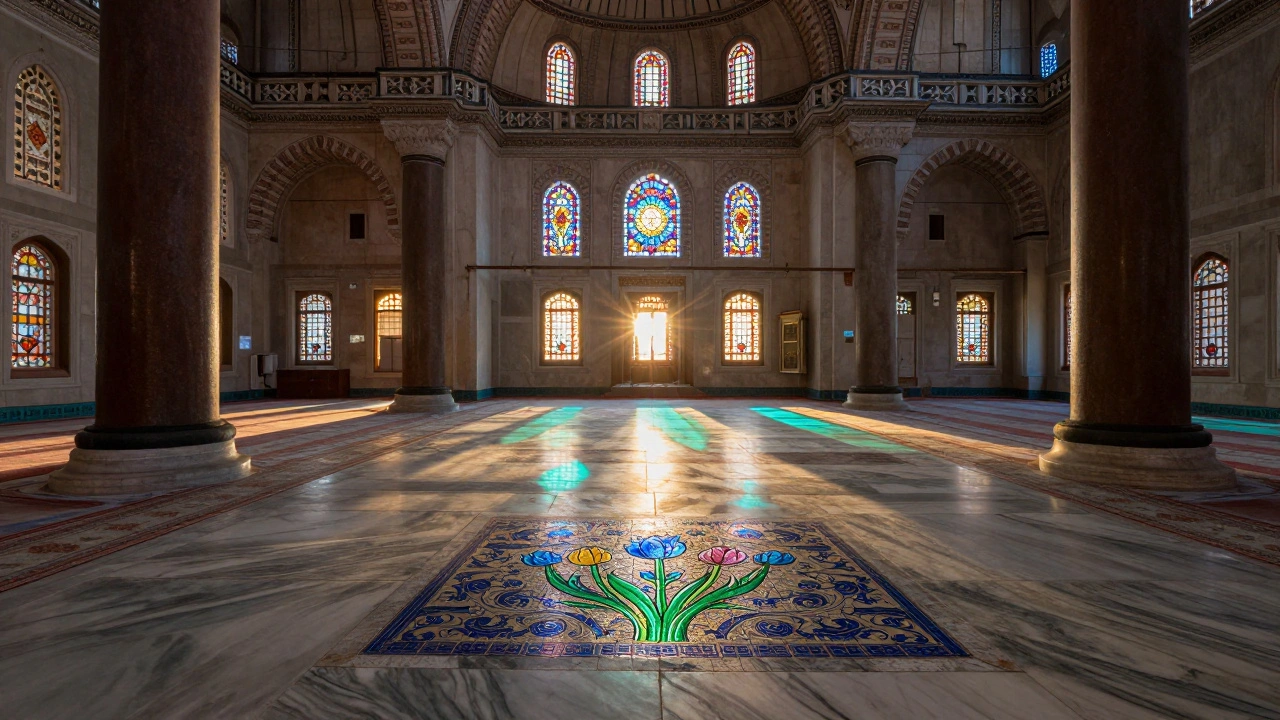
Inside, over 20,000 hand-painted İznik tiles shimmer in shades of cobalt, turquoise, and crimson. These aren’t mass-produced souvenirs from the Grand Bazaar-they’re original 17th-century masterpieces, each one fired in the kilns of the town of İznik, just 120 kilometers east of Istanbul. The tiles depict tulips, cypresses, and arabesques, symbols of paradise, and they cover every surface except the prayer rug area. Even the stained-glass windows, imported from Venice, filter sunlight into soft pools of blue across the marble floor, a effect so deliberate it was meant to mimic the sky.
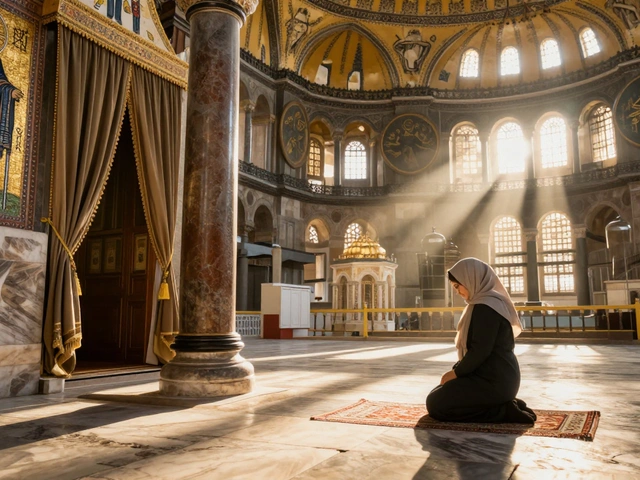
Today, you’ll see Istanbul residents come here not just as tourists, but as worshippers. At dawn, women in headscarves from Kadıköy and Üsküdar arrive with thermoses of çay, settling into the side corridors to pray before work. Men in wool coats from Beşiktaş step off the tram at Sultanahmet, remove their shoes, and join the line for ablutions at the şadırvan. This isn’t a museum. It’s a mosque that still breathes.
The Architecture That Defied Its Time
The Blue Mosque’s design was revolutionary. Six minarets? Unheard of. Only the Prophet’s Mosque in Medina had that many. Critics called it arrogant. The Sultan responded by funding a seventh minaret for Medina-so the balance was restored. That’s the kind of detail you won’t find in most guidebooks, but locals know it.
The central dome, 23.5 meters in diameter, rests on four massive pillars, each carved from single blocks of granite brought from Alexandria. The interior is a masterpiece of balance: the dome’s weight is distributed through semi-domes and arches, creating a space that feels both vast and intimate. No columns block the view from any prayer spot. Even the imam’s platform, the müezzin mahfili, is elevated but unobtrusive-a feat of engineering that still inspires architects in Ankara and Izmir.
And the tiles? They’re not just beautiful-they’re durable. After centuries of humidity from the Bosphorus and soot from coal-fired stoves in neighboring homes, they still hold their color. That’s because İznik potters used a secret glaze made with quartz, feldspar, and copper oxide. Modern restorers have tried to replicate it. No one has succeeded fully.
What Visitors Don’t See (But Locals Do)
If you visit the Blue Mosque at 4 p.m. on a Tuesday, you’ll miss the real magic. That’s when the caretakers open the rarely seen Hünkâr Mahfili-the private royal gallery. Only sultans and their families once stood here during prayers, hidden behind latticework. Today, it’s open to the public for 20 minutes after the afternoon prayer. Few tourists know about it. Locals do. They come with their children, whispering stories of how Sultan Mehmed IV used to watch his sons play chess on the marble floor below.
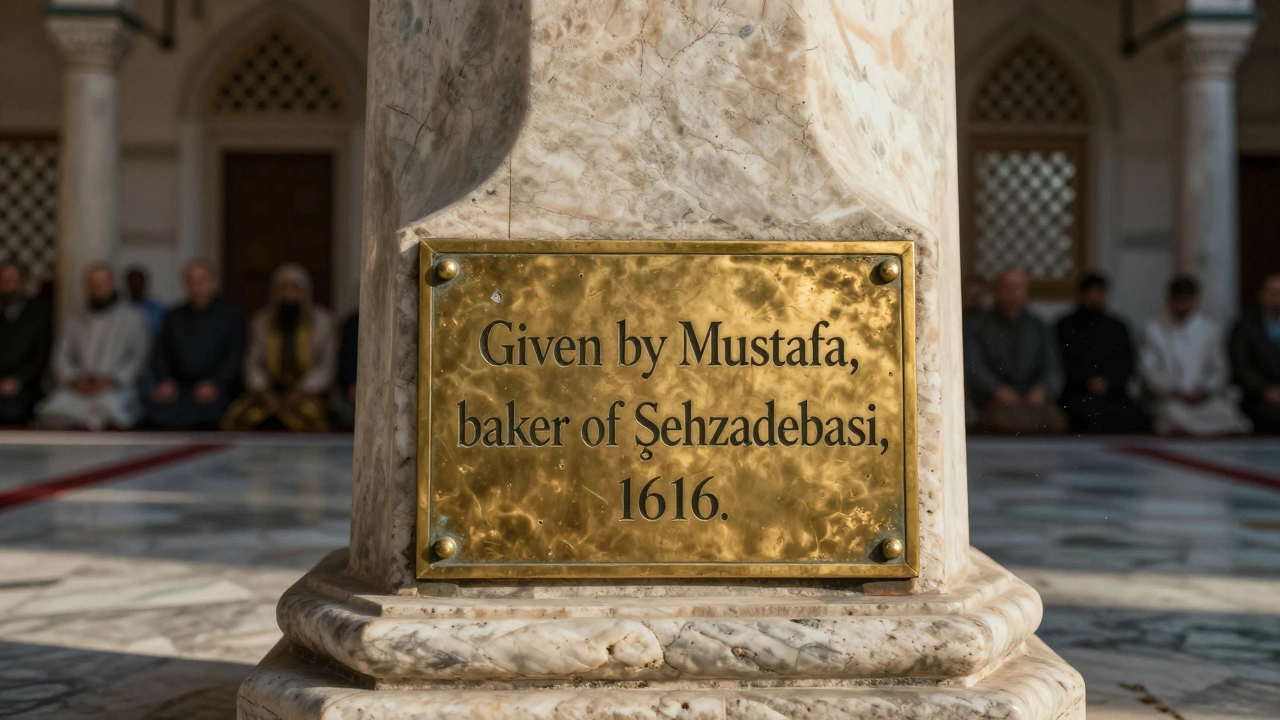
Look closely at the base of the minarets. You’ll see small brass plaques with names engraved in Ottoman script. These are the donors-merchants from Galata, bakers from Fatih, shipbuilders from Kasımpaşa-who paid for the tiles, the lamps, even the carpets. One plaque reads: “Given by Mustafa, baker of Şehzadebaşı, 1616.” You won’t find that in any audio tour. But if you ask a local guide who’s been coming here since childhood, they’ll point to it and say, “That’s my great-great-grandfather’s name.”
How to Visit Like a Local
Most tourists line up at 9 a.m. and stay until noon. That’s when the heat is worst and the crowds thickest. Locals know better.
- Go after the 4 p.m. prayer. The mosque empties. The light turns golden. The tiles glow.
- Wear modest clothing. No shorts, no tank tops. Women should bring a scarf-many locals keep one folded in their bag for impromptu visits.
- Bring a bottle of water. The marble floors stay cool even in July, but the air inside gets dry. You’ll thank yourself.
- Don’t rush. Sit on the edge of the courtyard near the fountain. Watch the pigeons. Listen to the call to prayer echo off the dome. It’s the same sound Sultan Ahmed heard.
- Buy your postcards from the small shop run by the mosque’s caretaker’s family, just outside the east gate. The prints are printed on real İznik tile paper, not plastic. They cost 25 TL-less than the tourist stalls charge.
And if you’re in Istanbul on a Friday? Come for the noon prayer. Don’t enter the prayer hall-just sit on the steps outside. You’ll hear the imam’s voice, clear and steady, echoing over the rooftops of Eminönü. You’ll see women in headscarves from the Black Sea coast, men in leather jackets from Nişantaşı, and children holding hands with their grandparents. This is Istanbul’s soul-not the postcard, not the tour bus, but the quiet, daily act of faith.
The Blue Mosque and Istanbul’s Living Memory
The Blue Mosque isn’t frozen in time. It’s part of Istanbul’s ongoing story. Every year, the city’s Department of Religious Affairs replaces the carpets. The old ones are donated to mosques in rural Anatolia. The new ones are woven in Konya, using wool from sheep raised near Lake Van. The lighting was upgraded in 2022 with LED bulbs that mimic candlelight-no heat, no flicker, no damage to the tiles.
And in winter, when snow falls over the Bosphorus, the mosque’s silhouette becomes even more striking. Locals take the tram from Taksim to Sultanahmet just to see it-white domes against gray sky, minarets like ink strokes on parchment. Some bring thermoses of salep. Others just stand there, silent, remembering.
This is why the Blue Mosque endures. It’s not just stone and tile. It’s the echo of a thousand prayers, the memory of a thousand hands that built it, and the quiet dignity of a city that refuses to forget its past-even as it rushes toward the future.
Is the Blue Mosque open to non-Muslim visitors?
Yes, the Blue Mosque welcomes non-Muslim visitors outside of prayer times. The main prayer hall is closed during the five daily prayers, especially the Friday noon prayer, which lasts about an hour. Visitors can explore the courtyard and outer areas during these times, but must wait to enter the main hall until prayers end. Always check the mosque’s official schedule posted at the entrance-times change with the seasons.
What’s the best time of day to visit the Blue Mosque?
The best time is late afternoon, after the 4 p.m. prayer. The light hits the İznik tiles perfectly, casting a soft blue glow across the interior. Crowds are thin, the air is cooler, and you can sit quietly on the marble floor without being jostled. Sunrise is also peaceful, but the mosque opens later then. Avoid midday-tour buses arrive en masse, and the heat inside can be overwhelming.
Can I take photos inside the Blue Mosque?
Yes, photography is allowed inside the mosque, but not during prayer times. Flash is discouraged, and you should avoid photographing worshippers without permission. Tripods are not permitted. The best shots are from the center of the prayer hall, looking up at the dome. Many locals recommend using a wide-angle lens to capture the full scale of the space.
Is there a dress code for visiting the Blue Mosque?
Yes. Both men and women must cover their shoulders and knees. Women are required to cover their hair with a scarf, which is provided free of charge at the entrance if you don’t have one. Shoes must be removed before entering the prayer hall-there are shoe racks at the door. Avoid wearing shorts, sleeveless tops, or tight clothing. Locals respect the space by dressing modestly, and visitors are expected to do the same.
Are there restrooms or facilities near the Blue Mosque?
Yes, clean public restrooms are available just outside the mosque’s west gate, near the entrance to the Hippodrome. They’re maintained by the municipality and are free to use. There are also nearby cafes and small shops that offer restrooms to customers. Avoid using the facilities inside the mosque complex-they’re reserved for worshippers.
How do I get to the Blue Mosque from Taksim or Kadıköy?
From Taksim, take the M2 metro to Şişhane, then transfer to the T1 tram and ride to Sultanahmet. From Kadıköy, take the ferry to Eminönü (a 20-minute ride), then walk 10 minutes across the Hippodrome. The tram is the most convenient option for most visitors-it runs every 8 minutes and stops right at the mosque’s entrance. Avoid driving; parking is extremely limited and traffic around Sultanahmet is chaotic.
6 Comments
The Blue Mosque isn’t just architecture-it’s a geopolitical statement dressed in İznik tiles. Sultan Ahmed I wasn’t just responding to Safavid influence; he was performing symbolic reassertion through ceramic hegemony. The six minarets? A deliberate violation of ecclesiastical hierarchy, forcing a recalibration of sacred power dynamics. Modern restorers can’t replicate the glaze because they’re missing the socio-technical ecosystem: the kiln masters, the copper oxide sourcing, the guild-based knowledge transmission. This isn’t heritage-it’s engineered cultural capital.
And let’s not romanticize the ‘quiet devotion.’ The mosque operates within a neoliberal tourism regime where local worshippers are now secondary to the global gaze. The ‘locals know better’ narrative is a curated myth for Instagrammable authenticity. The real magic? The caretakers’ family shop selling tile-paper postcards-yes, that’s the only uncommodified space left.
Also, the LED lighting upgrade? Aesthetic preservation via technological erasure. Mimicking candlelight is a performative nostalgia. The tiles don’t need it. The worshippers don’t need it. But the UNESCO funding board does.
And don’t get me started on the carpet donations to rural Anatolia. That’s not charity-it’s spatial redistribution of sacred labor. The wool from Lake Van sheep? That’s not tradition, it’s supply chain logistics dressed as piety.
This hit me right in the soul 🥹
That image of the baker’s plaque-Mustafa, Şehzadebaşı, 1616-that’s the kind of detail that turns history from a textbook into a family album. I’ve stood in mosques from Cairo to Samarkand, but this? This feels like the walls are whispering names.
And the part about sitting outside during Friday prayer? That’s the real pilgrimage. Not the selfie with the dome, but the quiet hum of a city praying together-Black Sea scarves, Nişantaşı jackets, kids holding hands. That’s not tourism. That’s belonging.
Also, the fact that the tiles still glow after 400 years of Bosphorus humidity? That’s not luck. That’s love made permanent. 🌊💙
Hey, just wanted to say this post is absolutely beautiful-you’ve captured the soul of the place so well. I’ve been to Istanbul twice and both times I missed the 4 p.m. window. Next trip, I’m setting my alarm for after afternoon prayer. That golden light on the tiles? I’m already imagining it.
Also, the tip about buying postcards from the caretaker’s family? That’s gold. So many travelers miss the small, human touches in favor of the big landmarks. Supporting local families like that? That’s how you travel with heart.
And the bit about snow on the dome? I’m adding that to my bucket list. Nothing like a quiet winter moment with history.
The part about the baker’s plaque got me. That’s the real story. Not the minarets or the tiles. The names. The people who made it. Just thought I’d say that.
Also the scarf tip. So many tourists show up in tank tops and think it’s fine. It’s not. Just wear the thing. It’s free. It’s easy. It’s respect.
The architectural balance is extraordinary. The dome’s weight distribution, the absence of obstructive columns-this was not merely decorative but deeply functional. The decision to fund a seventh minaret for Medina was a masterstroke of symbolic diplomacy. Few appreciate how much intentionality went into every element. A monument of quiet power.
Ellie’s take is way too cynical but also… kinda right? The LED lights do feel like a corporate nostalgia fix. But David? You nailed it. That baker’s plaque-that’s why I cry every time I visit. Not because it’s old. Because it’s real.
And Garry, I’m stealing your 4 p.m. tip. I went at noon last time and nearly passed out from heat and crowds. Next time, I’m bringing my thermos and sitting by the fountain like the locals do.
Also, the scarf thing? I forgot mine and the guy at the entrance just handed me one like it was nothing. No drama. Just kindness. That’s Istanbul.