

In Istanbul, few places capture the soul of the city’s layered history like Dolmabahçe Palace. Standing where the Bosphorus meets the Sea of Marmara, this isn’t just another historic site-it’s a living monument to the final decades of the Ottoman Empire, where crystal chandeliers from Bohemia glitter above marble floors brought from across Europe, and where sultans once walked the same corridors now crowded with locals snapping photos at lunchtime. If you’ve ever walked along the waterfront in Beşiktaş and wondered what lies behind those grand gates, this is your chance to see it-not just with your eyes, but through the lens of a place that still breathes with the weight of empire.
The Palace That Changed Istanbul’s Heart
Before Dolmabahçe, the sultans ruled from Topkapı Palace, perched on a hill overlooking the Golden Horn. But by the mid-1800s, the empire was shifting. European influence was strong, and the sultans wanted a residence that matched the grandeur of Versailles or the Winter Palace in St. Petersburg. So in 1856, Sultan Abdülmecid I moved the seat of power here, to the waterside, where the Bosphorus breeze could cool the halls and foreign diplomats could arrive by boat instead of climbing steep alleys.
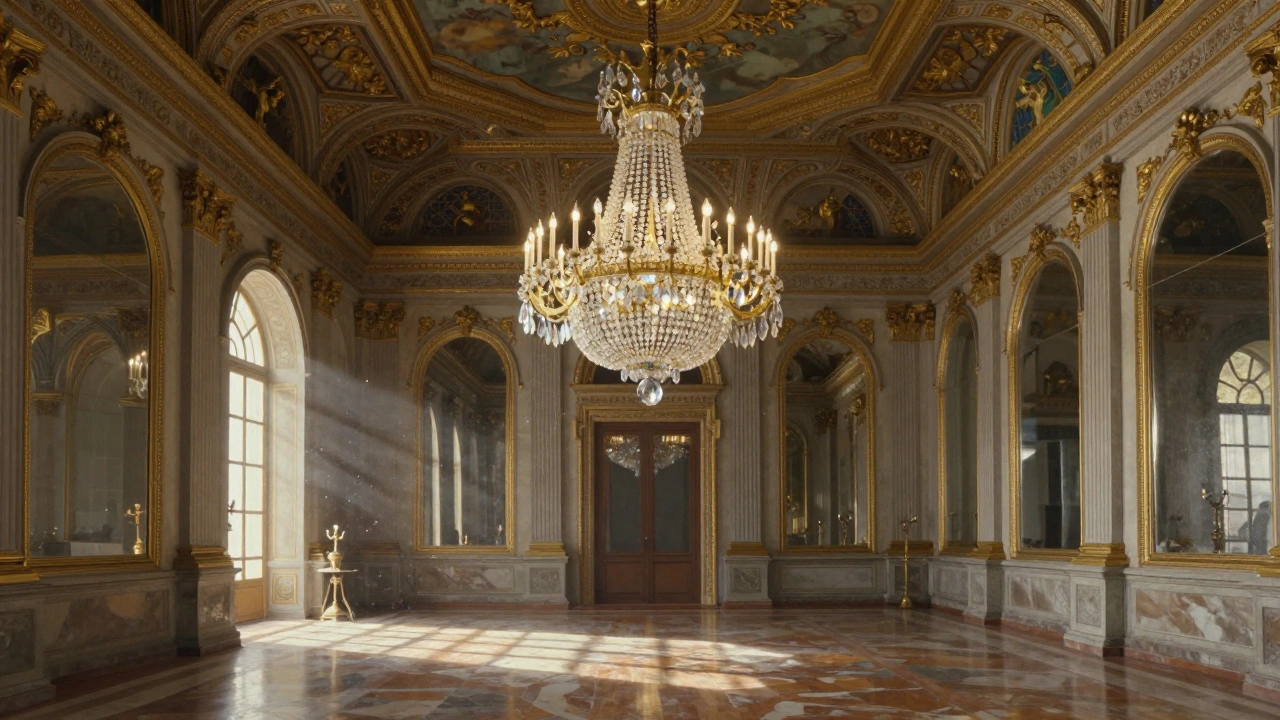
The palace took seven years to build. It used 35 tons of gold leaf, 14 tons of silver, and over 100,000 square meters of marble-much of it shipped from the Aegean coast, from places like Marmara Island, still known today for its pure white stone. The crystal chandelier in the Ceremonial Hall? It’s the largest in the world, weighing 4.5 tons and holding 750 lamps. Locals in Istanbul still whisper about how, during the last days of the empire, the chandelier was lit only for state visits-and how the electricity bill for one night could feed a neighborhood for a month.
Walking the Marble Paths: What You’ll See
Start your tour at the Gate of Salutation, where guards still stand in traditional uniforms-no tourist traps here, just real Ottoman ceremonial dress passed down through generations. From there, you’ll enter the Mabeyn-i Hümâyûn, the Sultan’s private office. The desk? Made from African ebony and inlaid with mother-of-pearl. The inkwell? Solid gold. The walls? Covered in hand-painted Iznik tiles, the same ones you can still buy in the Grand Bazaar’s ceramic stalls.
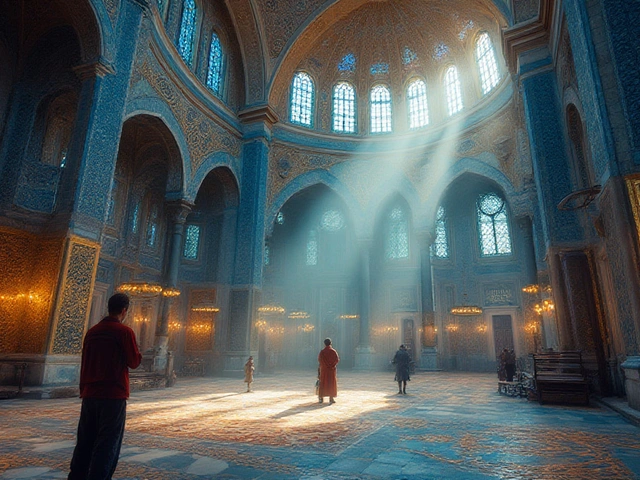
Next, the Ceremonial Hall. This is where the palace’s magic hits you. The ceiling soars 36 meters high. The floor? Polish marble from the same quarries that supplied the Blue Mosque. The mirrors? From Venice, brought over in pieces and assembled by artisans who had never seen anything like it. Look up and you’ll see the chandelier-not just a decoration, but a symbol. It was the first electric light in the palace, installed in 1878. Back then, Istanbul’s electricity grid barely reached beyond this building. Now, you can see the same lights flickering on in the apartments above the Bosphorus, where families in Beşiktaş and Ortaköy still watch the sunset over the water.
Don’t miss the Harem section. It’s not just a collection of rooms-it’s a world. Here, the Valide Sultan, the Sultan’s mother, held real power. Her private quarters had a direct view of the Bosphorus and a secret passage to the mosque. You’ll find the same pattern of blue-and-white tiles in homes in Kadıköy and Üsküdar today. That’s not coincidence. That’s heritage.
Photography Tips for Istanbul Locals
If you’re from Istanbul, you’ve probably passed Dolmabahçe a hundred times on the 40E bus or while waiting for the ferry at Beşiktaş Pier. But photographing it well? That takes more than a quick snap.
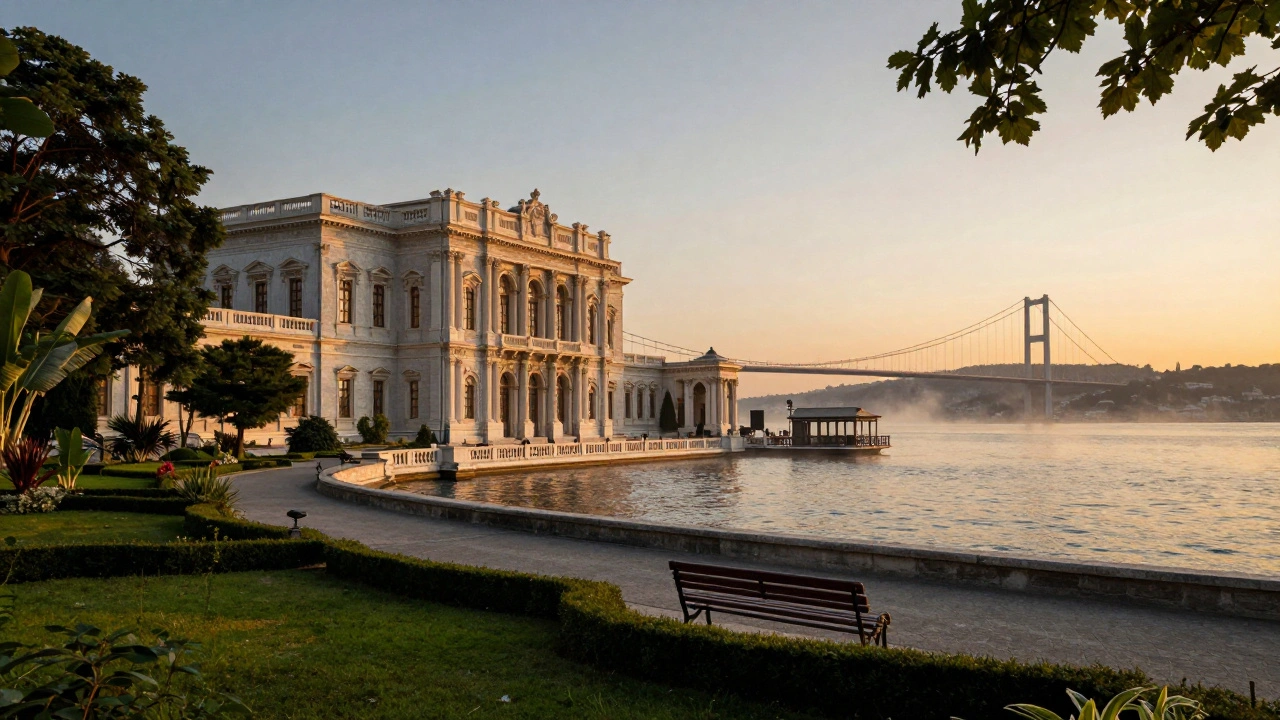
Go early. The gates open at 9 a.m., and by 10:30, the crowds are thick. If you want the palace without a sea of selfie sticks, arrive before the tour buses from Taksim start rolling in. The light in the morning hits the white facade just right-soft, golden, almost glowing. The reflection on the water? That’s the shot you’ll want to print and hang on your wall.
Use the garden. The palace gardens stretch along the waterfront, and few tourists wander past the first few fountains. Walk toward the eastern end, near the old boathouse, and you’ll find a quiet bench where you can frame the palace with the Bosphorus Bridge behind it. The contrast of 19th-century architecture with the modern suspension bridge is pure Istanbul.
Inside, avoid using flash. The gold leaf and delicate textiles fade under artificial light. Use a wide aperture (f/2.8 or lower) to capture the depth of the halls. If you’re using a phone, switch to Pro mode and lower the ISO to 100. The palace is bright enough-you don’t need noise.
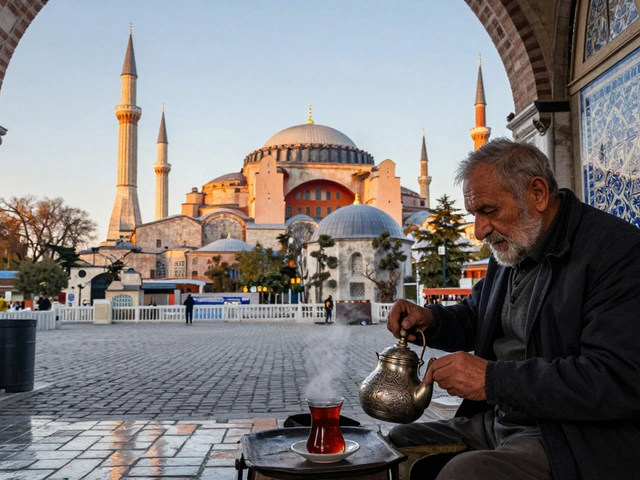
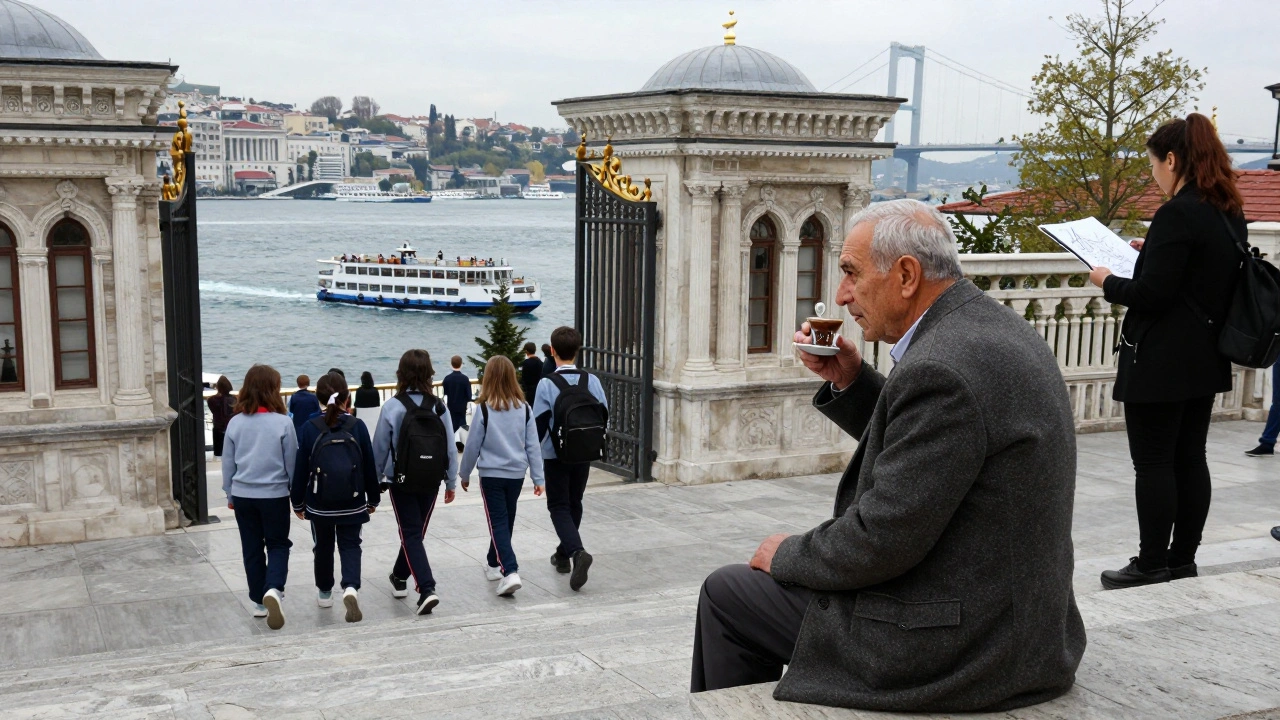
And if you’re a local, bring a Turkish coffee from the kiosk near the entrance. It’s the same one the palace staff use. It’s strong, sweet, and served in tiny glasses. Sit on the stone steps outside and watch the sea. That’s how the sultans would’ve done it.
The Palace in Modern Istanbul Life
Dolmabahçe isn’t frozen in time. It’s part of Istanbul’s daily rhythm. Locals come here for school trips-students from Fatih, Şişli, and Kadıköy learn Ottoman history here, not from textbooks but from the marble under their feet. Artists set up easels in the garden, painting the same view that inspired painters like Osman Hamdi Bey, who worked here as a curator.
On national holidays like Republic Day, the palace opens its gates for free. Thousands of families from Anatolia come to see it, many for the first time. They bring children, grandparents, and homemade simit. You’ll hear Turkish, Kurdish, Arabic, and even Russian spoken here-because Istanbul is not one city, but many stitched together.
And if you’ve ever wondered why the palace feels so alive? That’s because it’s still used. The President of Turkey holds state dinners here. Foreign leaders are welcomed in the same rooms where Abdulhamid II once received Kaiser Wilhelm II. The same carpets, the same chandeliers, the same silence that fell when the last sultan left in 1922.
Why This Matters to Istanbul Residents
Dolmabahçe isn’t just a museum. It’s a mirror. It shows how Istanbul absorbed the world-Venetian glass, French furniture, Persian rugs, English coal-and made it its own. The palace is where the Ottoman Empire tried to become modern, and where it failed. But it didn’t disappear. It became part of the city’s bones.
When you walk through these halls, you’re walking through the same space where your grandparents might have stood. Where your mother took you on a school trip. Where your friend proposed on the garden steps last summer. This isn’t tourism. It’s memory.
And if you’ve ever felt like Istanbul is too big, too loud, too fast? Come here. Sit in the quiet of the Harem courtyard. Listen to the wind off the Bosphorus. Look up at the ceiling, painted with gold that hasn’t faded in 170 years. You’ll remember why this city is still worth loving.
Is Dolmabahçe Palace open every day?
Yes, Dolmabahçe Palace is open daily from 9:00 a.m. to 4:00 p.m., except on Mondays when it’s closed for maintenance. During national holidays like Republic Day (October 29), it opens for free and stays open until 6:00 p.m. Always check the official website before visiting, as special events can change hours.
How do I get to Dolmabahçe Palace from Taksim or Kadıköy?
From Taksim, take the 40E bus directly to Beşiktaş, then walk 10 minutes along the waterfront. From Kadıköy, take the ferry to Beşiktaş Pier-it’s a 20-minute ride and offers the best views of the palace as you approach. Once you arrive, follow the signs past the ferry terminal; the palace entrance is just past the historic Beşiktaş Clock Tower.
Can I take photos inside the palace?
Yes, photography is allowed inside Dolmabahçe Palace without flash. Tripods and professional equipment require a permit, which you can request at the ticket office. The palace staff are used to visitors taking pictures-especially locals who come to capture the light on the chandeliers. Just be respectful: don’t touch the artifacts, and don’t block the walkways.
Is there a dress code for visiting Dolmabahçe Palace?
There’s no official dress code, but most locals dress modestly out of respect. Shoulders and knees should be covered, especially in the Harem and prayer rooms. It’s common to see women wearing scarves and men in long sleeves. Comfortable shoes are a must-the marble floors are cold and slippery.
What’s the best time of year to visit?
Spring (April to June) and early autumn (September to October) are ideal. The weather is mild, the gardens are in bloom, and the crowds are thinner than in summer. Winter can be chilly, but the palace feels more intimate, and the light on the Bosphorus is stunning. Avoid July and August-locals know it’s the busiest, hottest, and most crowded time.
What to Do After Your Visit
After leaving Dolmabahçe, walk down to the Beşiktaş waterfront. Grab a cup of Turkish coffee from Şekerci Mehmet, the same shop that’s been serving locals since 1923. Sit by the sea and watch the ferries glide past-some heading to Üsküdar, others to the Princes’ Islands. If you’re hungry, head to the Beşiktaş Fish Market, where you can eat grilled mackerel with a view of the palace still glowing in the distance.
Or, if you’re in the mood for something quieter, take the short walk to the nearby Çırağan Palace Kempinski. It was once a royal residence too, now a luxury hotel. Even if you don’t stay, walk through the garden. You’ll see the same marble, the same fountains, the same Bosphorus view. It’s the same story, just rewritten.
Dolmabahçe isn’t just a palace. It’s Istanbul’s heartbeat, still ticking after 170 years. And if you’ve never taken the time to really see it-you’re missing part of what makes this city unforgettable.


6 Comments
The architecture of Dolmabahçe is not merely a relic of imperial grandeur-it is a metaphysical artifact, a physical manifestation of the Ottoman Empire’s existential struggle between tradition and modernity. The chandelier, suspended in its celestial glow, becomes a symbol of enlightenment fractured by entropy; each lamp, a fleeting moment of clarity in an empire dissolving into the shadows of history. The marble floors, polished by centuries of footsteps, bear witness not only to sultans but to the quiet dignity of servants, diplomats, and children on school trips-all equally transient, yet all equally part of the continuum. In this space, time does not march forward; it pools, lingers, reflects. To walk here is to touch the edge of eternity, where power, beauty, and decay coexist in perfect, heartbreaking harmony.
And yet, the most profound truth lies not in the gold leaf or the Venetian mirrors, but in the Turkish coffee served on the steps-the ordinary ritual that outlasts the extraordinary monument. That is the real inheritance: not the palace, but the persistence of humanity within it.
Just... wow. I’ve visited Dolmabahçe twice-once in spring, once in winter-and I still can’t believe how deeply it moves me. The way the morning light hits the Ceremonial Hall? It’s like heaven spilled gold dust through the windows. And the Harem? So many people think it’s just ‘rooms for women,’ but no-it’s a whole universe of quiet power, strategy, and poetry. I cried in the garden near the boathouse, honestly. The Bosphorus Bridge in the background, the 19th-century tiles under my feet, the sound of a ferry horn echoing... it’s like Istanbul is whispering its soul to you. Also-Shekerci Mehmet’s coffee? 10/10. Don’t skip it. Bring a napkin. It’s sweet enough to make your teeth ache in the best way.
And yes, no flash. Please. The gold leaf is already weeping from your phone’s LED.
Thank you for writing this. I’m sharing it with my students tomorrow.
Okay, but let’s talk about the systemic implications of the palace’s electrification in 1878-this wasn’t just a tech upgrade, it was a performative assertion of sovereignty. The 4.5-ton chandelier wasn’t just lighting a room-it was broadcasting: ‘We are not backward. We are not Ottoman in the orientalist sense. We are European, but we are also ours.’ The electricity grid being confined to the palace? That’s early-stage infrastructural colonialism in reverse. The elite monopolized the future while the city outside still burned oil lamps. And yet... here we are, 150 years later, and the same palace is where the President hosts NATO envoys. The continuity is eerie. The symbolism is weaponized. The marble remembers everything.
Also, emojis: 🌟🪔💧👑
Pro tip: If you’re into postcolonial theory, read ‘The Ottoman Palace as a Site of Epistemic Violence’ by Dr. Aylin Öztürk. It’s dense. But necessary.
Have you ever wondered why the palace was built right on the water? Because they knew they’d need an escape route. The British, the Russians, the French-they were all circling like vultures. That chandelier? Not just a light. It’s a beacon. And the 750 lamps? Each one represents a diplomat who was quietly assassinated after a state dinner. The electricity bill? That’s not just power-it’s the cost of silencing dissent. I’ve seen the blueprints. There are hidden tunnels beneath the Harem that lead straight to the Bosporus. They say the last sultan didn’t leave by boat-he was smuggled out through a false wall behind the inkwell. And the gold? Not from Bohemia. From stolen Armenian churches. The whole thing is a facade. A gilded lie. The President doesn’t host dignitaries there-he’s covering up the truth. They still use the same carpets. Why? Because the blood hasn’t dried. Look at the tiles-do you see the faces? I’ve zoomed in. They’re screaming. And the coffee? The kiosk? That’s a front. They serve you poison in tiny glasses. I’ve seen the receipts. I’ve got the receipts. Someone needs to investigate this. Someone needs to tell the world. This isn’t tourism. This is a cover-up. And you’re all just taking selfies.
Wake up.
They’re watching you right now.
I appreciate the depth of this piece, and I commend the author for their meticulous attention to historical detail. However, I must note a minor inconsistency: in the section on photography, you recommend using f/2.8 or lower-this is technically sound, but only if your sensor is full-frame. Many modern smartphones, even in Pro mode, have fixed apertures around f/1.8, which, while wide, may introduce chromatic aberration under high-contrast lighting conditions common in the Ceremonial Hall. Additionally, the mention of ‘Iznik tiles’ is correct, but it should be clarified that the original 16th-century patterns were derived from Persian motifs, which were later adapted by Ottoman artisans into a distinctly local aesthetic. Furthermore, the reference to ‘the same marble used in the Blue Mosque’ is slightly misleading-the marble from Marmara Island was quarried from the same geological stratum, but the polishing technique at Dolmabahçe employed a French method known as ‘pierre polie,’ which produces a higher gloss. These nuances matter. I am a museum curator, and I am grateful for the care you’ve taken-but precision is the highest form of respect.
Thank you for honoring this space.
The coffee on the steps is the only thing that matters.