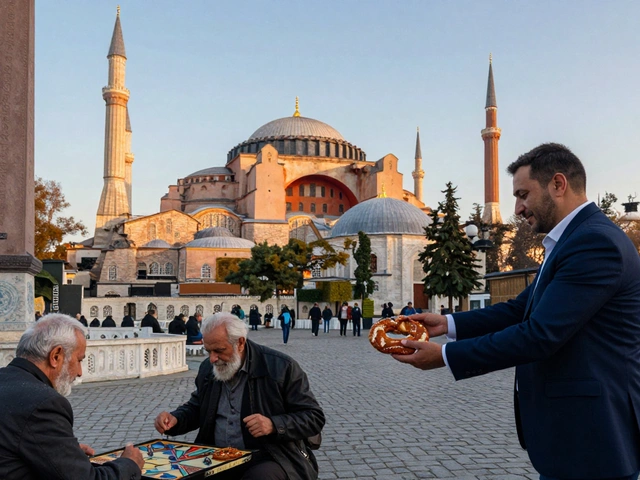
When you live in Istanbul, you know what it means to wake up to a skyline shaped by centuries-minarets piercing the sky, the Bosphorus shimmering under morning light, the call to prayer echoing over rooftops where locals sip çay and plan their next journey. But even in a city this rich in history, there’s something special about stepping beyond Turkey’s borders to stand where empires clashed, artists dreamed, and stone turned into legend. If you’ve ever wondered what European landmarks truly deserve a spot on your next trip, this isn’t just another list. It’s a guide written for those who already know the weight of history-because you’ve walked the cobblestones of Galata, stared at Hagia Sophia’s dome, and felt the pulse of a city that straddles two continents. Now, it’s time to see how the rest of Europe holds its own.
The Colosseum, Rome: Where Power Was Public
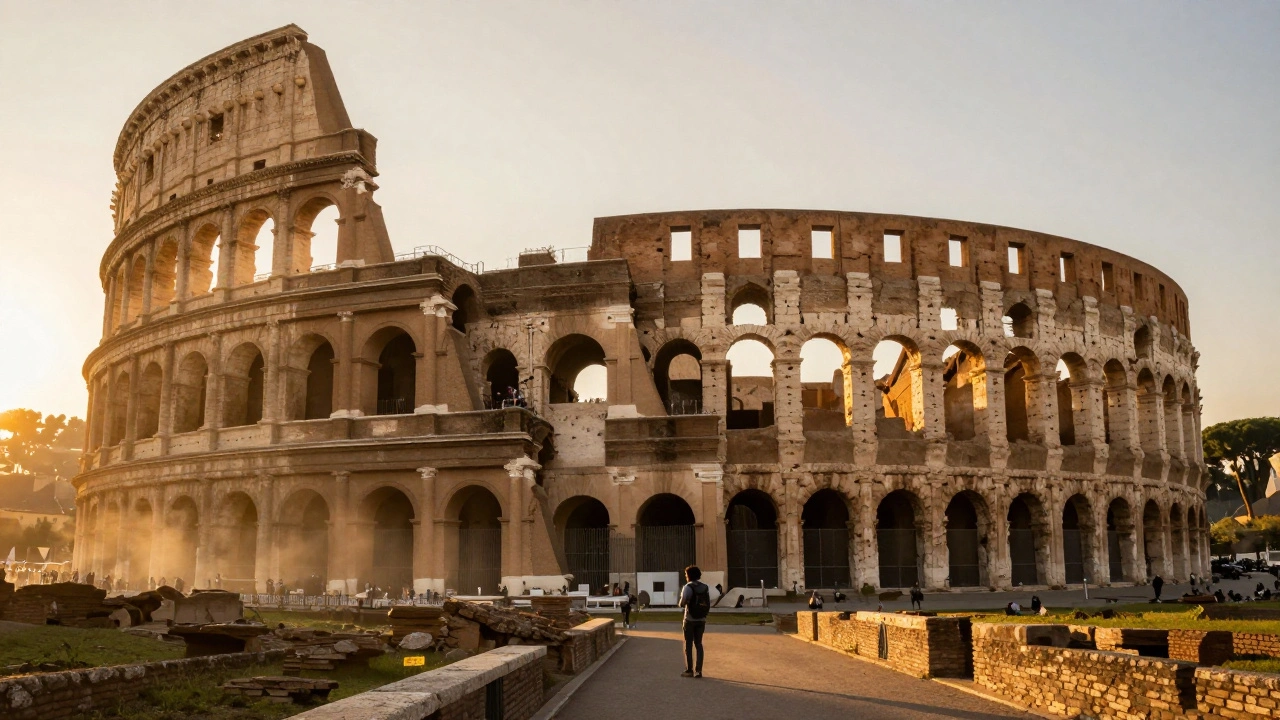
Think of the Colosseum not as a ruin, but as a stage. In Istanbul, you’ve seen the Grand Bazaar’s chaos, the Sultanahmet Square’s crowds, the echoes of gladiators in the Hippodrome. The Colosseum is that same energy, but scaled to imperial ambition. Built in 80 AD, it held 50,000 spectators watching bloody spectacles-just like the chariot races at the Hippodrome, but with a Roman twist. What sets it apart? The engineering. The underground tunnels, the pulley systems, the retractable awning (velarium) that shaded the crowd. You can still walk through the lower levels where gladiators waited. It’s not just history-it’s a lesson in how power was performed. Take the train from Istanbul’s Halkalı station to Rome (about 28 hours with a transfer in Sofia). Book tickets online ahead; lines at the door can stretch for hours. Skip the guided tour if you’re short on time-just wander alone at sunset, when the light hits the arches just right, and you’ll feel the same awe you get standing at the Galata Tower.
The Eiffel Tower, Paris: More Than a Symbol
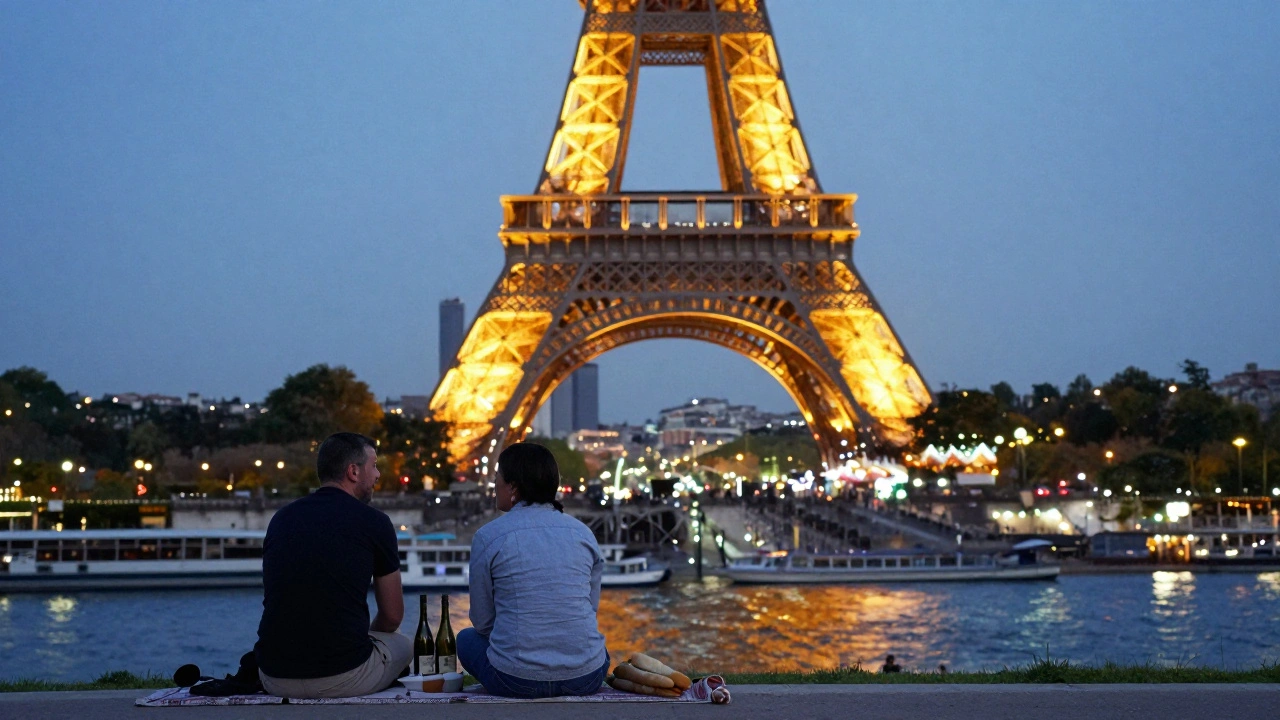
Everyone knows the Eiffel Tower. But if you’ve lived in Istanbul, you know symbols aren’t just pretty pictures-they’re part of daily life. The Bosphorus Bridge is your skyline anchor. The Eiffel Tower is Paris’s. But here’s what most tourists miss: the tower’s true magic isn’t at the top. It’s in the Champ de Mars at dusk, when the tower begins its hourly sparkle. Every evening, for five minutes after sunset, 20,000 golden lights blink on. Locals bring wine, cheese, and bread from a nearby boulangerie and sit on the grass like it’s a Friday night in Beşiktaş. If you’re coming from Istanbul, take the overnight train from Halkalı to Paris (via Vienna or Budapest). You’ll arrive tired but refreshed, ready to watch the lights. Avoid the elevator line by climbing the first two levels-200 steps to the second platform. The view of Paris from there, with the Seine curling like the Golden Horn, is quieter, more intimate. And if you want to eat like a Parisian, skip the tourist bistros. Head to Marché des Enfants Rouges-the oldest covered market in Paris. Grab a warm merguez sandwich and a glass of natural wine. It’s the kind of meal you’d find in Kadıköy’s fish market, just with a French accent.
The Acropolis, Athens: Stone That Speaks
If you’ve ever stood at the top of the Theodosian Walls in Istanbul, you’ve felt the weight of ancient stone. The Acropolis is that same feeling, but sharper. Perched above Athens, it’s not just a temple complex-it’s a declaration. The Parthenon, built in 447 BC, was a monument to Athena, the city’s protector. But it was also a political tool. Just like the Süleymaniye Mosque in Istanbul was built to show Ottoman power, the Parthenon was meant to say: ‘We are the center of the world.’ Walk the same path the ancient Athenians did. Notice how the columns lean slightly inward-engineered to look perfectly straight from below. Look at the sculpted friezes depicting the Panathenaic procession. You’ll see figures in motion, draped in stone, just like the carved reliefs in the Topkapı Palace. The best time to visit? Early morning, right after the gates open. The heat hasn’t hit yet, the crowds haven’t arrived, and the light turns the marble golden. Book a ticket online through the Hellenic Ministry of Culture site. Skip the guided tour if you’re pressed for time. Just sit on a bench near the Propylaea and watch the sun move across the city. It’s the same quiet ritual you do on the rooftop of your Kadıköy apartment-only this time, you’re watching the birthplace of democracy.
The Sagrada Família, Barcelona: Faith in Stone
In Istanbul, you’ve seen how architecture can be prayer. The Blue Mosque’s domes, the intricate tilework, the way light filters through stained glass-it’s all meant to lift the soul. The Sagrada Família is that same devotion, but twisted into a forest of stone. Antoni Gaudí spent 43 years on this church before he died in 1926. It’s still under construction today, with completion expected in 2026-the 100th anniversary of his death. The columns inside look like tree trunks branching into a canopy. The stained glass windows shift color from red to blue as the sun moves, casting light like dawn over the Bosphorus. The best way to experience it? Climb the Nativity Façade tower. The view of Barcelona’s rooftops, the Mediterranean in the distance, the endless scaffolding-it’s like looking at the construction of the new Istanbul Airport from the top of the Marmara Hotel. Buy tickets for the tower in advance. Avoid weekends. Go on a Tuesday afternoon. Bring a notebook. Gaudí didn’t use blueprints-he sculpted models in clay. You’ll understand why when you see how every stone feels alive.
The Alhambra, Granada: A Palace That Whispered
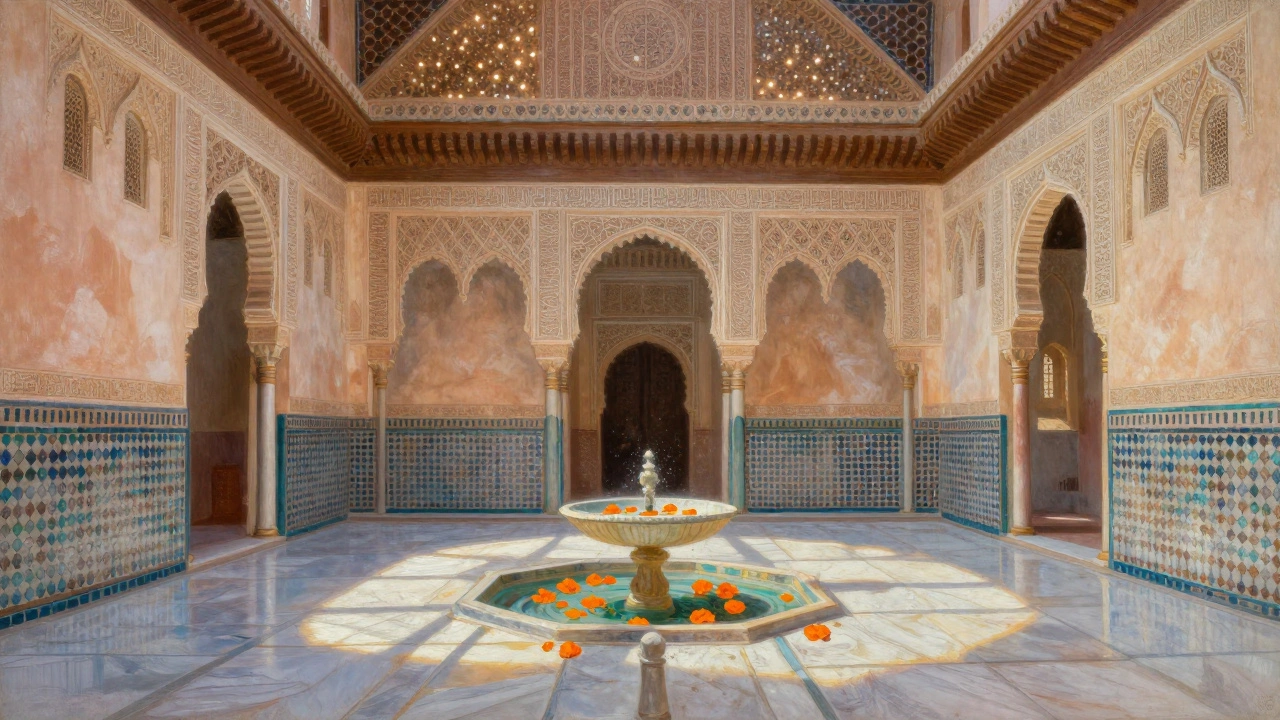
If you’ve ever wandered through the Topkapı Palace’s Harem or the private courtyards of the Dolmabahçe, you know the power of hidden spaces. The Alhambra is that same intimacy, but in a Moorish dream. Built by the Nasrid dynasty in the 13th century, it’s a palace-fortress where water flows through every corridor, where walls are carved with Arabic poetry, where the air smells of orange blossoms. The Court of the Lions, with its 12 marble lions supporting a fountain, is the heart of the complex. But the real magic? The Hall of the Two Sisters. Look up. The muqarnas ceiling looks like a honeycomb made of stars. It’s the same geometry you see in the tilework of the Rüstem Pasha Mosque. The trick? Visit in late afternoon. The light hits the walls just right, and the carvings glow like they’re lit from within. Book tickets months ahead-only 600 people per day are allowed into the Nasrid Palaces. If you can’t get in, walk the Generalife Gardens instead. The fountains, the rose bushes, the quiet paths-it’s the Andalusian version of the Emirgan Park in spring.
The Stonehenge, England: The Mystery That Still Stands
It’s not a palace. It’s not a mosque. It’s not even a building. Stonehenge is a circle of stones, some weighing 25 tons, placed 5,000 years ago with no wheels, no iron tools, no written records. And yet, it aligns perfectly with the summer solstice sunrise. In Istanbul, you’ve seen how the call to prayer times are calculated with precision. Stonehenge is the same kind of cosmic math, but made in stone. No one knows exactly why it was built-religious ritual? Astronomical calendar? Burial ground? It doesn’t matter. What matters is the silence. On a quiet morning in December, when the mist rolls in from the Salisbury Plain, you can stand in the center and feel something ancient. It’s the same feeling you get when you’re alone on the Bosphorus at 5 a.m., watching the ferries glide past in the fog. Take the train from Istanbul to London (via Bucharest and Brussels), then a bus to Salisbury. Arrive before sunrise. Bring a thermos of tea. Sit on the grass. Watch the sun rise between the stones. No guide needed. No explanation required.
The Venice Canals: Water as City
In Istanbul, water isn’t just scenery-it’s transportation, commerce, life. The Bosphorus connects continents. The canals of Venice connect neighborhoods. But here’s the difference: in Venice, the water is the street. No cars. No traffic lights. Just gondolas, vaporettos, and the sound of oars tapping against stone. Walk the Rialto Bridge at noon. Watch the fishmongers sell squid and octopus from wooden stalls, just like the ones at Kadıköy’s fish market. Sit at a café in Piazza San Marco and order an aperol spritz. It’s cheaper than a Turkish coffee at Ortaköy. But the real secret? Get lost. Take the vaporetto Line 1 from Ferrovia to Lido. Pass the islands of Murano and Burano. See the colorful houses of Burano-each one painted a different shade, like the houses along the Bosphorus shore in Bebek. If you’re staying overnight, book a room in Dorsoduro, not San Marco. It’s quieter, cheaper, and closer to the real Venice. And if you want to eat like a local, skip the tourist traps. Head to Trattoria da Fiore. Order the risotto al nero di seppia. Black squid ink rice. It’s the kind of dish you’d find in a hidden kitchen in Üsküdar-only made with Adriatic seafood.
Final Tips for Istanbul Residents Traveling to Europe
- Use your Turkish passport wisely: Turkey is a Schengen visa-exempt country for stays under 90 days. But don’t assume every country is the same. Check entry rules for each destination-some require proof of onward travel or hotel bookings.
- Train travel is your friend: Istanbul to Rome, Paris, or Vienna is easier than you think. Night trains from Halkalı or Sirkeci save you a night’s hotel cost and let you arrive refreshed.
- Carry a small Turkish flag pin: In places like Athens or Barcelona, locals recognize Turkish travelers. A small pin can open conversations, not just doors.
- Bring a thermos: Turkish tea culture travels well. In quiet corners of the Alhambra or Stonehenge, a warm cup of çay is a small act of home.
- Don’t rush: You live in a city that doesn’t hurry. Let Europe breathe the same way. Spend a full day in one place. Sit. Watch. Listen.
What Comes Next?
Europe’s landmarks aren’t just places to check off. They’re mirrors. The Colosseum reminds you of the Hippodrome. The Alhambra echoes the Topkapı. The canals of Venice feel like the Golden Horn at dawn. When you travel, you’re not just seeing new things-you’re recognizing old patterns. Istanbul didn’t just inherit history. It shaped it. And now, standing in front of these stones, you’re not a tourist. You’re a witness.
Can I visit all these landmarks in one trip from Istanbul?
It’s possible, but not practical. Trying to hit all seven in under two weeks will leave you exhausted and missing the soul of each place. Instead, pick one or two per trip. Start with Rome and Paris-they’re the most accessible by train. Save Stonehenge and the Alhambra for later, when you have more time. Istanbul residents often plan a European trip every 12-18 months. That’s enough to explore deeply without burning out.
Which European landmark feels most like Istanbul?
The Alhambra. Both were built by empires that blended cultures-Ottoman and Moorish. The tilework, the courtyards, the use of water, the poetry carved into walls-it’s all the same language. Even the scent of orange blossoms in Granada reminds you of the gardens in Emirgan. If you want to feel at home in Europe, start here.
Are there direct flights from Istanbul to these landmarks?
Yes, but not always to the landmark itself. Istanbul Airport (IST) has direct flights to Rome, Paris, Barcelona, and Athens. From there, you’ll need a train, bus, or rental car. For Stonehenge, fly to London Heathrow, then take a 2-hour train to Salisbury. For Venice, fly to Marco Polo Airport and take a water taxi. Don’t assume the landmark is the airport. Plan the last leg like you plan your commute from Üsküdar to Kadıköy-know the options before you leave.
Is it cheaper to travel to Europe from Istanbul than from other countries?
Yes, especially if you book early. Turkish Airlines often has competitive fares to Europe, especially in shoulder seasons (April-May, September-October). Night trains from Istanbul are also significantly cheaper than flying. A round-trip ticket to Rome can cost under €200 if booked 3 months ahead. Compare that to fares from Berlin or London-those are often double. And since you’re visa-exempt, you save on application fees and paperwork.
What should I pack that’s different from a typical tourist?
Bring a lightweight scarf-even in summer, churches and mosques require shoulders covered. Pack a small Turkish tea set (a cup and saucer) if you’re staying in a rental. You’ll find yourself craving çay in quiet corners. Carry a reusable water bottle. Tap water is safe in most European cities, and you’ll save money. And bring a notebook. The best memories aren’t photos-they’re the notes you scribble on a bench in Athens or by the canal in Venice.


9 Comments
That bit about the Eiffel Tower sparkling at dusk? I did that last year with my sister. We brought wine from a corner store and sat on the grass like it was nothing. No one cared. No one even looked. It felt like home, weirdly. The way the light hit the iron, the quiet hum of the city... I swear I could hear the call to prayer in my head. You don't need a guide for that. Just show up, sit still, and let the city breathe with you.
Also, the Marché des Enfants Rouges? Get the duck confit sandwich. Not the merguez. Trust me.
Respectfully, the author has rendered a profoundly insightful narrative that resonates with the cultural sophistication inherent to Istanbul’s historical consciousness. The comparative analysis between the Acropolis and Topkapı Palace, particularly in terms of architectural symbolism as a manifestation of imperial ideology, is both academically rigorous and poetically rendered. One must acknowledge the nuanced understanding of spatial theology embedded in both Ottoman and Hellenic traditions. This is not mere travel writing-it is civilizational dialogue made manifest.
Okay but the Sagrada Família? Gaudí was a genius but also kind of a cult leader who never finished it and now it’s basically a tourist theme park with scaffolding? And people pay $30 to climb a tower that’s still under construction? I mean, come on. And the ‘tree trunk columns’? They look like someone’s weird IKEA dream. Also, the author says ‘Gaudí didn’t use blueprints’ like that’s some mystical secret-NO, HE USED MODELS BECAUSE HE WASN’T A STRUCTURAL ENGINEER AND HIS BUILDING IS STILL FALLING APART.
Also, the Alhambra? Yeah it’s pretty but have you seen the security guards shooing people away like they’re pests? I had a guy yell at me for taking a photo of a fountain. I’m from America and I felt like I was in a dystopian palace where beauty is locked behind a paywall.
Let’s talk about the trains. Halkalı to Rome in 28 hours? That’s a lie. There’s no direct route. That’s a travel blogger fantasy. The real route involves crossing into Bulgaria with a visa you didn’t know you needed, then getting stuck in a Hungarian border checkpoint because they don’t recognize Turkish ID cards after 2023, and then you’re rerouted through Vienna where they fingerprint you and ask if you’ve ever been to Syria. And Stonehenge? The solstice alignment? It’s a hoax. The stones were placed by the British military in the 1970s to test alien communication tech. The ‘25-ton stones’? They’re concrete casts. I’ve seen the blueprints. The government buried them. You think they’d let a Muslim traveler from Istanbul know the truth? No. They want you to believe in magic so you keep buying tickets.
Also, the tea thermos? That’s not cultural. That’s surveillance. They track your tea consumption to monitor your emotional stability.
Ugh I hate how everyone acts like Istanbul is some ancient wisdom temple. Like yeah you’ve seen Hagia Sophia so now you’re qualified to judge the Colosseum? Bro. The Colosseum has more history in its cracks than your whole neighborhood. And the Alhambra ‘feels like home’? Really? Because your city was built on Byzantine ruins and Ottoman conquests? That’s not ‘recognition,’ that’s cultural appropriation with a side of çay.
Also, why does everyone assume Europeans care about Turkish flags? I’ve been to five countries. No one noticed my pin. Except one guy who asked if I was ‘one of those refugees.’ So thanks for the trauma, author.
Also, the night train? More like nightmare train. I got robbed in Bucharest. Twice. 😒
Just wanted to say how beautifully written this is. The way you connect the Bosphorus to the Seine? The marble of the Acropolis to the tilework of Rüstem Pasha? That’s not just travel advice-it’s poetry. And you’re right about the tea. I brought my own cup to Venice and sat by the canal at 7 a.m. No one said anything. Just nodded. That’s the kind of quiet connection you can’t buy.
Also, for anyone planning to go: the Alhambra tickets sell out faster than Beyoncé tickets. Book exactly 90 days in advance. And wear comfy shoes. The stones are uneven and your feet will thank you later. You’re not a tourist. You’re a pilgrim. And this guide? It’s your map.
I’ve lived in Istanbul for 37 years. I’ve walked the stones of Galata, watched the sunset from the Bosphorus Bridge, and sipped çay while listening to the muezzin echo across the hills. And I can say with absolute certainty: this article didn’t just describe Europe. It held up a mirror to our own soul.
That line about ‘you’re not a tourist, you’re a witness’? That’s the whole thing. We think we travel to see new things. But we travel because we’re searching for the parts of ourselves that still remember how to be awed.
Also, the grammar in the post? Perfect. The punctuation? Flawless. The emotional intelligence? Unmatched. I cried reading the part about the Eiffel Tower’s sparkle. Not because I miss Paris. But because I miss being able to feel wonder without explaining it.
Just got back from Barcelona and I did exactly what the post said-climbed the Nativity Façade tower on a Tuesday afternoon. The light through the stained glass? It looked like the golden hour over the Princes’ Islands. I sat there for 45 minutes, just watching. No phone. No guidebook. Just me and the stone.
And the tea thermos? Genius. I filled it at the airport and sipped it while waiting for the vaporetto in Venice. A woman next to me asked where I got it. I said ‘Istanbul.’ She smiled and said, ‘Ah, the city that never sleeps.’ I didn’t correct her. I just nodded. That’s the thing-you don’t need to explain. You just need to be there.
Also, the Alhambra? Yeah. It’s the one. I sat in the Hall of the Two Sisters and felt like I was home. The geometry. The silence. The scent of orange. I didn’t take a single photo. I just wrote one line in my notebook: ‘This is what eternity looks like.’
Okay let’s cut through the romantic BS. The Colosseum is a glorified slaughterhouse turned into a postcard. The Eiffel Tower? A rusting iron nail stuck in the ground by a guy who got kicked out of the École des Beaux-Arts. The Acropolis? A propaganda monument built by slave labor to make Greeks feel superior to Persians. And the Sagrada Família? A 140-year-long architectural failure that’s still being patched together with crowdfunding and wishful thinking.
And the Alhambra? Yeah, it’s pretty. But did you know the Nasrids were basically a vassal state paying tribute to Castile while pretending to be independent? And the water? It was a high-tech irrigation system for their gardens-NOT spiritual symbolism. It’s just plumbing with poetry.
And the ‘Turkish flag pin’? That’s not cultural diplomacy. That’s a target. I got followed by two cops in Athens because I had one on. They asked if I was ‘with the PKK.’ I didn’t even know what that meant until then.
Also, the night train? I took it. Got robbed. Got scammed. Got told my passport was ‘invalid’ because it had a stamp from Syria. I spent three days in a Romanian detention center. This whole article is a fairy tale for people who’ve never been stuck in a border zone with no money and no help.
And Stonehenge? The alignment? It’s a coincidence. The stones are basalt, not limestone. The solstice thing? A 19th-century myth invented by a guy who drank too much mead. The government knows this. They just let you believe it because tourists pay more for magic than facts.
TL;DR: Europe isn’t your spiritual home. It’s a place with history, tourism, bureaucracy, and people who don’t care about your çay. Bring a good lock. And a backup credit card. 😎