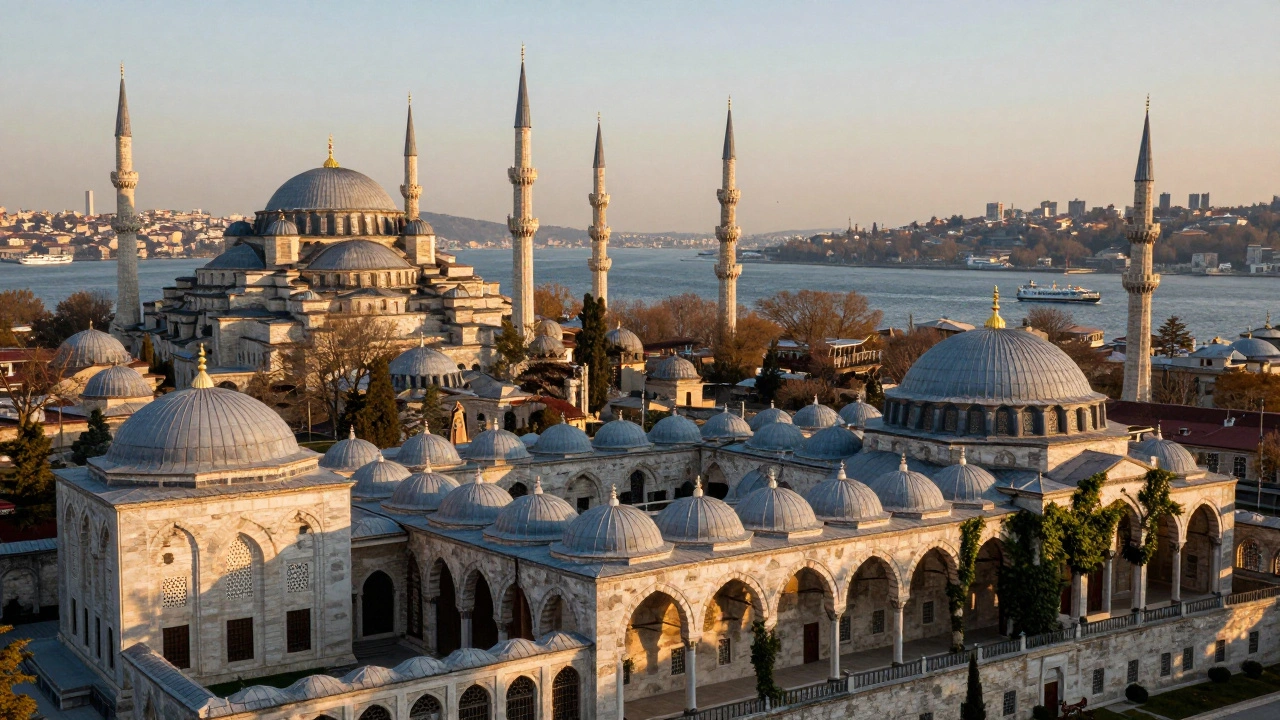
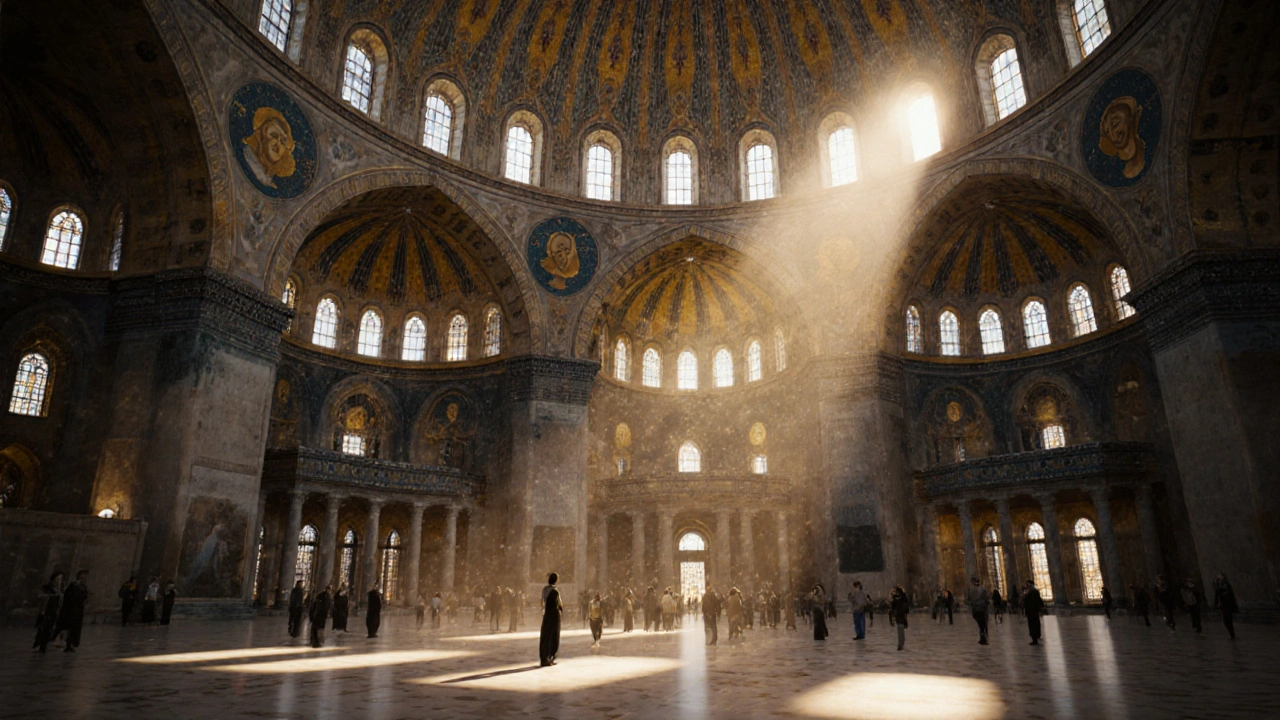
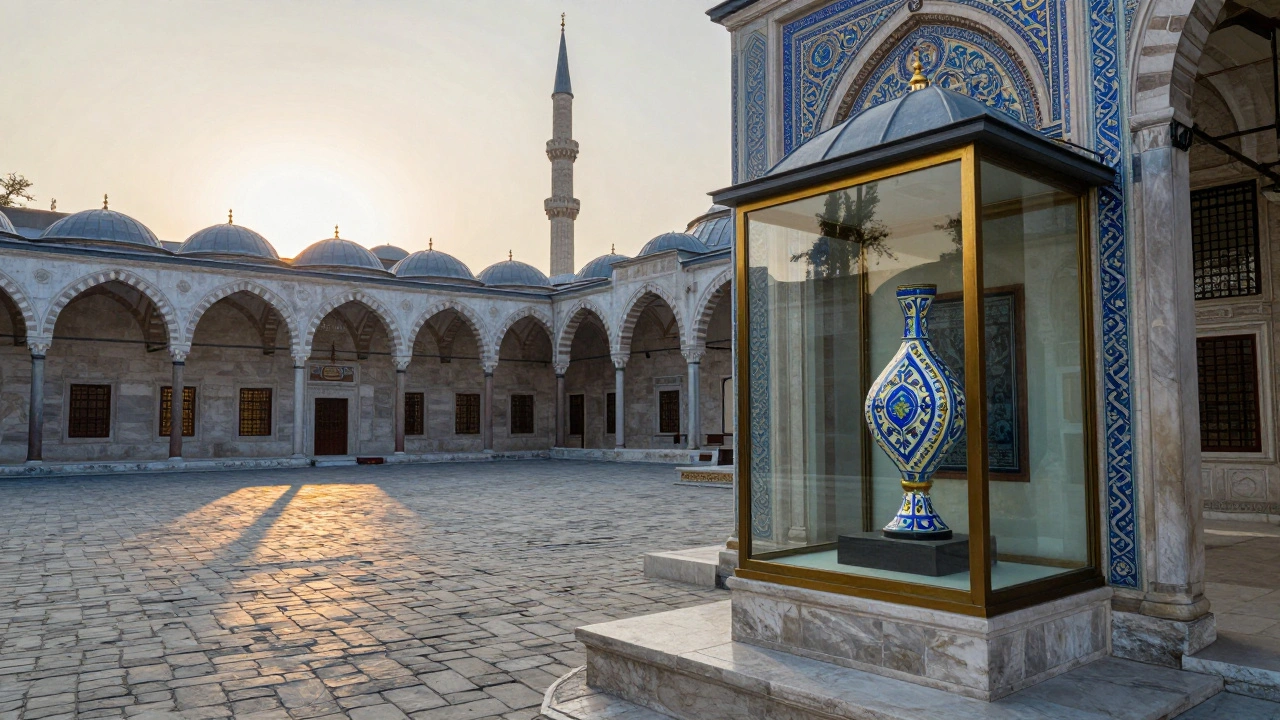

In Istanbul, where the call to prayer echoes over the Bosphorus and the scent of simit drifts through narrow alleyways, few places hold the weight of history quite like Topkapi Palace. This isn’t just another museum-it’s the beating heart of an empire that once stretched from the Danube to the Persian Gulf, tucked away behind high walls just steps from the bustling streets of Sultanahmet. If you’ve walked the marble halls of Hagia Sophia, soaked in the steam of a Turkish bath near the Grand Bazaar, or watched the sunset from the Galata Bridge, then you already know Istanbul’s soul is layered. Topkapi Palace is where those layers were forged.
More Than a Palace-A City Within Walls
When the Ottomans moved their seat of power from Edirne to Istanbul in the 15th century, they didn’t just build a royal residence. They built a self-contained world. Topkapi Palace sprawls across a hilltop overlooking the Golden Horn, the Bosphorus, and the Sea of Marmara. Its grounds cover 700,000 square meters, divided into four courtyards, each with its own function, rules, and rhythm. The first courtyard, once guarded by soldiers and lined with market stalls, now welcomes visitors with kiosks selling lokum and miniature replicas of the palace’s famed porcelain. It’s here, near the entrance, that locals pause to admire the view before stepping into history.
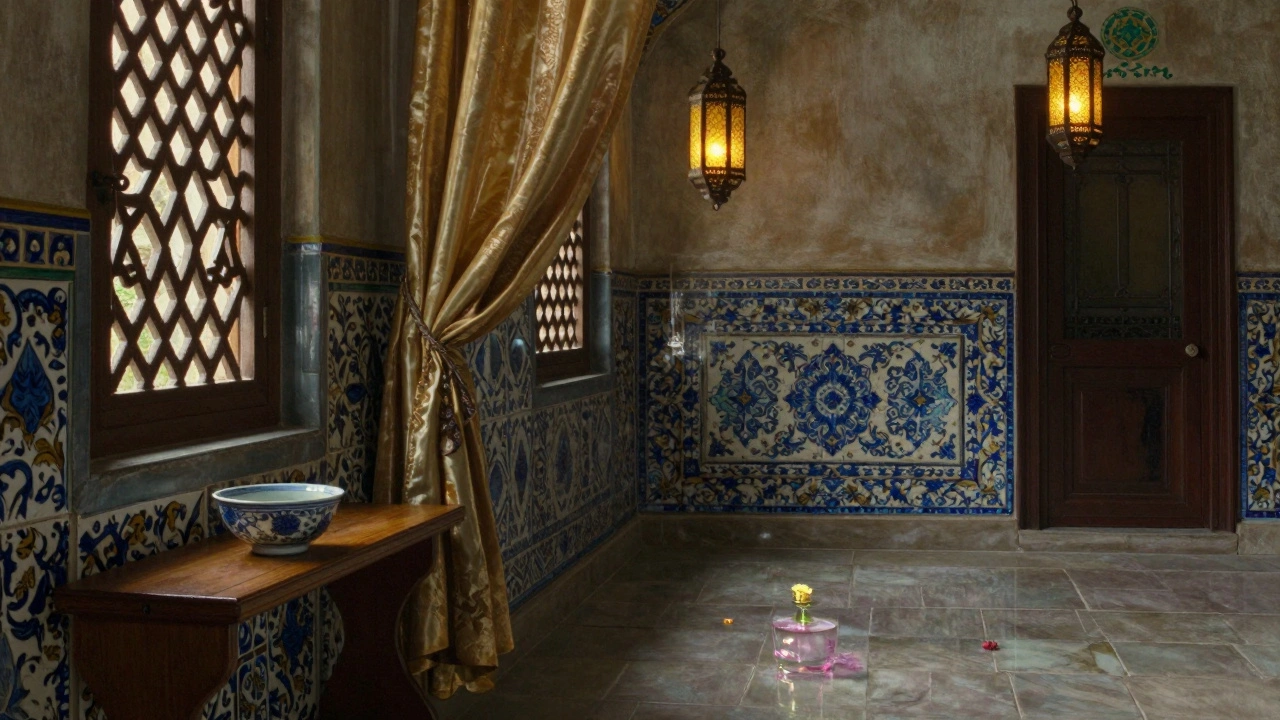
Unlike European palaces, Topkapi wasn’t designed for grand ballrooms or gilded ceilings. Its beauty lies in intimacy. The sultans lived not in a single throne room, but in a network of private apartments, courtyards, and gardens. The Harem, often misunderstood as a place of luxury alone, was a complex administrative hub-home to over 400 women, eunuchs, servants, and even the imperial children. Today, you can walk the same corridors where Valide Sultanas ruled behind velvet curtains, where concubines studied poetry under lantern light, and where the Sultan’s personal physician prepared remedies from spices brought from the Spice Bazaar.
The Treasures That Made Empires Tremble
Topkapi’s collection isn’t just impressive-it’s unparalleled. The Treasury holds the Spoonmaker’s Diamond, a 86-carat pear-shaped gem that outshines even the Hope Diamond in clarity. It’s displayed in a glass case so simple, you’d miss it if you weren’t looking. Nearby, the Sacred Relics room holds the Prophet Muhammad’s cloak, his staff, and even his tooth. These aren’t relics for tourists. For millions of Muslims across Turkey and beyond, these objects carry spiritual weight. Locals often visit during Ramadan, not for photos, but for quiet reflection.
The palace also houses over 10,000 pieces of Chinese porcelain-some from the Ming Dynasty, others from the Qing. You’ll see plates with dragon motifs that once graced Ottoman dinner tables, and bowls glazed in cobalt blue that were prized more than gold. These weren’t imported for show. They were daily tableware for the imperial family. In Istanbul, where even the simplest tea set is a work of art, this connection between utility and beauty is deeply familiar.
Where Istanbul’s Past Meets Its Present
Walk through the Imperial Kitchen today, and you’ll find a quiet courtyard with stone ovens still intact. But just outside, near the palace gates, you’ll spot a çay bahçesi-a tea garden-where office workers from nearby Sirkeci take their lunch break. It’s the same spot where palace cooks once roasted lamb for the Sultan’s banquets. Today, it’s where a Turkish mom buys piyaz from a vendor who’s been selling it since the 1980s. That’s Istanbul: history isn’t locked behind glass. It’s in the steam rising from your tea, in the way the light hits the palace dome at 4 p.m., in the old man who still remembers his grandfather telling him stories about sneaking into the palace grounds during the 1950s.
On weekends, you’ll see families from Kadıköy and Üsküdar bringing picnics to the palace gardens. They don’t just come to see the relics-they come to sit under the same plane trees where Ottoman sultans once walked. The palace isn’t a monument to the past. It’s a living part of Istanbul’s daily rhythm.
How to Visit Like a Local
If you’re planning a visit, skip the 10 a.m. rush. Locals know the best time is late afternoon-around 3 p.m.-when the light turns golden and the crowds thin. The palace opens at 9 a.m., but the crowds from cruise ships and tour buses don’t arrive until 11. By 3, you can wander the Harem without jostling for space. Bring a bottle of water-there’s no vendor inside the Harem section, and the stone paths get hot in summer.
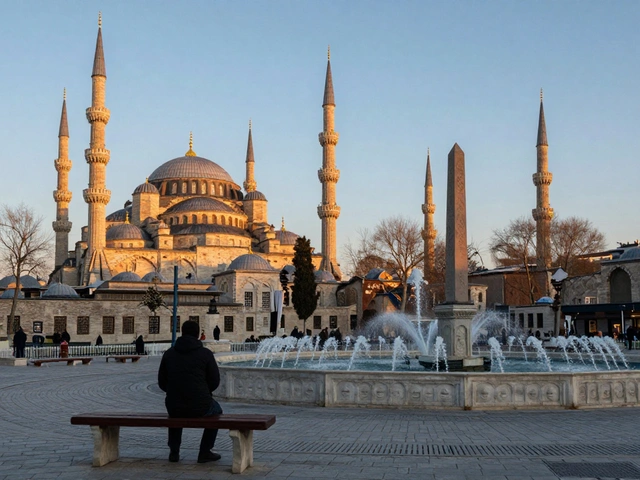
Buy your ticket at the official Topkapi Palace Museum counter, not from a street vendor. The price is 70 Turkish lira for foreigners (as of 2026), but Istanbul residents pay just 25 lira with a valid ID. If you have a Metrobus card or an Istanbulkart, you can use it for discounts on combo tickets that include Hagia Sophia and the Archaeological Museum. Many locals combine their visit with a walk down to the Blue Mosque, then a gözleme from a street cart near the entrance to the Hippodrome.
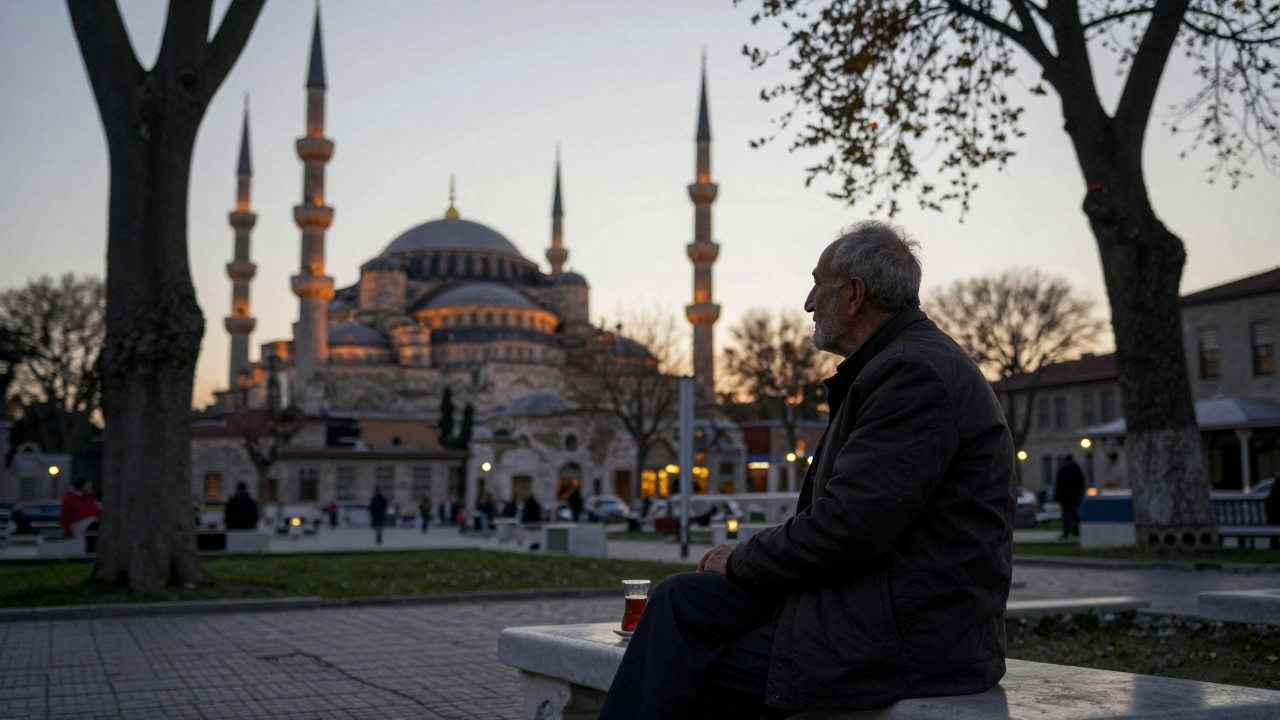
Don’t rush. Take your time in the Fourth Courtyard. Sit on the stone bench near the Pavilion of the Holy Mantle. Watch the way the sunlight hits the minarets of the Blue Mosque across the way. Listen to the distant sound of the ferry horn from Eminönü. That’s the sound of Istanbul-ancient, alive, and endlessly beautiful.
Why Topkapi Still Matters Today
In a city where new high-rises rise every year and the skyline changes faster than the tides of the Bosphorus, Topkapi Palace remains unchanged. It’s not a relic. It’s a mirror. It reflects who we were, who we are, and who we still aspire to be. For Istanbul residents, it’s not just a tourist site-it’s a reminder that our city was once the center of a world. And even now, with all its chaos and change, that legacy still whispers in the wind.
Next time you’re walking past the Hagia Sophia, or sipping Turkish coffee near the Spice Bazaar, pause for a moment. Look uphill. See the domes and minarets. That’s Topkapi. And it’s still waiting-for you, for your stories, for your silence.
Is Topkapi Palace open every day?
Topkapi Palace is open daily except for Tuesdays. Hours are from 9 a.m. to 6:30 p.m. from April to October, and 9 a.m. to 4:30 p.m. from November to March. The Harem section closes 30 minutes earlier than the rest of the palace. Always check the official website before visiting, as holiday schedules may vary.
Can I visit Topkapi Palace with an Istanbulkart?
Yes. The Istanbulkart offers discounted entry when combined with other major museums like Hagia Sophia and the Archaeological Museum. The combo ticket is valid for 72 hours and gives you access to all three sites. Locals use this often-it’s the smartest way to explore Istanbul’s historical core without overspending.
Are there free days to visit Topkapi Palace?
Yes. Turkish citizens and residents with valid ID can enter for free on the first Sunday of every month. Foreigners don’t qualify for this, but many locals bring guests along and share the experience. It’s a quiet, meaningful day-the palace feels more like a home than a museum.
What’s the best time of year to visit Topkapi Palace?
Spring (April-May) and early autumn (September-October) are ideal. The weather is mild, the gardens are in bloom, and the crowds are manageable. Summer can be brutally hot, especially inside the Harem’s stone corridors. Winter is quiet but chilly-perfect if you want solitude and dramatic light on the palace walls.
Is the Harem section worth visiting?
Absolutely-if you’re willing to wait. The Harem is separate from the main palace and requires a timed ticket. Lines can be long, but the experience is unforgettable. You’ll walk through rooms where imperial mothers raised future sultans, where silk curtains once hid private conversations, and where the scent of rosewater still lingers in the air. It’s not just history-it’s humanity.



7 Comments
I went there last year... and honestly? It was overrated. Too many signs. Too many people. Too much walking. The diamond? Yeah, it’s shiny. But I’ve seen shinier in Vegas. And the harem? Looked like a bunch of dusty rooms with ropes. I just sat on a bench and ate a simit. That was the highlight. Seriously. Just... skip it if you’re not into ‘historical vibes.’
Topkapi isn’t just a museum-it’s a geostrategic nexus of imperial architecture, socio-political symbolism, and cultural capital accumulation. The integration of domestic, ceremonial, and sacred functions within a hierarchical courtyard system reflects a pre-modern governance model that predates Weberian bureaucracy by centuries. The porcelain collection? A testament to early global supply chain logistics-Ming Dynasty ceramics as soft power instruments. And let’s not ignore the harem’s administrative architecture; it functioned as a parallel governance entity, managed by eunuch bureaucracies with direct access to the Sultan’s inner circle. This isn’t tourism. It’s institutional archaeology.
As someone from India, I found this so relatable. The way Topkapi blends daily life with deep history reminds me of Fatehpur Sikri or the Red Fort-places where emperors lived, prayed, ate, and raised kids, just like we did. The tea garden outside the palace? Same energy as the chai stall near Jama Masjid. People don’t visit these places to ‘see relics’-they go to feel connected. I brought my nephew there last Diwali. He didn’t care about the diamond. He cared that the old man selling simit knew his name. That’s the real treasure. Don’t rush it. Sit. Breathe. Listen.
I went to Topkapi on a 100 degree day and let me tell you, the Harem section is basically a stone sauna. No AC, no shade, just centuries-old walls holding heat like a giant brick. I almost passed out. But then I sat by that little bench in the fourth courtyard? Pure magic. The light on the Blue Mosque? Unreal. And yeah, the diamond? Tiny. I almost walked past it. But the tea garden? Chef’s kiss. I bought two çay, sat for an hour, watched this grandma argue with her grandson about whether the palace was built by ‘the old Turks’ or ‘the Ottomans.’ He said Ottomans. She said ‘no, the Turks.’ I just smiled. That’s Istanbul.
You call this a ‘living part of Istanbul’s rhythm’? Please. It’s a tourist trap. The locals? They don’t picnic there-they go to Emirgan Park. The ‘Sultan’s tea’? Sold by vendors charging 50 lira. The ‘Sacred Relics’? Probably fake. You think Muslims care about a tooth? That’s like me saying I have a piece of JFK’s tooth and you’re supposed to bow. And the combo ticket? Yeah right, ‘locals use it’-most of them can’t even afford the 70 lira. This whole thing is performative heritage. The real Istanbul is in Kadıköy’s backstreets, not this overpriced museum with a view.
The article exhibits a concerning romanticization of historical sites through sentimental prose. The notion that Topkapi Palace is ‘a mirror’ or ‘whispers in the wind’ is not only metaphorically excessive but also academically imprecise. Furthermore, the assertion that ‘locals bring picnics’ implies a casualness toward sacred space that is culturally inappropriate. The Harem, as a historically private and gender-segregated domain, should not be reduced to a picturesque backdrop for Instagrammable tea gardens. This narrative lacks scholarly rigor and risks trivializing cultural heritage.
I just went last week and I’m still thinking about it. I didn’t even know the Harem needed a timed ticket until I got there-so I waited 45 minutes. Totally worth it. The little courtyard with the stone ovens? I sat there for 20 minutes just watching the light. And the guy who sold me the rosewater-scented soap? He said his grandfather worked as a guide there in the 60s. I cried. I didn’t mean to. But yeah, it’s not just a place. It’s a feeling. And the diamond? Yeah, it’s small. But it’s the only thing I still dream about. Also, I spelled ‘harem’ wrong in my notes. Oops.