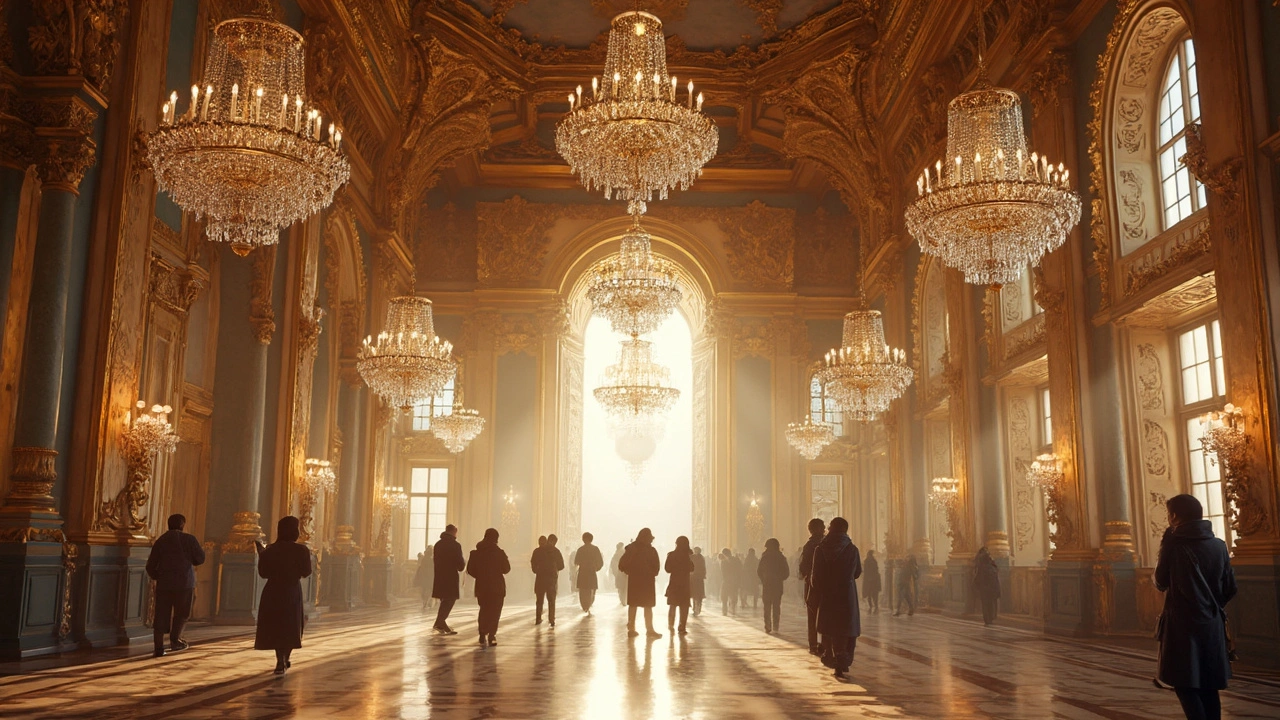
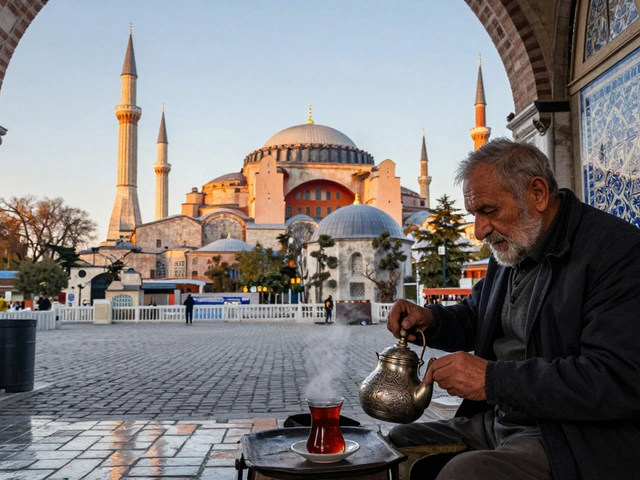
In Istanbul, museums are no longer just quiet halls with dusty artifacts behind glass. Thanks to technology, they’ve become immersive, interactive, and downright addictive experiences - drawing in locals, expats, and tourists alike. Walk into the Istanbul museums today, and you’ll find augmented reality reconstructions of Byzantine palaces, AI-guided tours in 12 languages, and touchscreen walls that let you zoom into 10,000-year-old pottery shards like you’re holding them. This isn’t happening in Paris or Tokyo - it’s happening right here, in the heart of a city that’s been a crossroads of empires for 2,500 years.
From Static to Storytelling: How Museums in Istanbul Changed
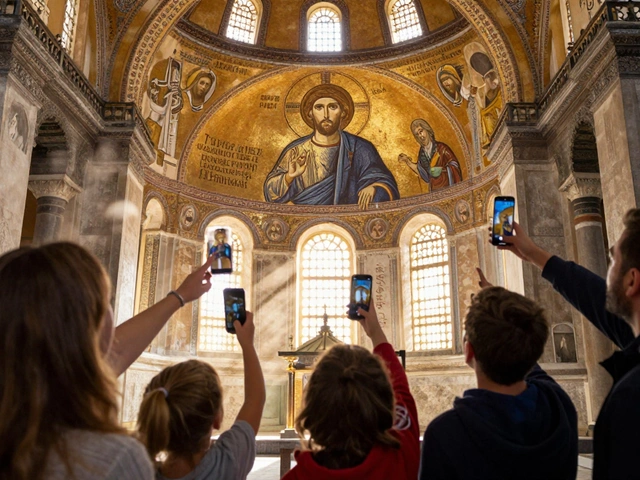
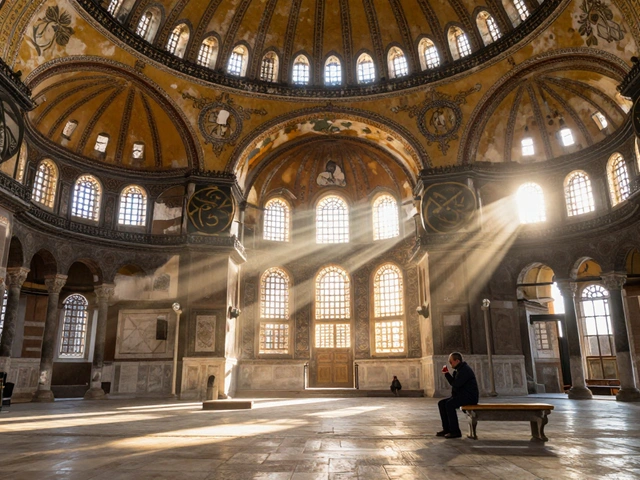
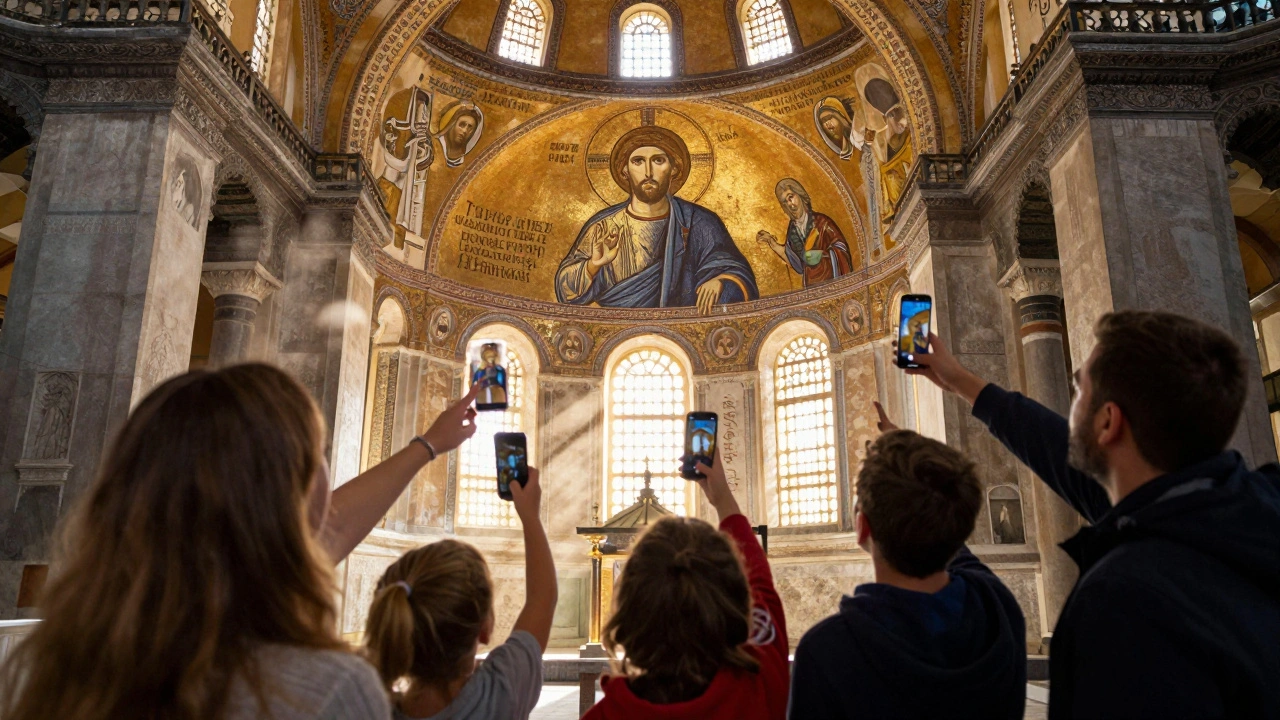
A decade ago, the Hagia Sophia Museum (now Hagia Sophia Mosque, but still a major cultural site) was mostly about quiet reverence and postcard photos. Visitors walked in, stared at mosaics, took a few pictures, and left. Today, the Byzantine Digital Archive - a project launched in 2024 by Istanbul University and the Ministry of Culture - lets you point your phone at any mosaic and see it come alive. A golden Christ Pantocrator doesn’t just sit there; it speaks. In Turkish, English, Arabic, Russian, and even Georgian, it tells you who commissioned it, why it was covered during the Ottoman conversion, and how it was rediscovered in 1931. The tech isn’t flashy. It’s useful. And locals love it.
At the Topkapı Palace Museum, motion sensors now detect when someone lingers too long in front of the Sacred Relics collection. A tablet automatically appears on a nearby kiosk, offering a 90-second video narrated by a Turkish historian who explains the Prophet Muhammad’s cloak, the staff of Moses, and the sword of Ali - all in plain language, no jargon. No more confused tourists staring blankly at velvet-covered cases. Now, people leave with stories.
Why This Matters for Istanbul Residents
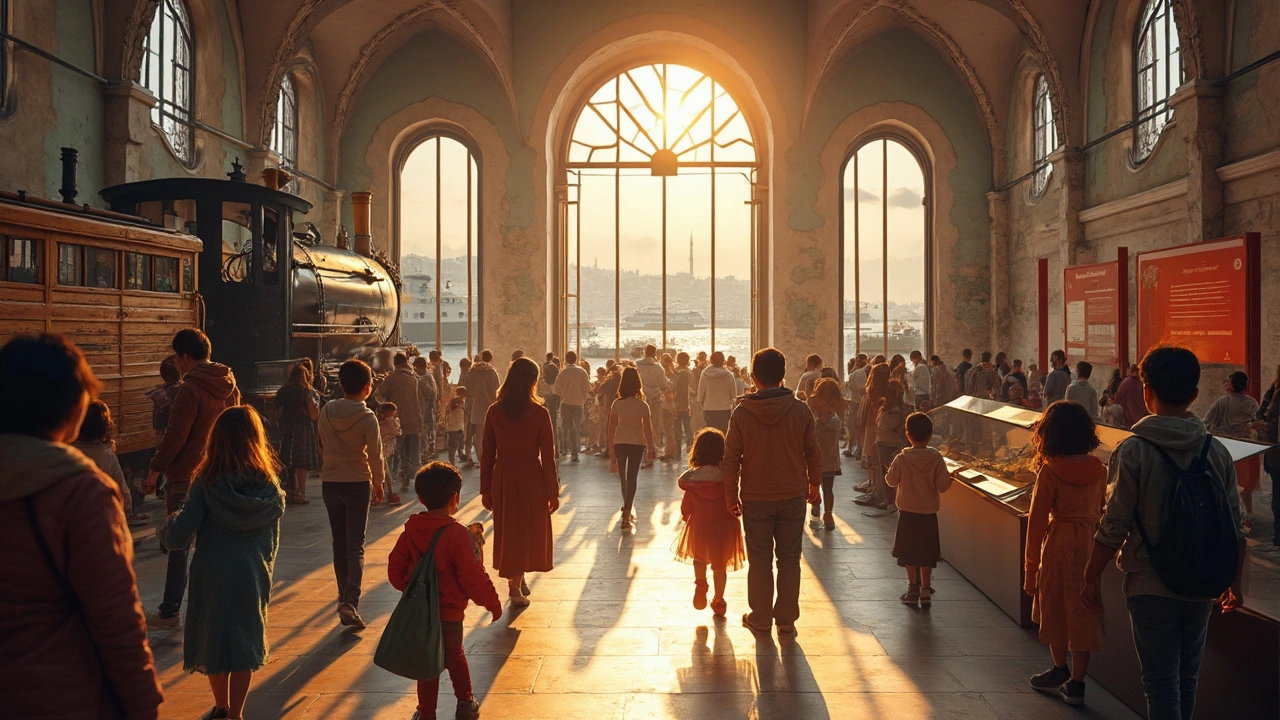
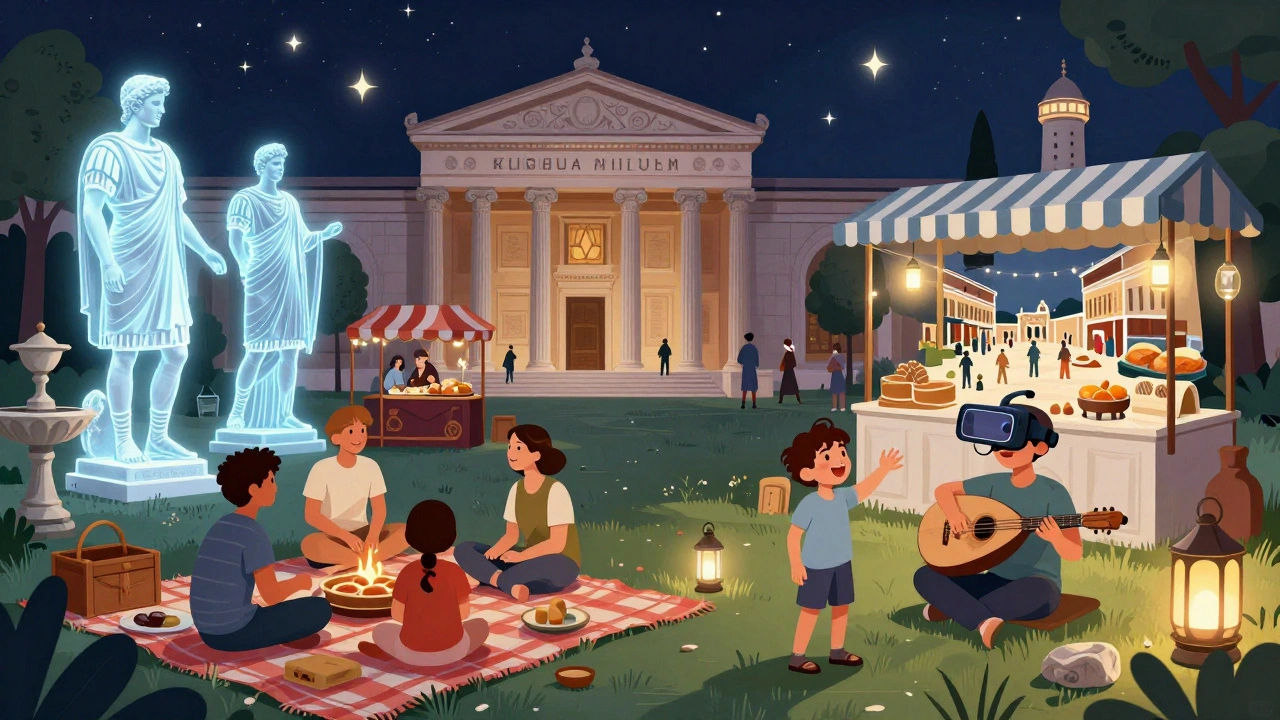
For decades, many Istanbul residents saw museums as tourist traps - places for foreigners, not for families on weekends. But that’s changing. With free entry on the first Sunday of every month (a policy expanded in 2023), and mobile apps like MuseumPass Istanbul offering discounts at 22 city-run sites, locals are rediscovering their own heritage. The İstanbul Archaeology Museums now host monthly “Museum Nights” - open until midnight - with live oud music, Ottoman-era food stalls from Kadıköy’s historic bazaars, and VR recreations of ancient Pergamon’s market square. Families bring picnics. Students study under the stars. Couples take selfies in front of holographic Roman statues.
Even school trips have transformed. In 2025, 87% of public schools in Istanbul used the AR History Pack - a free app developed by the city’s education board. Kids scan a coin from the Roman era, and an animated Roman merchant appears, explaining how trade routes from the Silk Road connected Istanbul to Samarkand. No more memorizing dates. Now, they remember names, smells, and sounds.
Technology That Works - Not Just Looks Cool
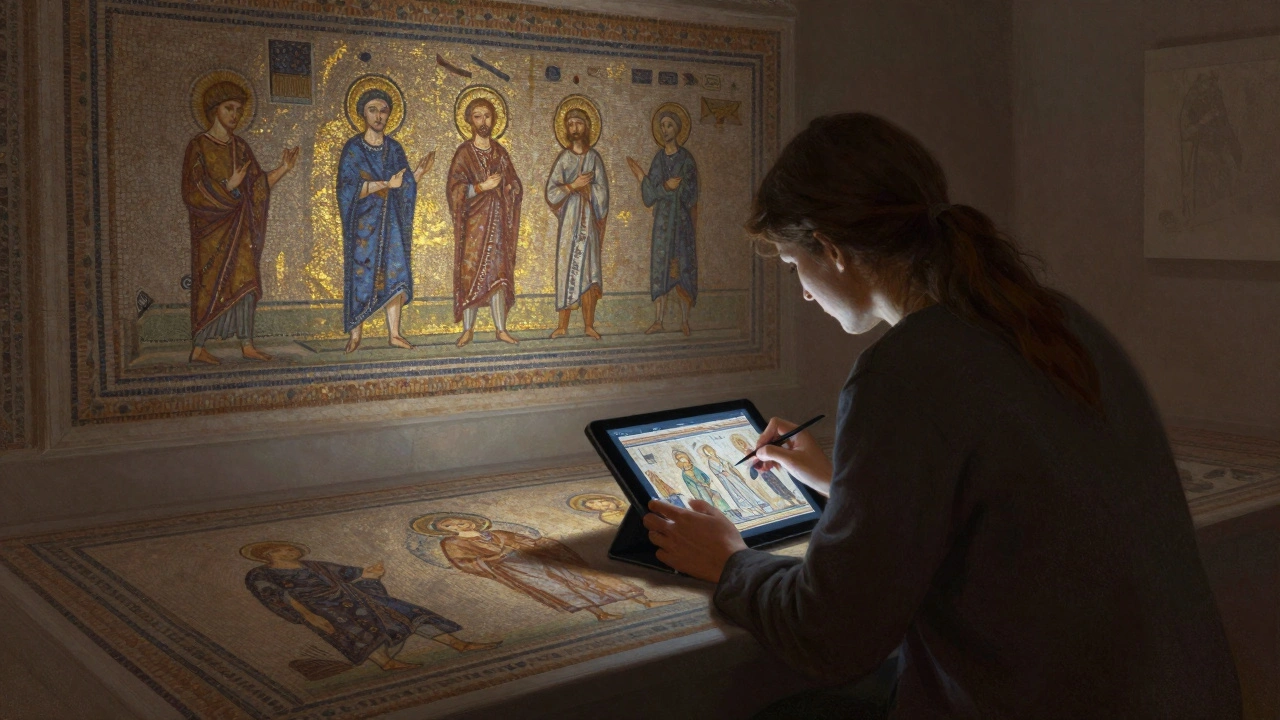
Not every museum in Istanbul went all-in on holograms. Some made smarter, quieter upgrades. The Chora Museum (Kariye Camii), known for its breathtaking Byzantine mosaics, installed low-glare digital panels that let visitors adjust lighting to see details invisible under natural light. No flash photography. No crowds. Just you, the art, and a tablet that lets you zoom in 100x. The result? A 62% increase in repeat visits from Istanbul residents in 2025.
At the Modern Istanbul Museum, a simple QR code next to each painting links to a 3-minute audio diary from the artist - recorded in their own voice, often in Turkish dialects. A painting of a woman selling simit on Galata Bridge? You hear her laugh. You hear the clatter of carts. You hear the call to prayer from the nearby mosque, faintly in the background. It’s not just art. It’s memory.
The Local Tech Behind the Scenes
This transformation didn’t come from Silicon Valley. It came from Istanbul’s own tech scene. Startups like ArkeoTech (founded in Kadıköy in 2021) build custom AR/VR tools for Turkish museums using local historians as consultants. Their team includes archaeologists from Boğaziçi University, coders from Üsküdar tech hubs, and even calligraphers who helped digitize Ottoman manuscripts. They don’t use expensive global platforms. They build in Turkish, with local fonts, local accents, and local humor.
Even payment systems changed. Instead of foreign credit card terminals, most museums now accept Yurtiçi Kredi, Turkish Lira QR payments, and even Paycell - Turkey’s homegrown mobile wallet. You can buy a ticket for the Pera Museum with your phone, scan it at the gate, and get a digital stamp that unlocks bonus content on your way out. No paper tickets. No lines. No confusion.
What’s Next? The Future of Istanbul’s Museums
The next leap? AI personalization. Starting in 2026, the Istanbul Museum Network will launch “My Museum” - a profile-based app that remembers what you liked. Visit the Egyptian Antiquities Museum? It’ll suggest the Mummy Exhibit at the Sakıp Sabancı Museum next. You’re into Ottoman ceramics? It’ll alert you when the İstanbul Ceramics Festival opens in June. You’re a student? It’ll send you free tickets to lectures at the Istanbul Fine Arts University.
And it’s not just about apps. The city is installing smart benches at major museum exits - solar-powered, with free USB charging and built-in speakers that play ambient sounds from the exhibits you just saw. Walk out of the Hagia Sophia? You hear the echo of a 10th-century chant. Walk out of the Museum of Innocence? You hear the clink of tea glasses from Çukurcuma.
Why This Works in Istanbul - And Not Just Anywhere
Technology didn’t make Istanbul’s museums popular because it’s trendy. It worked because it respected the city’s soul. Istanbul isn’t just a tourist destination. It’s a living archive. Every mosaic, every tile, every calligraphy panel carries layers of identity - Byzantine, Ottoman, Armenian, Jewish, Greek, Arab. Technology didn’t erase those layers. It deepened them.
Unlike in London or New York, where museums often feel like temples to global culture, Istanbul’s museums feel like family albums. The tech doesn’t shout. It whispers. And locals are listening.
How You Can Experience It Today
- Download MuseumPass Istanbul - free on iOS and Android - for discounts across 22 museums.
- Visit on the first Sunday of the month for free entry and live cultural performances.
- Use AR features at Hagia Sophia, Topkapı, and the Archaeology Museums - just point your phone at the artifacts.
- Join a Museum Night at the İstanbullu Archaeology Museums - every first Friday, open until midnight.
- Try the AR History Pack app if you’re with kids - it turns history into a game.
If you’ve been to Istanbul’s museums before and thought they were dull - go again. The city didn’t just upgrade its exhibits. It reconnected its people to their past.
Are Istanbul museums free for locals?
Yes - all state-run museums in Istanbul offer free entry on the first Sunday of every month. This includes Hagia Sophia, Topkapı Palace, the Archaeology Museums, and the Museum of Innocence. Some private museums like Pera and Sakıp Sabancı offer discounted rates for residents with a Turkish ID.
Do I need to download an app to use the tech features?
Not always. Many AR features work directly through your phone’s camera - no app needed. But for full access to personalized tours, audio diaries, and museum maps, download the official MuseumPass Istanbul app. It’s free, available in Turkish and English, and works offline once downloaded.
Are these tech upgrades only for big museums?
No. Even smaller museums like the Rumeli Hisarı Museum and the Museum of Turkish Calligraphy now have QR-coded audio guides. The city’s tech initiative prioritizes accessibility - not size. If a museum is run by the Ministry of Culture, it’s likely got some digital feature, even if it’s just a tablet with a short video.
Can I use these features if I don’t speak Turkish?
Absolutely. All major museums offer multilingual support - English, German, French, Arabic, Russian, and Chinese are standard. The AR content and audio guides automatically detect your phone’s language setting, or you can switch manually in the app. You’ll never be left behind.
Are there any museums in Istanbul that still don’t use technology?
A few, but they’re rare. The city has committed to digitizing all 38 public museums by 2027. Even the smallest ones, like the Museum of the History of Science and Technology in Islam in Eyüp, now have touchscreens with 3D models of ancient astrolabes. The goal isn’t to replace tradition - it’s to make it more alive.
Technology didn’t change Istanbul’s museums - it revealed them. And now, more than ever, the city’s own people are the ones leading the way.