

When you live in Istanbul, you pass by Topkapi Palace more times than you count-on the way to the ferry, during a weekend stroll along the Bosphorus, or when you’re chasing the best simit near the entrance of Sultanahmet. But how many of us actually go inside? For locals, it’s easy to assume we’ve seen it all, that the harem, the treasury, and the sacred relics are just part of the city’s background noise. But if you’ve never taken the time to walk through its courtyards with intention, you’re missing one of the most powerful layers of Istanbul’s soul.
Start Early, Skip the Crowds
The first thing you need to know: Topkapi Palace isn’t a museum you visit after lunch. It’s a living archive that thrives in quiet mornings. Locals who know best arrive by 8:30 a.m., right when the gates open. By 10 a.m., tour groups from Ankara, Izmir, and beyond flood the courtyards. If you’re serious about seeing it properly, come early. The light hits the Iznik tiles just right around 9 a.m., and the echoes of Ottoman guards’ footsteps still feel real when the courtyard is empty.Buy your ticket online through the Topkapi Palace official website. Don’t waste time standing in line at the gate. The online ticket includes access to all four courtyards, the Harem, and the Treasury. Skip the combo tickets that bundle in Hagia Sophia or the Archaeology Museums-those are separate experiences, and you’ll want to pace yourself.
The Courtyards Are the Story
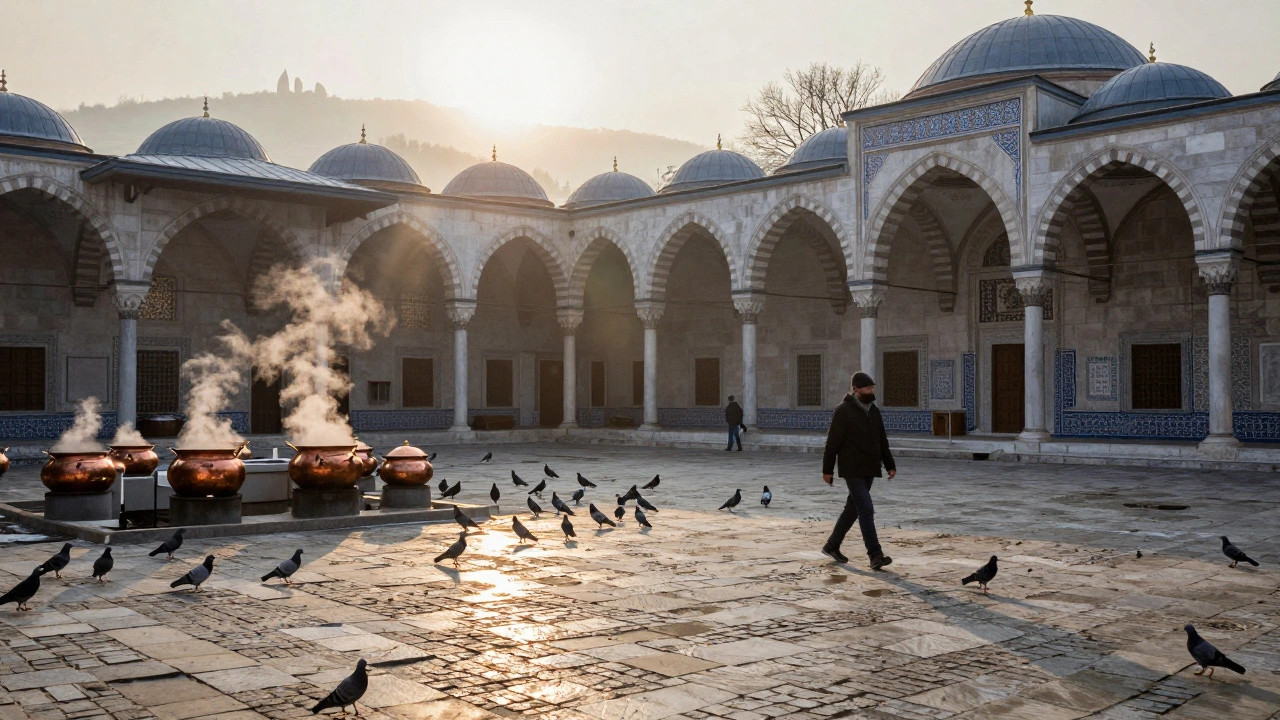
Topkapi isn’t one big building. It’s a series of courtyards, each more intimate than the last, like chapters in a novel written in stone and tile.The First Courtyard is the easiest to overlook-it’s green, open, and full of pigeons. But this is where palace staff, soldiers, and servants lived. Walk past the Imperial Mint and the old bathhouse. Look for the stone where the Sultan’s horse was groomed. These details matter.
The Second Courtyard is where the heart of the empire beat. The Imperial Council Chamber, where grand viziers debated wars and treaties, sits under a vaulted ceiling that still holds the scent of incense. The kitchens here were the largest in the world at the time. You can still see the giant copper pots-some big enough to boil rice for 5,000 people at once. The Ottoman cooks didn’t just feed the palace; they shaped Turkish cuisine. Try the mantı at the nearby Çiya Sofrası after your visit-it’s the same slow-cooked, spiced meat tradition that fed sultans.
The Third Courtyard is where the Sultan retreated from public life. The Pavilion of the Holy Mantle, where the Prophet Muhammad’s cloak and sword are kept, is here. It’s quiet, dimly lit, and deeply sacred. Locals often pause here to pray silently. Even if you’re not religious, this space demands respect. The silence here is thicker than the walls.
The Harem: More Than Just a Fantasy
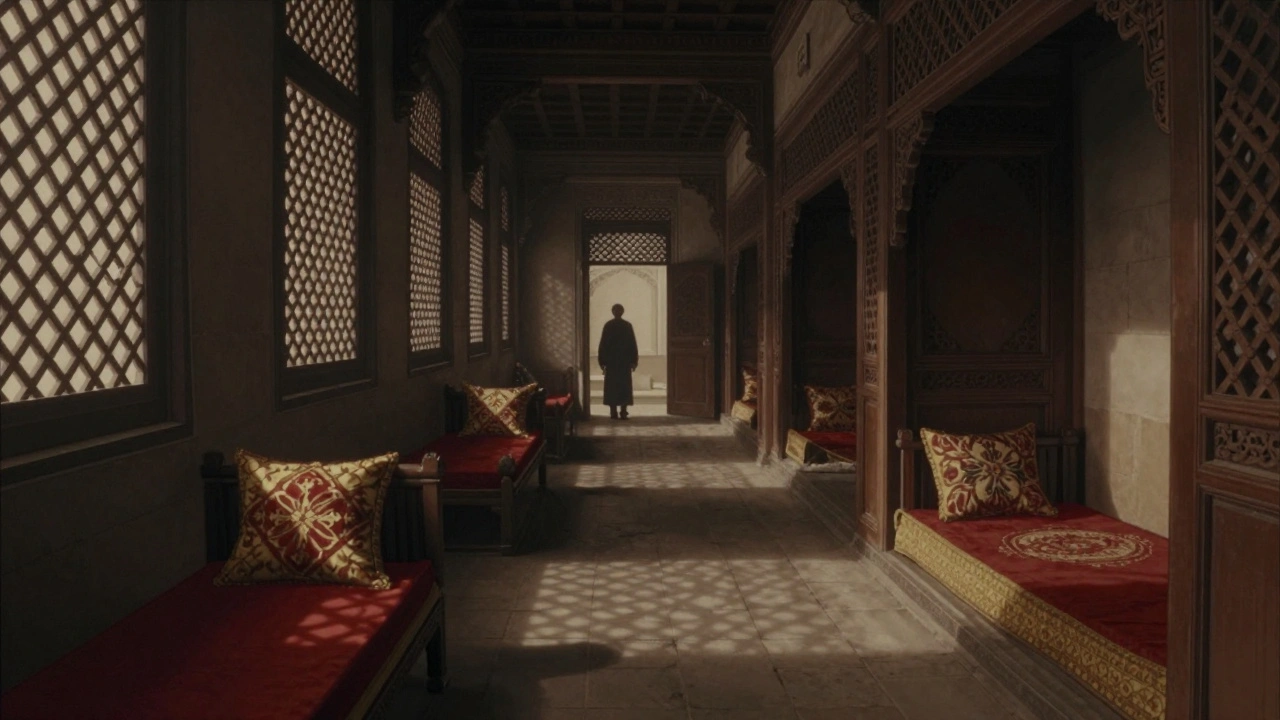
The Harem isn’t a place of decadence-it’s a complex social system. Women of the imperial family, concubines, eunuchs, and servants lived here in a tightly controlled hierarchy. The rooms are small, the corridors narrow. You’ll see the Queen Mother’s quarters, the Sultan’s private study, and the rooms where children were raised away from the world.Many visitors expect glittering jewels and silk drapes. What they find instead is discipline. The Harem was a school, a prison, and a political engine all at once. The women here weren’t passive. They influenced wars, marriages, and succession. If you want to understand modern Turkish family dynamics, spend time here. The power structures haven’t vanished-they’ve just changed shape.
The Treasury: Real Gold, Real History
The Treasury is where you’ll see the Spoonmaker’s Diamond, the Topkapi Dagger, and the Emerald-Encrusted Throne. But don’t just snap a photo and move on. Look at the craftsmanship. The dagger’s hilt is carved from pure emerald, set with 100+ diamonds, and the scabbard is covered in gold filigree that looks like lace. This wasn’t just wealth-it was art as power.Locals know that the real treasure isn’t the gems. It’s the Ottoman mindset behind them: luxury as a statement, not a show. Compare this to today’s Istanbul-where luxury is loud, flashy, and often imported. Back then, it was quiet, deliberate, and made by hand. That’s why the Yeni Valide Mosque down the road, with its hand-painted tiles, still feels more authentic than any five-star hotel lobby.
Where to Go After
Don’t rush out after the last courtyard. Walk down to the Golden Horn via the Yedikule gate. Grab a cup of Turkish coffee at Arasta Bazaar-it’s less touristy than the ones near the ferry. Sit by the water. Watch the boats. The breeze here still carries the same salt and spice that floated through the palace gardens centuries ago.If you’re staying in Istanbul, make this a ritual. Come once in spring, when the cherry blossoms bloom outside the palace walls. Come again in autumn, when the light turns gold and the crowds thin. Each visit reveals something new.
What Most Visitors Miss
Most tourists think Topkapi is about the jewels or the harem. But the real magic is in the details:- The imperial watchtower in the Fourth Courtyard still has the original wooden floorboards worn smooth by sultans pacing at night.
- The water channels under the courtyards were engineered to cool the palace in summer-no AC needed.
- The calligraphy on the walls isn’t decoration-it’s Quranic verses chosen to guide the Sultan’s decisions.
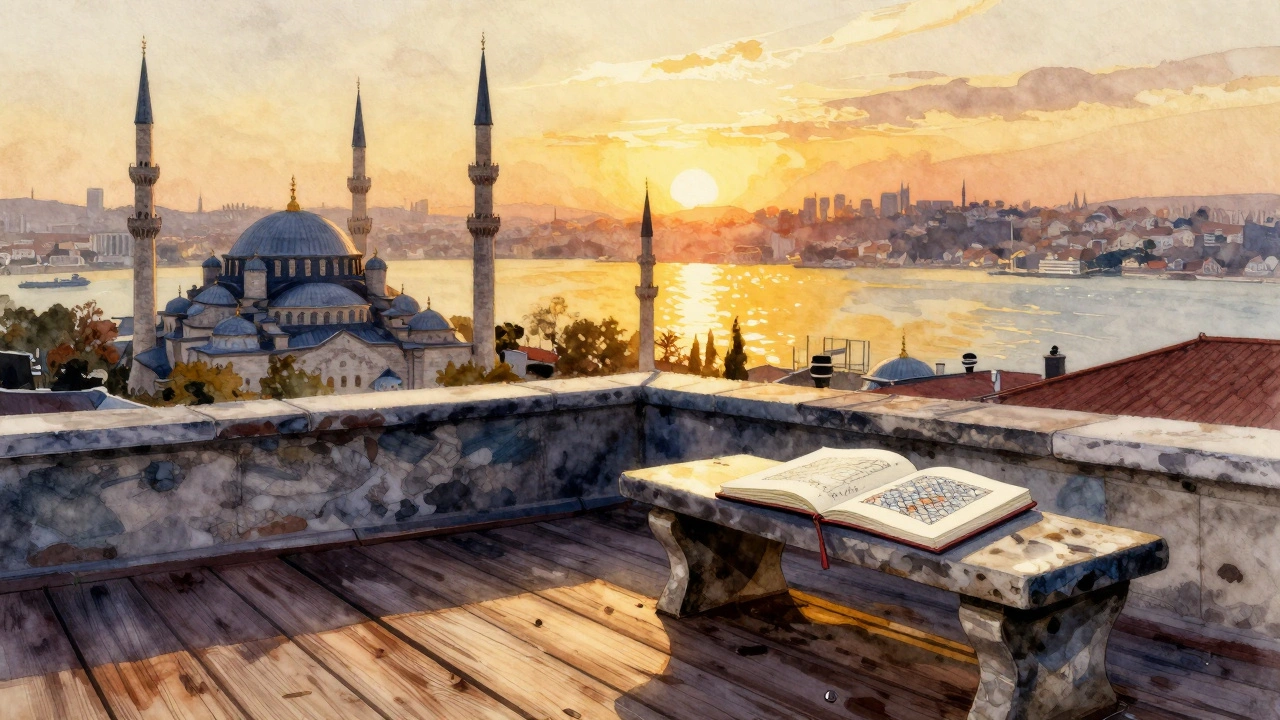
- The garden terraces offer the best view of the Bosphorus. No photo can capture how the water shimmers when the sun hits just right.
And here’s the secret most guides won’t tell you: The palace wasn’t built to impress foreigners. It was built to remind the Sultan-and everyone inside-that power comes with responsibility. That’s why the walls are thick. Why the windows are small. Why the courtyards are layered. This wasn’t a palace for show. It was a palace for survival.
How to Visit Like a Local
If you live in Istanbul, here’s how to make Topkapi feel personal:- Bring a notebook. Sketch a tile. Write down a line of calligraphy. You’ll remember it longer than any photo.
- Visit on a Tuesday or Wednesday. Fewer tourists, more quiet.
- Bring a bottle of water. There’s no place to buy it inside, and the walk is long.
- Don’t skip the gift shop. The Topkapi Miniature Books-tiny reproductions of Ottoman manuscripts-are sold here. They’re under 100 TL and far more meaningful than a fridge magnet.
- Bring someone who doesn’t know Istanbul. Watch their face when they see the Treasury. That’s the moment you’ll understand why this place still matters.
Topkapi Palace isn’t just a museum. It’s Istanbul’s memory. It’s the echo of a time when the city ruled an empire, not just a metropolis. And if you’ve never truly seen it, you haven’t really seen Istanbul.
How long does it take to visit Topkapi Palace?
Most visitors spend 3 to 4 hours exploring all four courtyards, the Harem, and the Treasury. If you’re short on time, you can see the highlights in 2 hours, but you’ll miss the quiet moments that make the experience meaningful. Locals who come regularly often spend half a day, returning to different sections on separate visits.
Is the Harem worth visiting?
Yes-but only if you go with the right expectations. The Harem isn’t a palace of romance or scandal. It’s a complex social institution that shaped Ottoman politics. The rooms are small, the lighting dim, and the history deeply layered. Skip the audio guides that dramatize it. Instead, read up on the role of the Valide Sultan before you go. You’ll walk out with a better understanding of power, gender, and family in Ottoman society.
Can I bring food or drinks inside?
No food or drinks are allowed inside the palace grounds. There are no cafés or vending machines within the walls. Bring a water bottle before you enter, and refill it at the public fountains near the entrance. After your visit, grab a simit and ayran from the stall just outside the main gate-it’s the same one locals have used for decades.
Is Topkapi Palace open every day?
Topkapi Palace is closed on Tuesdays. It opens daily from 9 a.m. to 7 p.m. in summer and 9 a.m. to 5 p.m. in winter. The Harem and Treasury have the same hours, but entry is controlled by timed tickets-arrive early to avoid waiting. Check the official website before your visit, as hours can change for religious holidays like Ramadan or Kurban Bayramı.
What’s the best way to get to Topkapi Palace from different parts of Istanbul?
If you’re in Sultanahmet, it’s a 10-minute walk. From Taksim, take the tram (T1 line) to Sultanahmet and walk. From Kadıköy, take the ferry to Eminönü, then walk 15 minutes uphill. Avoid taxis-they can’t get close to the entrance, and you’ll end up walking the same route anyway. Locals know the best shortcut: walk from the Yeni Valide Mosque through the small alley behind it. It’s quieter and gives you a real feel for the old city.
Are there any hidden spots at Topkapi that most tourists don’t see?
Yes. The Library of Ahmed III in the Third Courtyard is often overlooked. The wooden shelves are carved with floral patterns, and the glass cases hold rare manuscripts that haven’t been touched in centuries. The Privy Chamber, where the Sultan met his closest advisors, has a hidden door behind a bookshelf-still intact. And the rooftop terrace overlooking the Bosphorus, accessible via a narrow staircase near the Harem exit, offers the best view in the entire palace. Few people know it’s there.
11 Comments
Man, this post hit me right in the chest. I’ve lived in Lagos my whole life, but after reading this, I feel like I’ve been to Topkapi already. The way you describe the silence in the Third Courtyard? That’s the same quiet you find in the ancient mosques of Kano-where the air feels heavy with prayers no one speaks aloud. I brought my nephew there last year, and he sat on the steps for twenty minutes just staring at a tile. Didn’t say a word. That’s the power of place. You don’t need a tour guide when the walls remember everything.
And the part about the water channels? Genius. We’ve got similar systems in old Nigerian palaces-cooling through evaporation, no electricity, just smart design. Modern architects should study this instead of chasing glass towers that bake in the sun. This isn’t just history-it’s a blueprint for living wisely.
Also, the miniature books? I’m ordering three. One for my sister, one for my cousin who thinks history is boring, and one for my future self when I’m old and forgetful. I need to remember this feeling.
Thank you for writing this like a love letter to a place you’ve known too long to take for granted. I’m booking my flight next week.
PS: The cherry blossoms in spring? I’m coming then. No tourists, just me, the breeze, and the ghosts of sultans pacing at night.
omg yes yes yes!!! i went last year and totally missed the library of ahmed iii 😭 i was rushing because i thought i had to see everything but then i found this little stairway near the harem and just… sat. no one was there. just birds and the sound of wind through old wood. i cried. not because it was sad, but because it felt like the palace was whispering to me. also the spoonmaker’s diamond? i thought it was fake until i saw how the light bent inside it. like it had its own universe. and the water channels?? i swear i felt cooler just standing near them. this post is the reason i’m going back next month. bring snacks. they dont let you in with food but the simit outside is life-changing.
ps: i typoed everything but you get the vibe right??
Real talk-most tourists think Topkapi is about the jewels. Nah. It’s about the silence between the tiles. I’ve been there five times. First time, I took selfies. Third time, I just sat by the treasury window and watched the light move across the floor. Fifth time? I brought my cousin from Abuja. He didn’t say anything for 45 minutes. Then he whispered, ‘This is where power learned to be quiet.’ That’s the truth. Skip the audio guide. Just walk. Listen. The palace doesn’t need your camera. It needs your presence.
So this is what the globalists want you to believe-that some old palace holds the soul of a city? Wake up. The Ottomans were invaders. The jewels were stolen. The harem was a prison for women. This whole place is a propaganda museum built by conquerors to make you feel small. Why are you romanticizing empire? The real treasure is the fact that Turkey isn’t ruled by sultans anymore. Go visit the modern mosques. Go see the real Turkey-the one with wifi and kebabs and people who don’t bow to dead kings. This post is just cultural brainwashing dressed up as poetry.
Also the water channels? They were built by slaves. Don’t glorify slavery. And the calligraphy? It was forced on conquered people. Stop worshipping oppression as art.
I’ve been to Topkapi three times and each visit changed me. The first time I was just ticking boxes. The second time I noticed how the tiles changed color with the sun. The third time I sat on the same step near the Fourth Courtyard and just breathed. No phone. No guidebook. Just me and the wind carrying the same scent from 600 years ago. I didn’t cry. I didn’t need to. I just felt… lighter. Like I’d shed something I didn’t know I was carrying. This post got it right. It’s not about what you see. It’s about what you stop ignoring. Bring a notebook. Write one line. Don’t overthink it. Just let the place speak. And if you’re lucky? It’ll answer.
Wow. Just… wow. I’m from Kansas. I’ve never been to Istanbul. But after reading this, I feel like I’ve walked every courtyard, touched every tile, smelled every incense stick. You made me feel the weight of silence. You made me want to sit on a step and wait for the past to whisper. I’m not even a history person. But this? This is poetry wrapped in stone. I’m printing this out and taping it to my fridge. My daughter’s going to Istanbul next year. I’m making her read this before she goes. No selfies. No rush. Just presence. That’s the lesson here. Not the jewels. Not the harem. Just… being there. Quietly. Fully. Thank you for reminding me that some places don’t need to be seen. They need to be felt.
This made me feel so seen. I’ve lived in Istanbul for 12 years and never stepped into Topkapi until last month. I was scared it would feel like a theme park. But it didn’t. It felt like coming home to a house you forgot you grew up in. The way you described the Treasury-not as a display of wealth but as art as power? That’s it. That’s the difference. We’re so used to loud luxury now-bling, influencers, Instagrammable everything. But this? This was quiet strength. I brought my 8-year-old niece. She didn’t care about the diamond. She sat for 20 minutes tracing the grooves in the wooden floor with her finger. Asked me, ‘Why do the walls look like they’re breathing?’ I didn’t have an answer. But I think the palace did. Thank you for writing this like a letter to your younger self. I’m going back in autumn. Bring tissues.
Oh please. You’re all just romanticizing a colonial relic. The ‘sacred relics’? Probably fake. The ‘harem’? Just a brothel with better architecture. The ‘quiet moments’? People just didn’t have smartphones yet. And the water channels? Cute. But they’re not sustainable. This whole post is a tourist fantasy wrapped in flowery prose. The real ‘soul’ of Istanbul is the traffic jams and the kebab shops and the guys yelling at each other in Turkish over a game of backgammon. This palace? It’s a museum. Like the Louvre. Like the Met. Stop acting like it’s holy. It’s not. It’s just old. And slightly overpriced.
Hi everyone 😊 I just wanted to say how beautiful this thread is. Even the angry comments-they’re part of the conversation too. I’ve been to Topkapi twice and each time I left feeling like I’d met a quiet elder who didn’t need to shout to be heard. I’m so glad this post reminded people to go slow. And Michaela, I hear you. Maybe it’s not holy. But maybe it’s still sacred. Not because of what’s inside, but because people still choose to come here and sit quietly, even now. That’s kind of magic, right? 🌿 I’m going back next week with my mom. She’s 78. She’s never seen it. I think she needs to feel the silence too. Anyone else going? Let’s meet at the rooftop terrace. No cameras. Just tea and quiet.
Correction: The post says 'the kitchens here were the largest in the world at the time.' That’s inaccurate. The Forbidden City’s kitchens were larger. Also, 'the Sultan’s horse was groomed'-no, it was the Grand Vizier’s horse. The Sultan didn’t groom horses. And 'the water channels were engineered to cool the palace'-technically, they were drainage channels that incidentally cooled via evaporation. You can’t say 'engineered to cool' unless you have primary sources. Also, 'the calligraphy is Quranic verses chosen to guide the Sultan’s decisions'-most are from Surah Al-Baqarah and Surah Al-Imran, not individually selected. And 'the palace wasn’t built to impress foreigners'-wrong. It was built to impress embassies. The Venetian envoys were stunned. The post is poetic, but it’s riddled with historical inaccuracies. Fix your facts before you preach about soul.
Sloan, you’re right about the details. I looked it up. The kitchens were indeed smaller than the Forbidden City’s. But that doesn’t change the fact that they fed 5,000 people daily with no refrigeration, no electricity, just fire, skill, and discipline. The point wasn’t size-it was scale of organization. And yes, the Sultan didn’t groom his own horse-but the stone where his horse was groomed? That’s where the court gathered. It’s a symbol. You’re missing the metaphor. The water channels weren’t just drainage-they were a system of passive cooling that modern architects still study. You’re nitpicking grammar while ignoring the soul of the thing. And maybe that’s the problem. We’ve forgotten how to feel history. We only know how to fact-check it.
Michaela? Maybe you’re right too. Maybe it’s not holy. But it’s still heavy. And sometimes, that’s enough.
Carolyn? I’ll be there. Tea and quiet. No cameras. I’ll bring the miniature book. We’ll read it together.